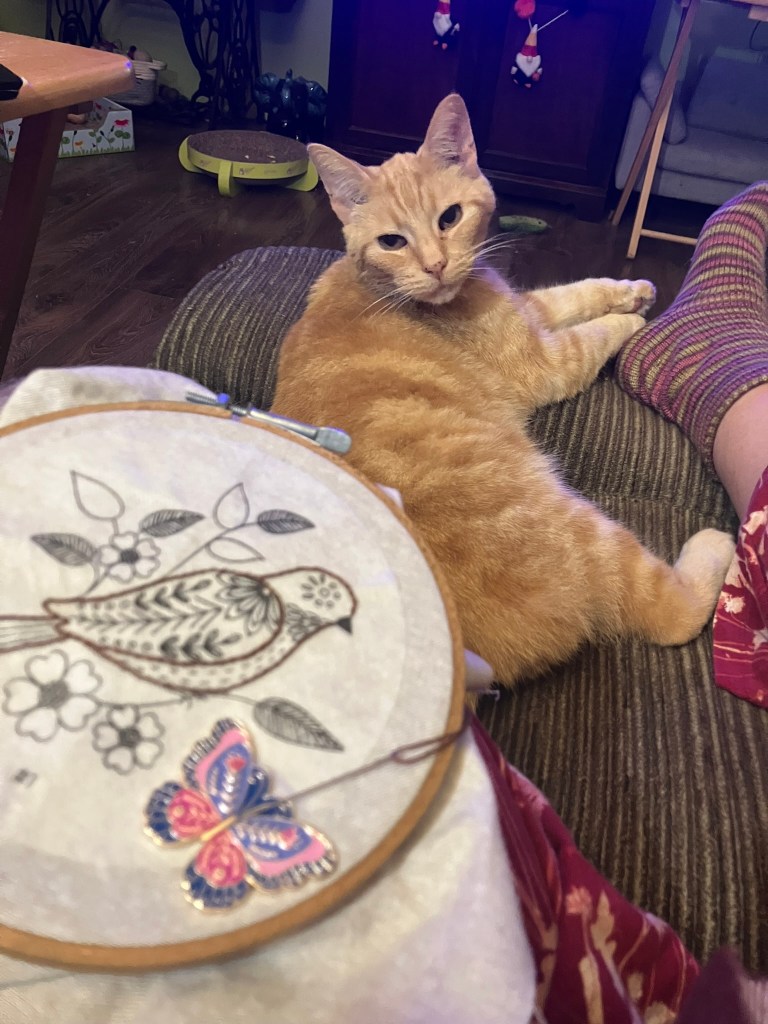
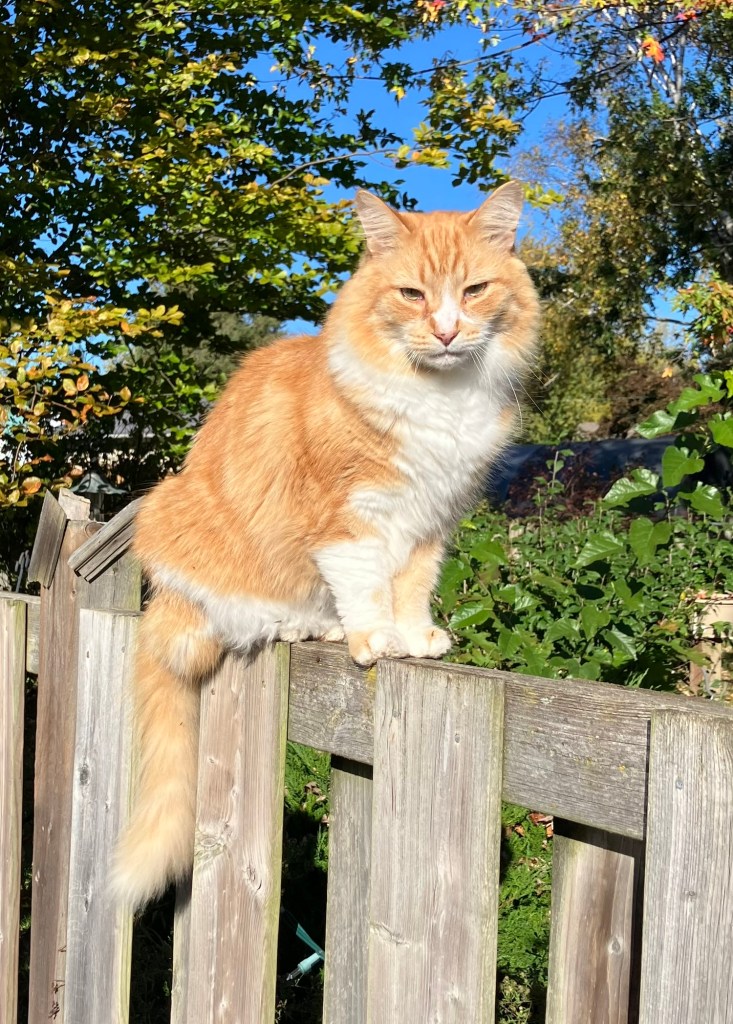
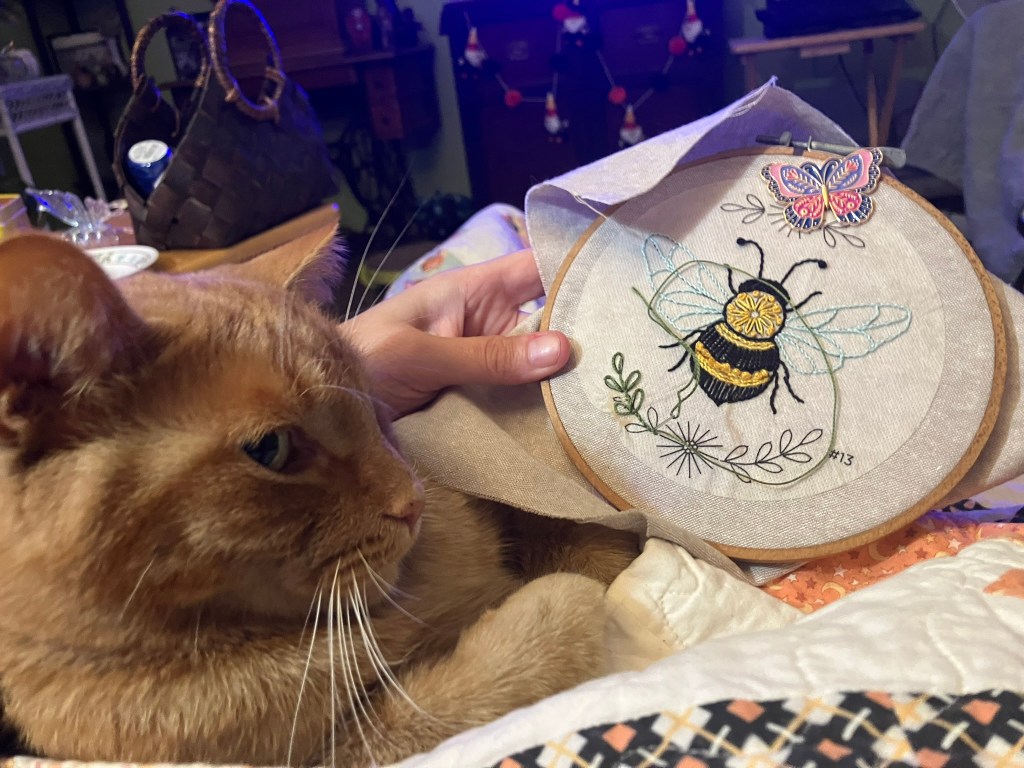
Rupert was sole cat on Snoopervisor Duty for this weekend’s embroidery sessions…
That’s mostly because I still haven’t turned the heat on (still holding out until November 1), which means in the evenings, the house is around 16C/62F. I’ve got lots of warm clothes and quilts, but despite little Ru’s fur coat, he seems to need some extra body heat.
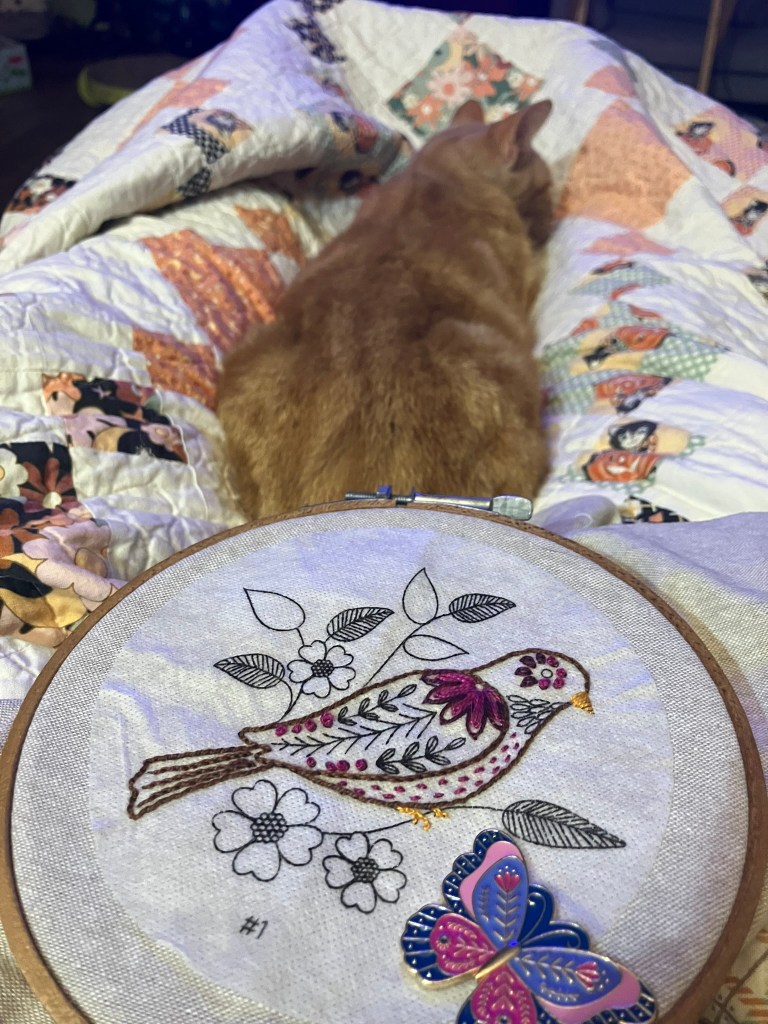
And though he may have ulterior motives, it doesn’t mean he doesn’t takeSnoopervisor duties seriously…
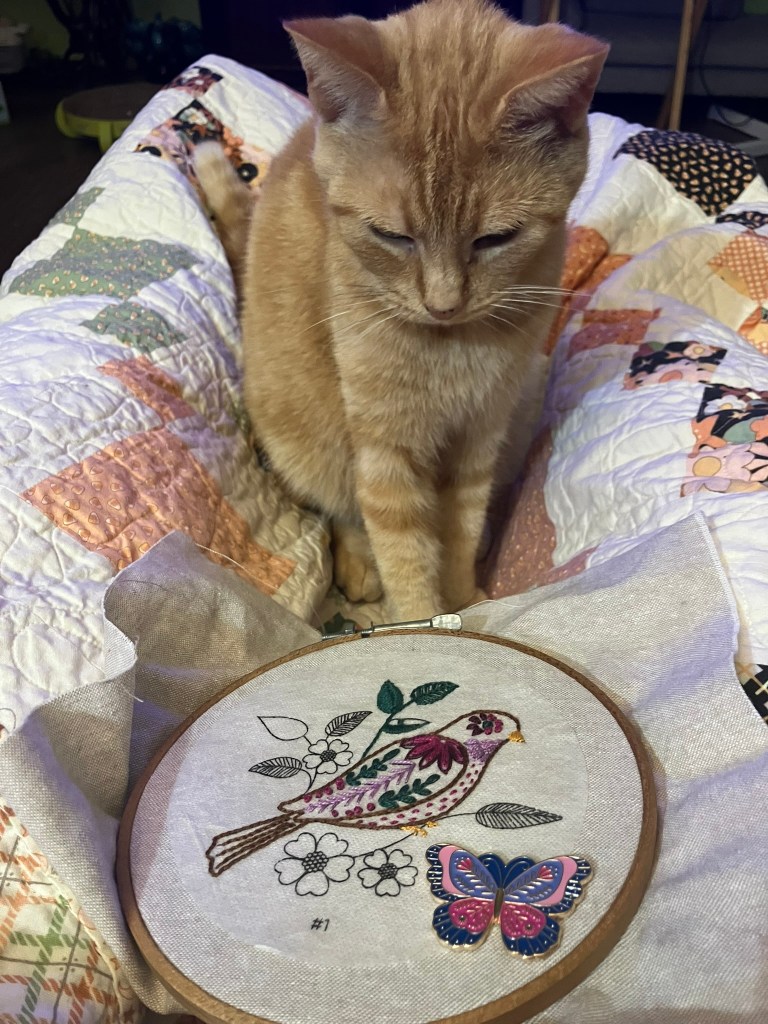
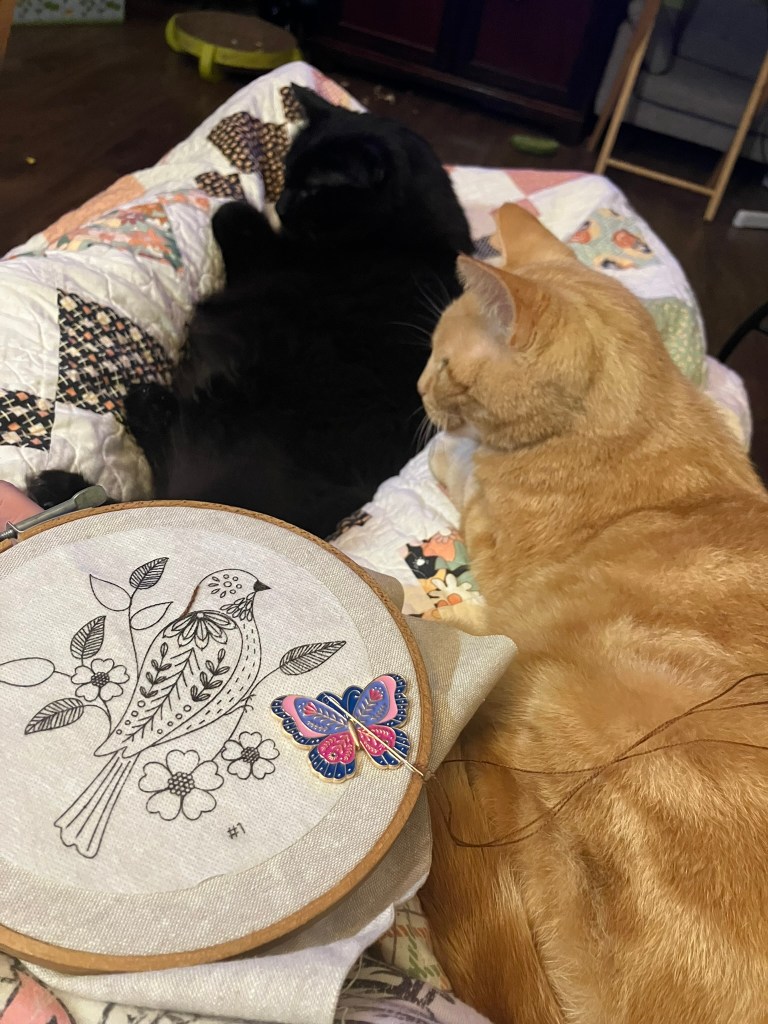
And while we didn’t finish our bird…
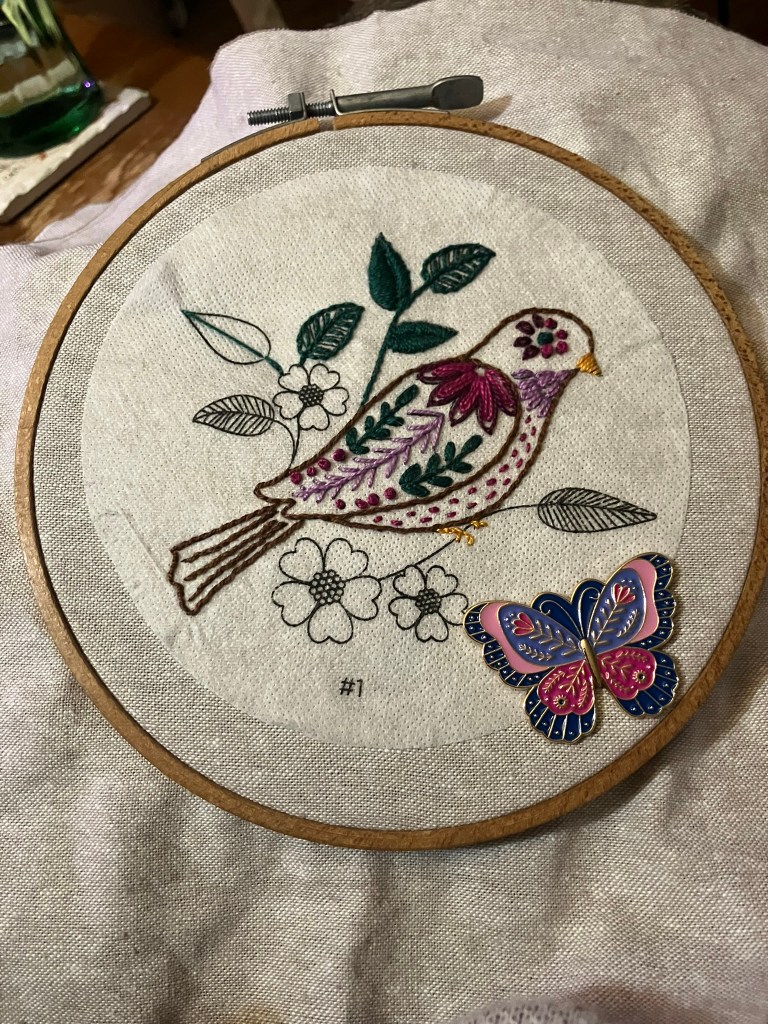
We made some excellent progress and will likely be able to finish it up this coming weekend!
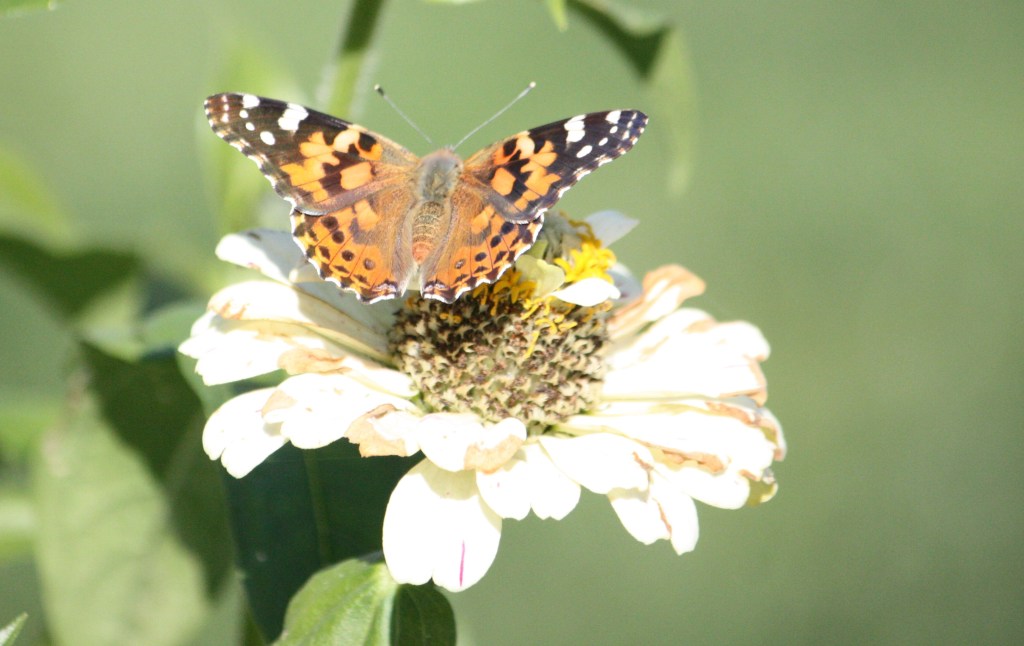
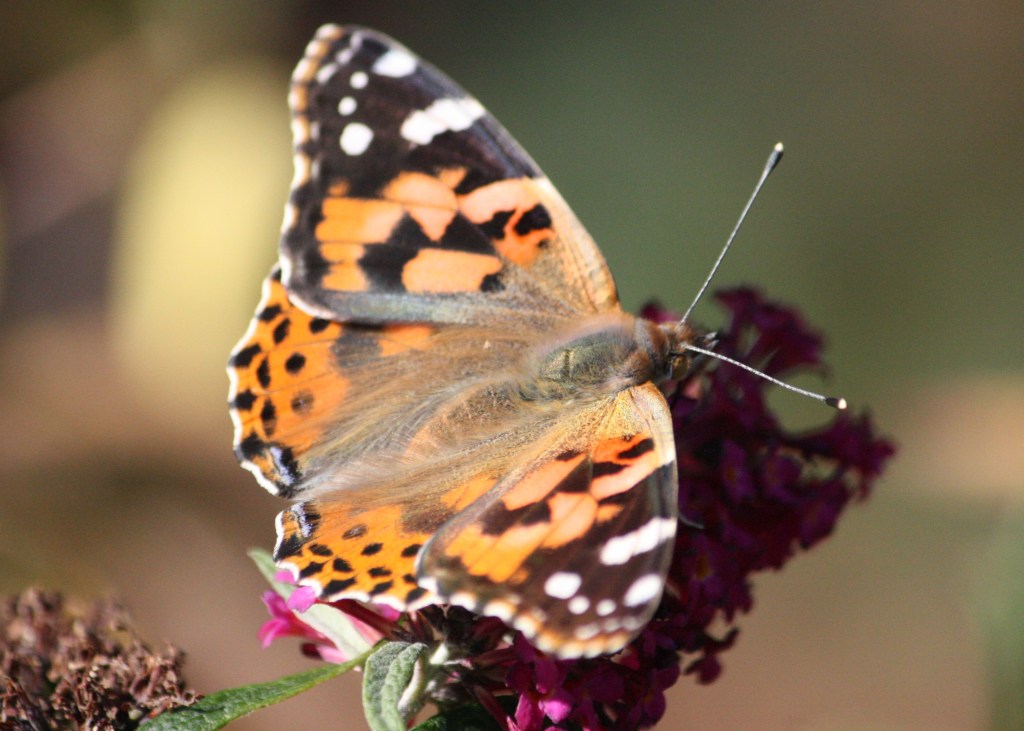
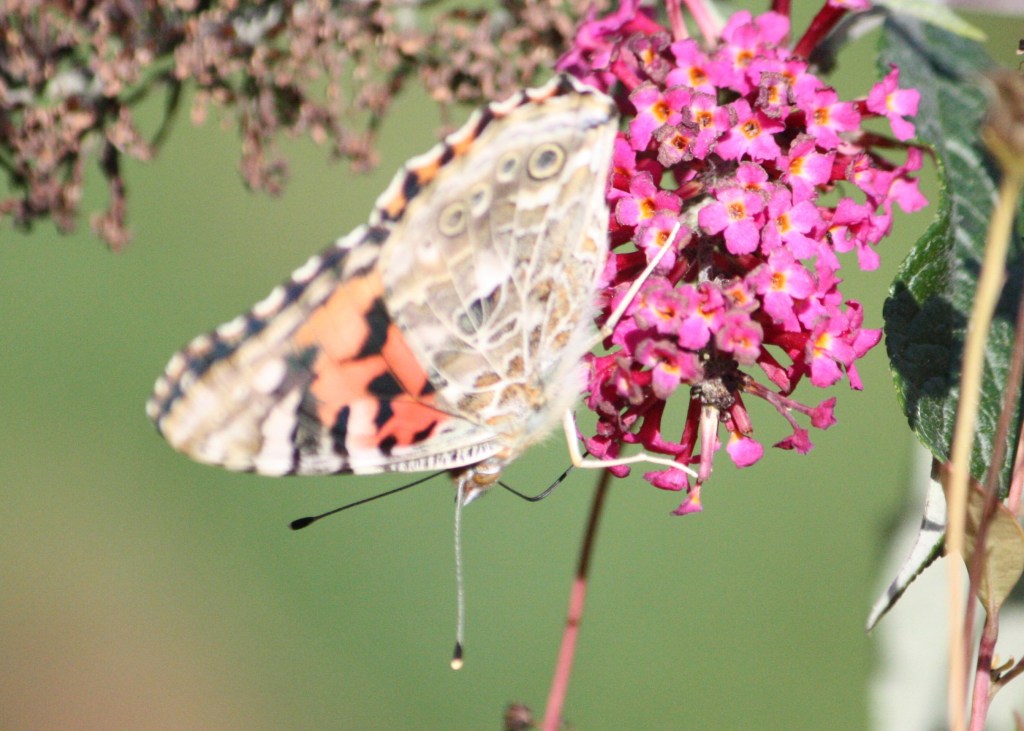
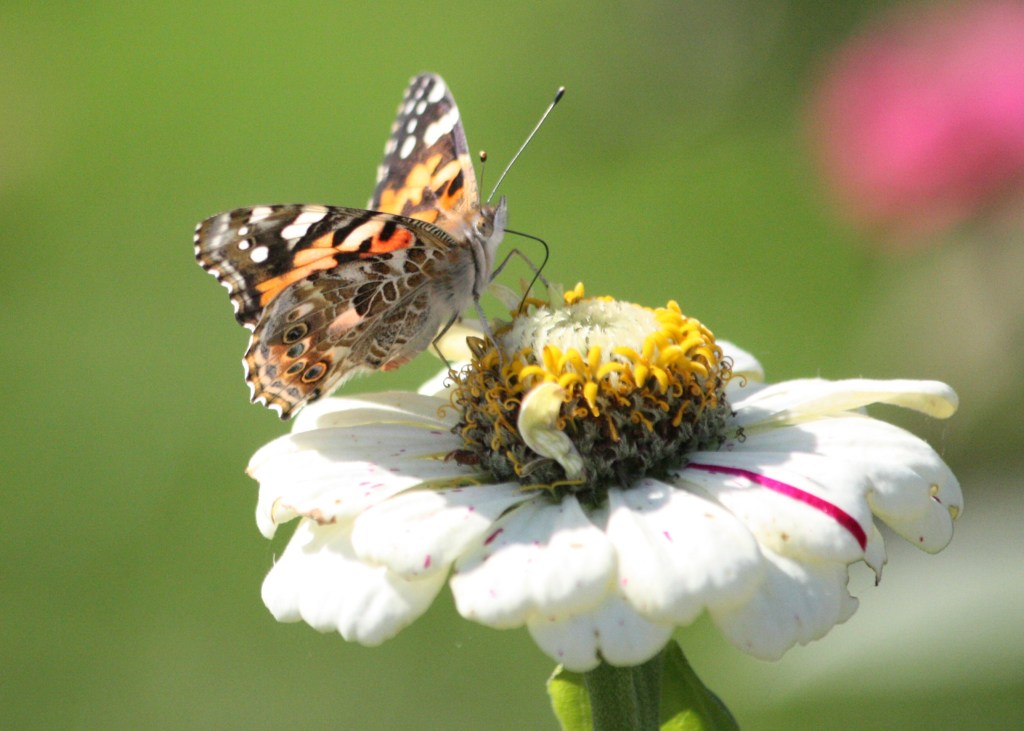
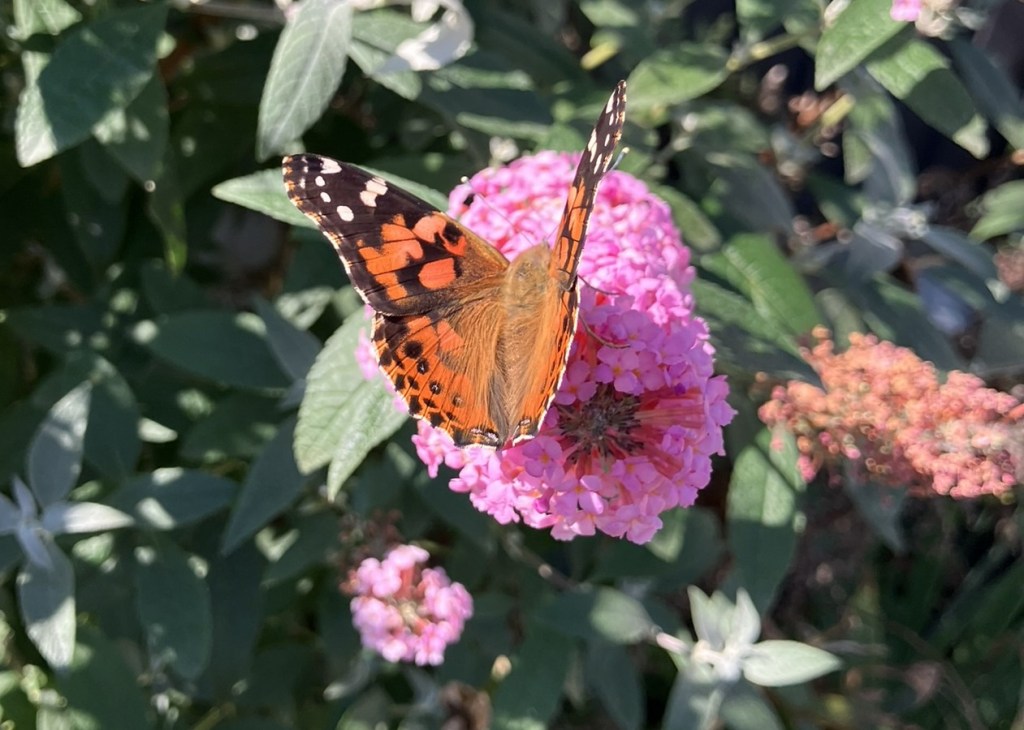
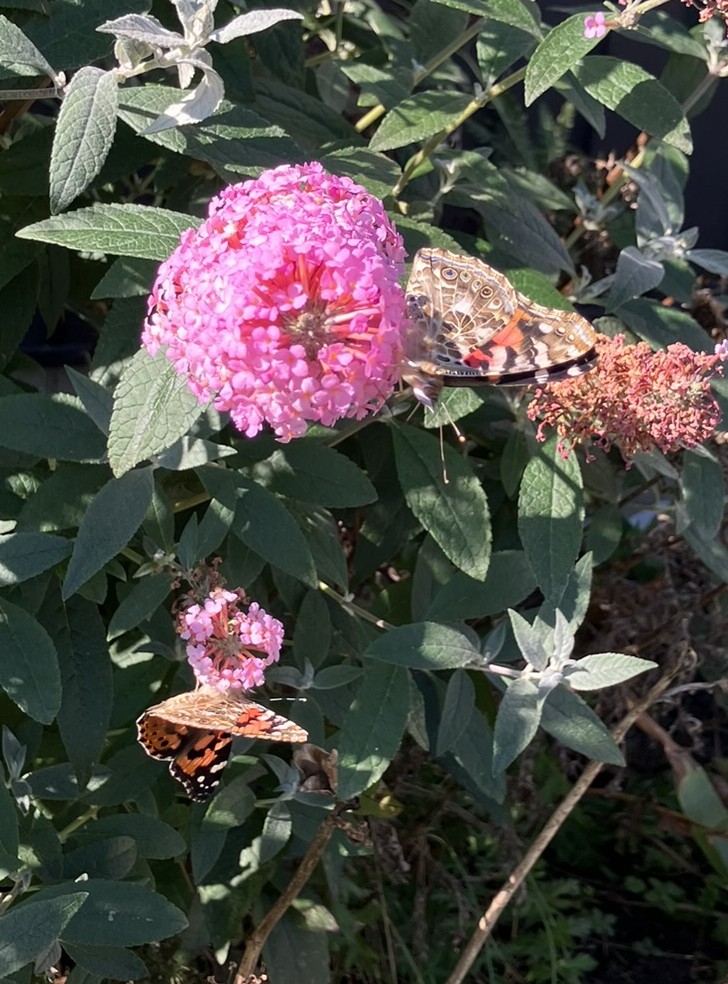
Despite the fact that we are closing in on the end of the month, the garden is still full of butterflies. If it’s sunny out (and it mostly has been) I’m pretty much guaranteed to see these guys fluttering around from flower to flower out front.
They are Painted Ladies, and sometimes there are even multiple of them…
But they are by no means the only butterflies still fluttering about.
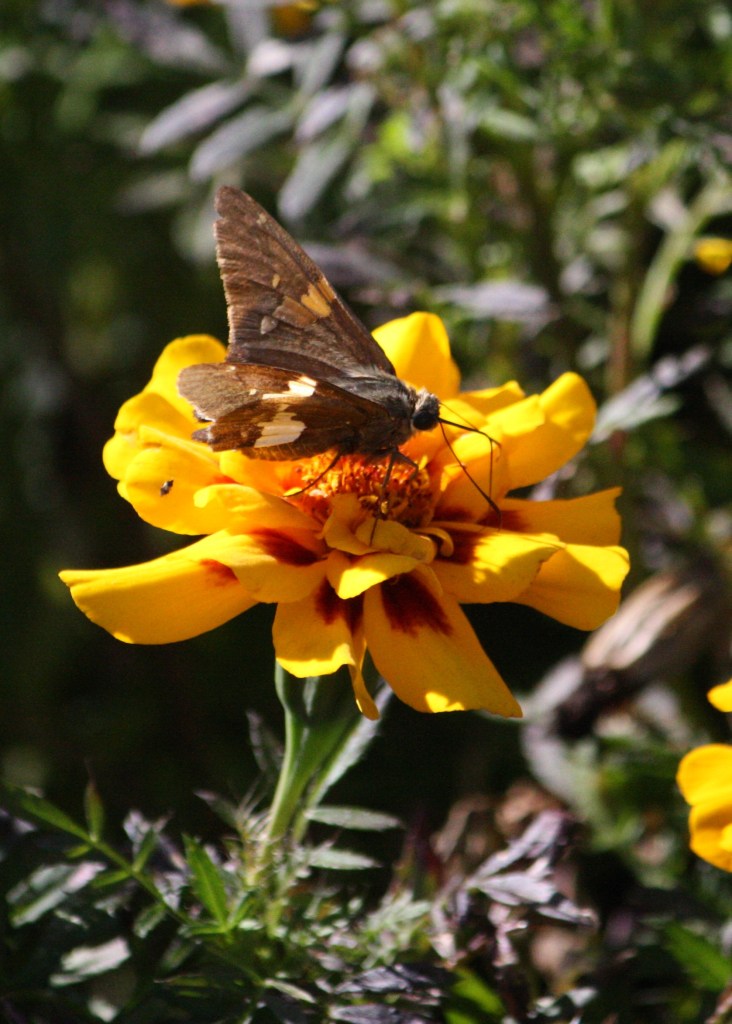
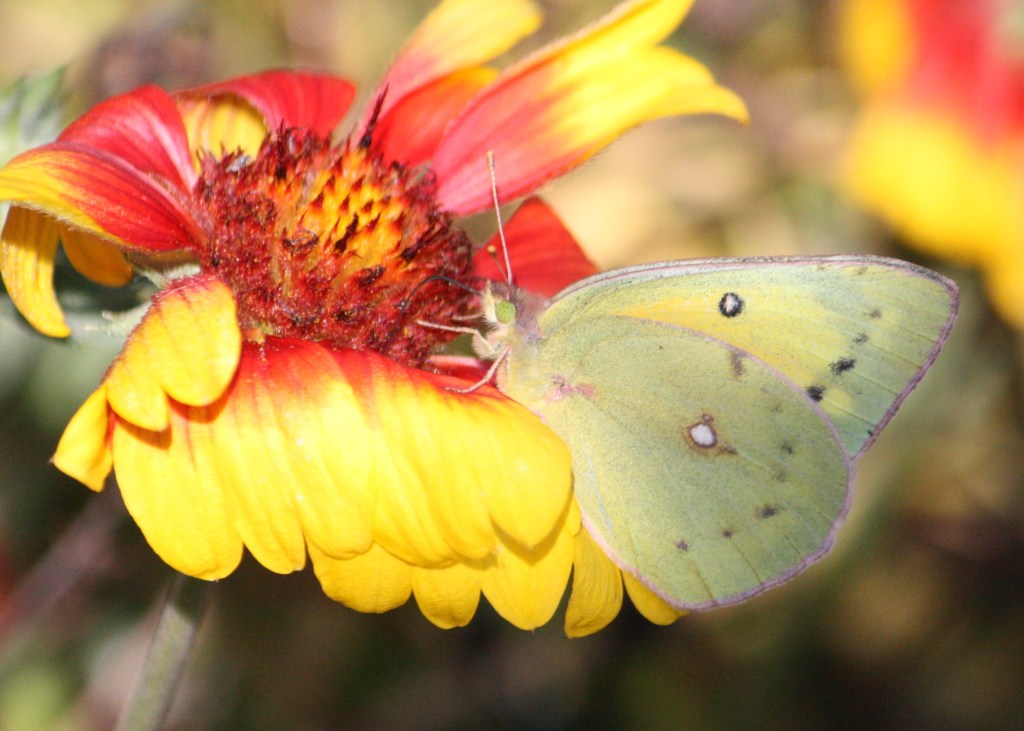
We’ve had…
Silver Spotted SKippers
Clouded Sulpher
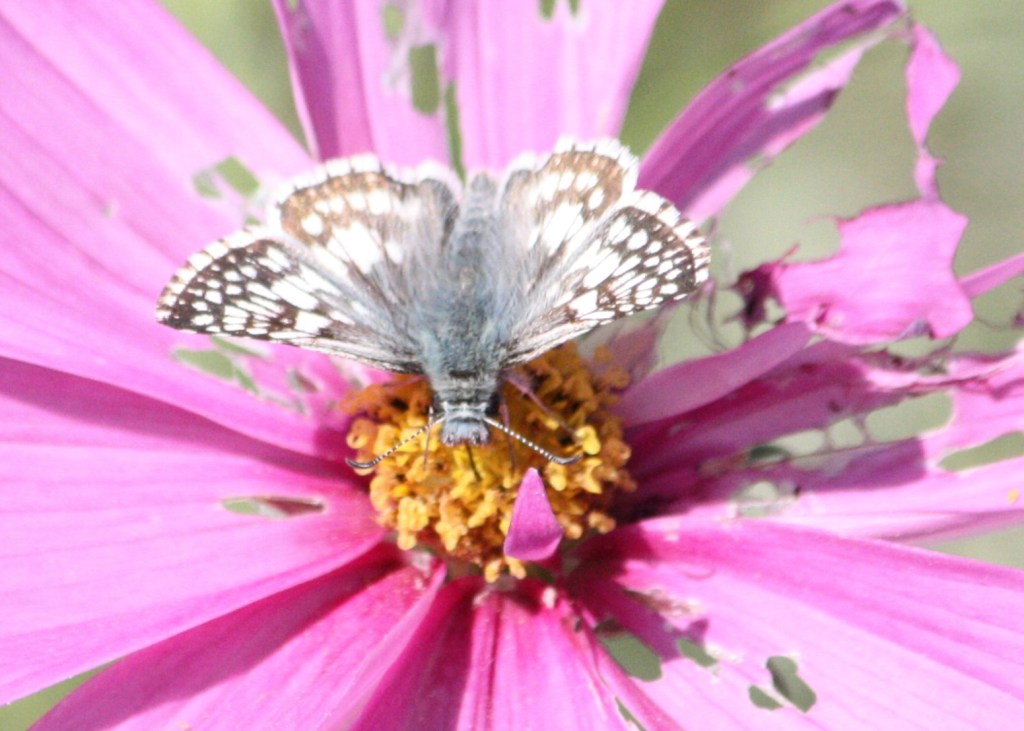
Common Checkered Skipper.
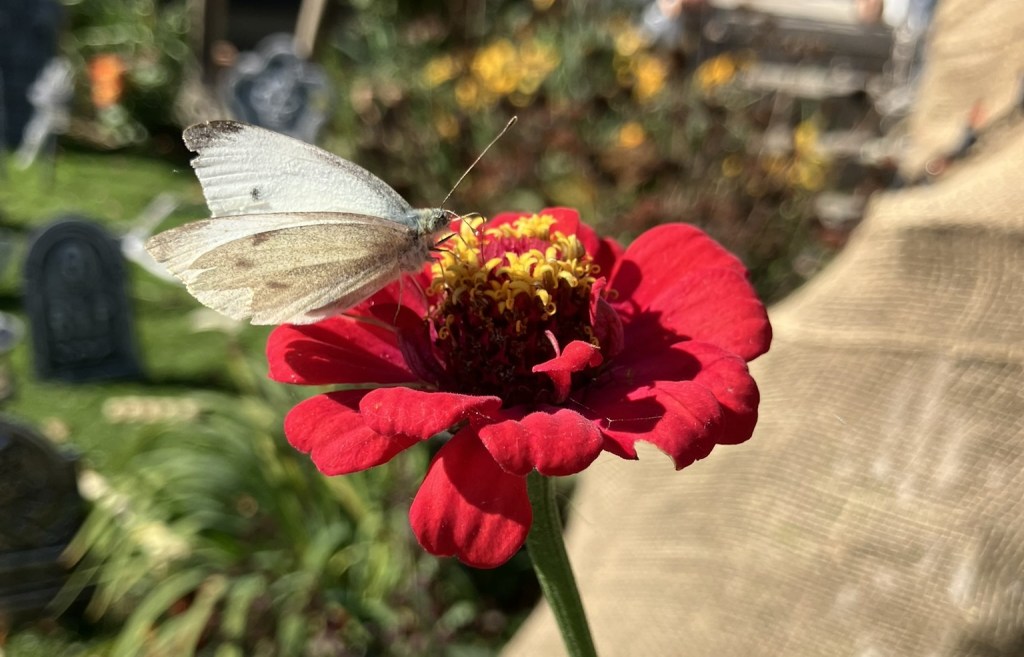
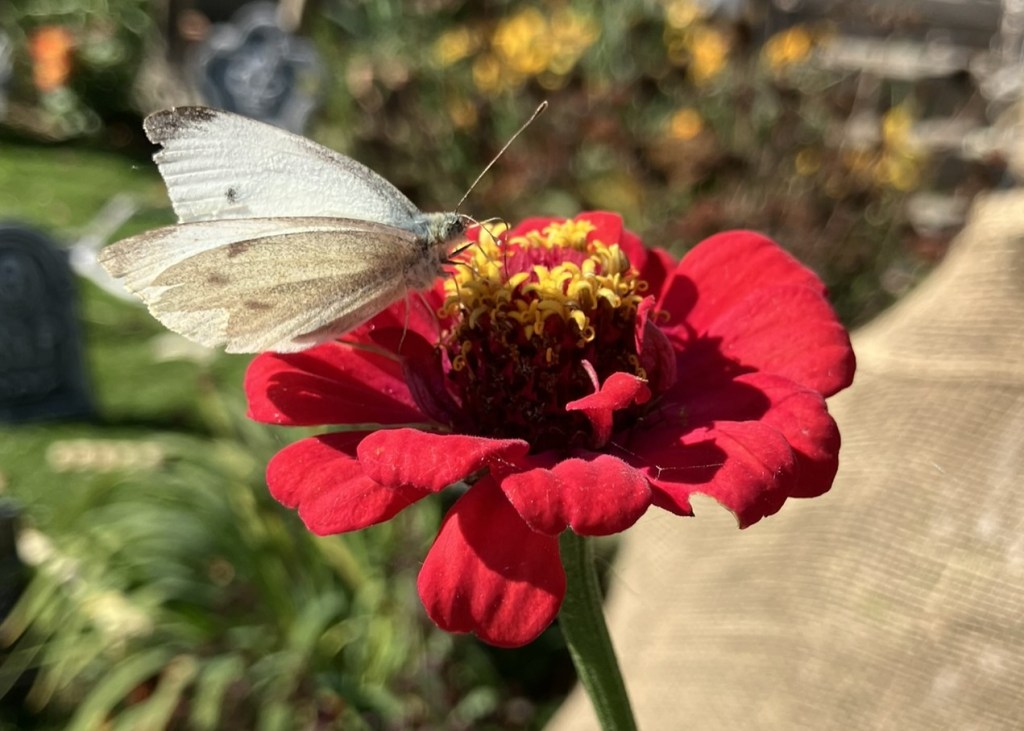
And, of course, our White Cabbage. These guys are one of the toughest butterflies out there! The first to show up and the last to leave!
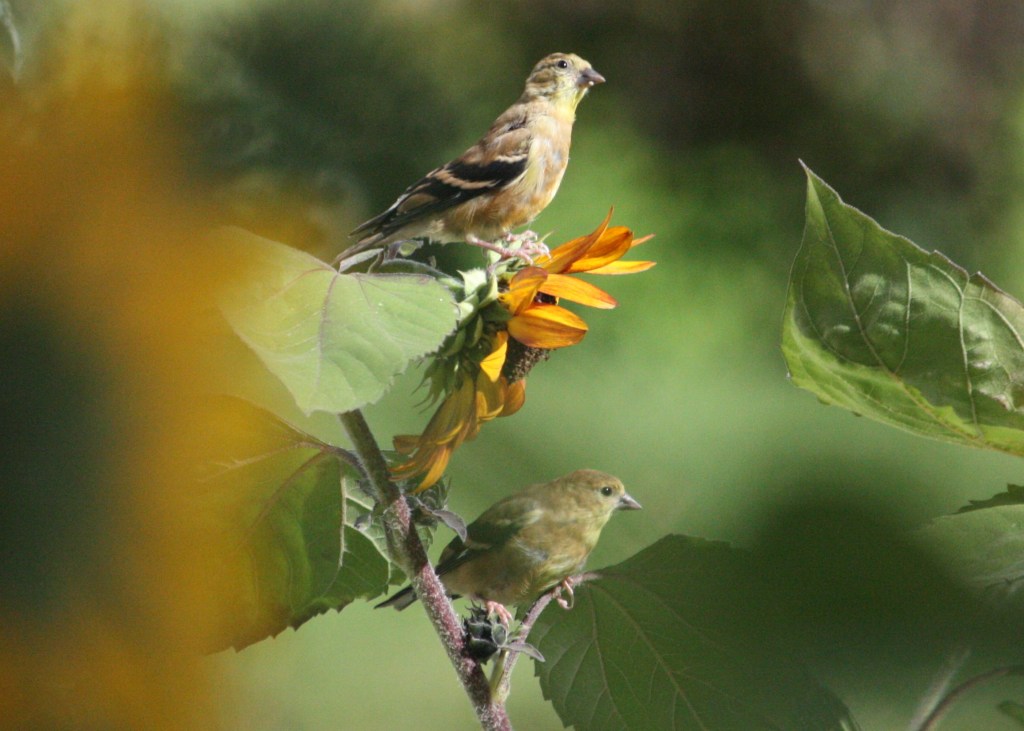
I had to get rid of the sunflowers out front to make way for the Garden of Bones, but there are still a few out back and the Goldfinches are enjoying them immensely.
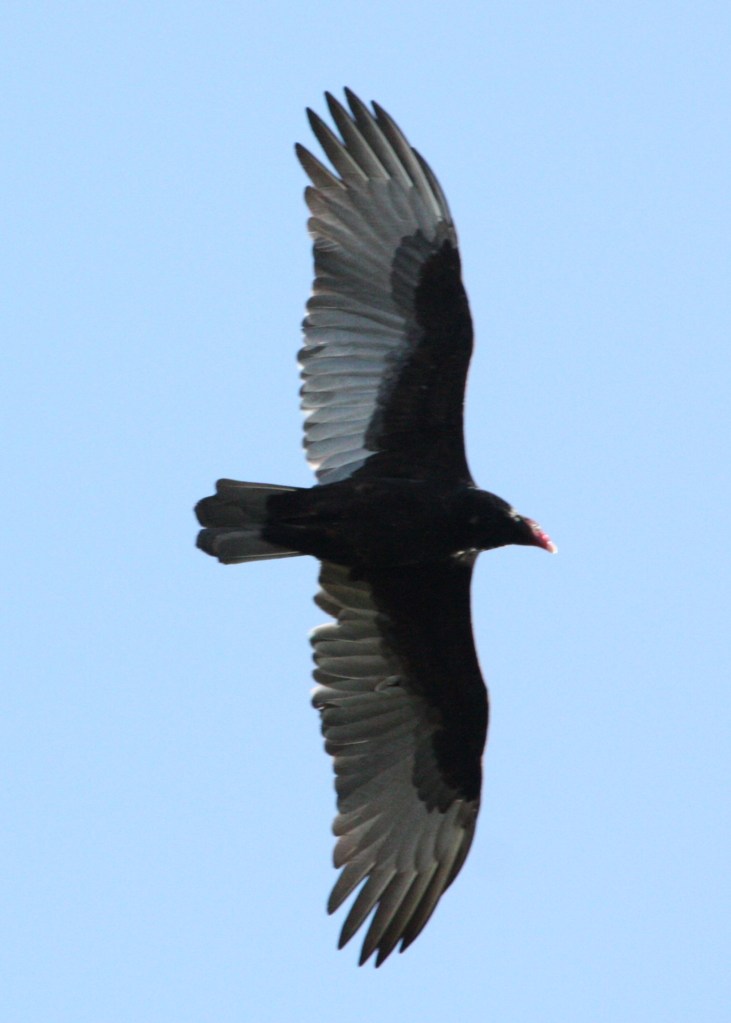
Turkey Vultures are a very common sight around here, but it’s rare when they fly low enough for my camera to capture them. They often circle over the house – we are just a couple blocks from a big grain operation that they seem to like to hang out around.
A lot of people don’t realize, but they are actually migratory birds – so in another week or so they will all be gone south. We’ll start seeing them again in late March.
These guys though… they stick around all year. They know I put out the good stuff for them all winter long!
I didn’t get all my garden jobs done while I was off on vacation, so I was back out there yesterday. There were two things I needed to accomplish.
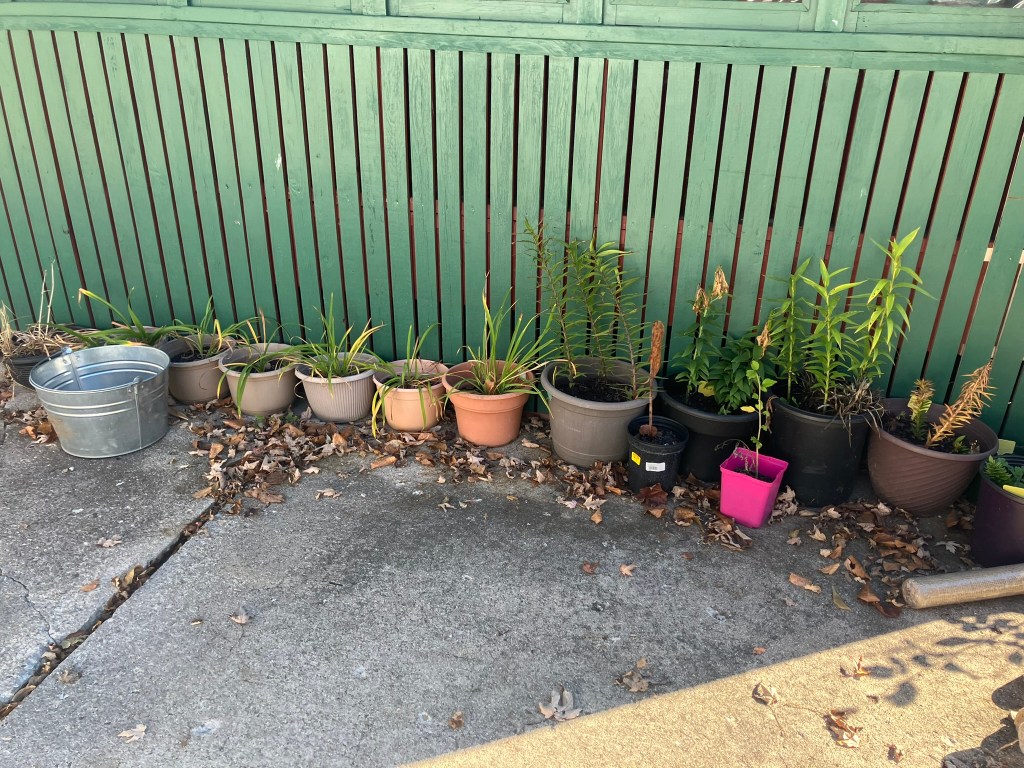
The first was getting all the daylilies and lilies I had in pots into the ground so they could get some roots down before winter.
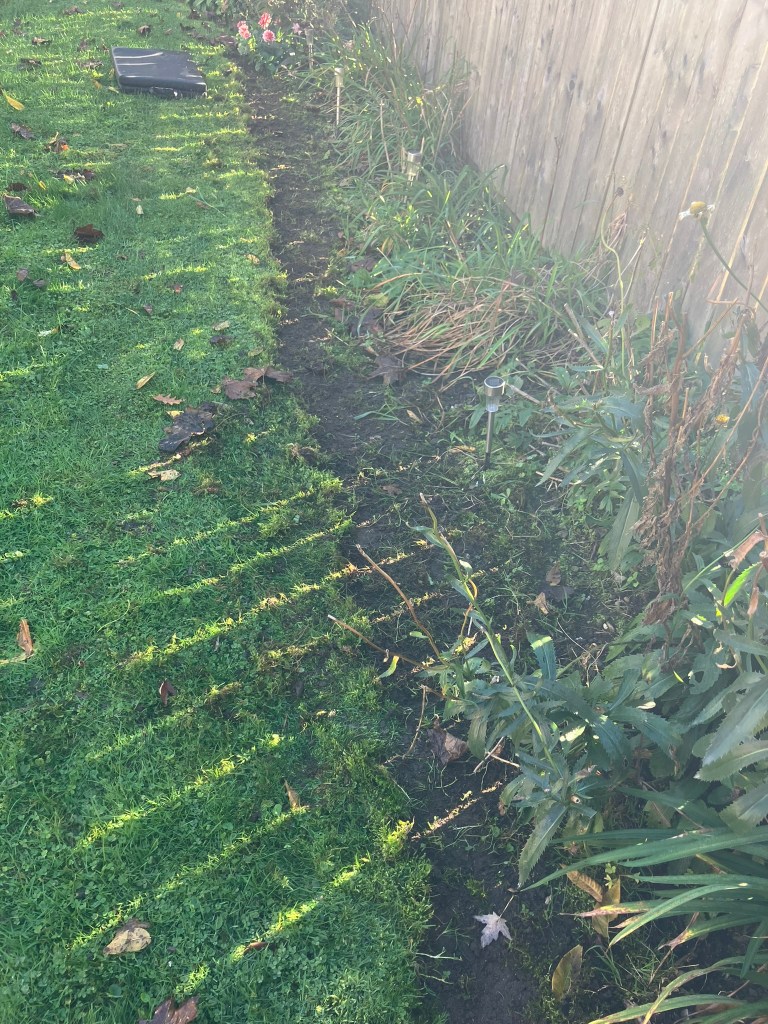
To do that, I needed to widen the fence border.
It doesn’t look like much but it’s about six inches wider than it was. It gave me enough room to shift a few things around, and get all those plants in.
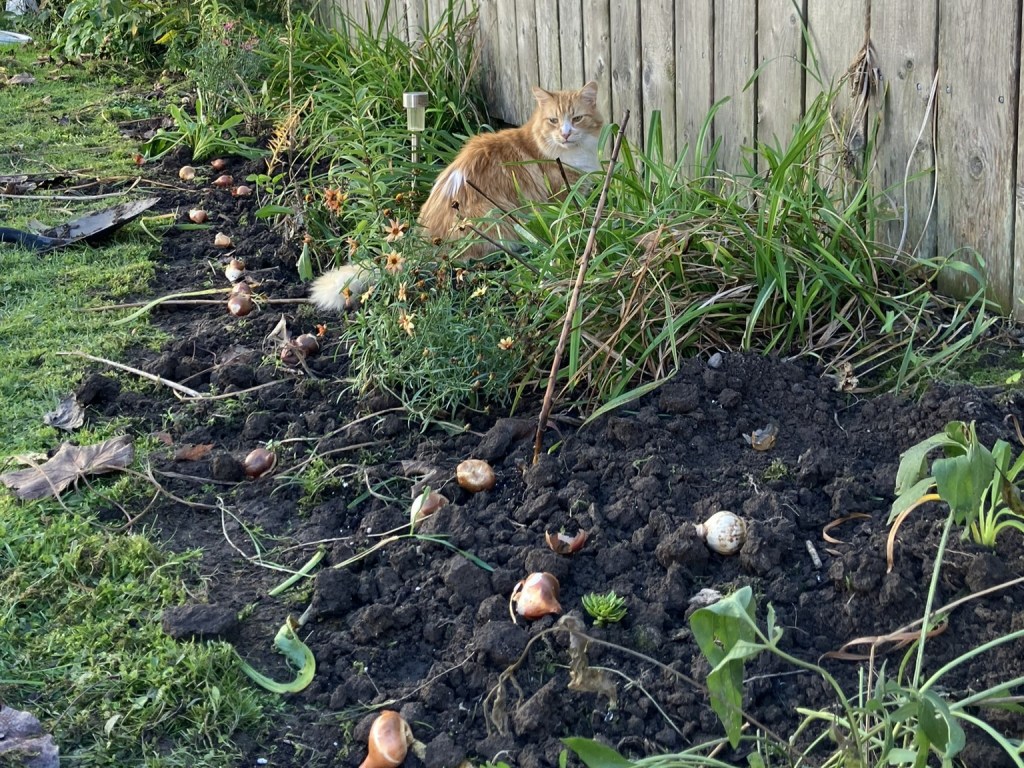
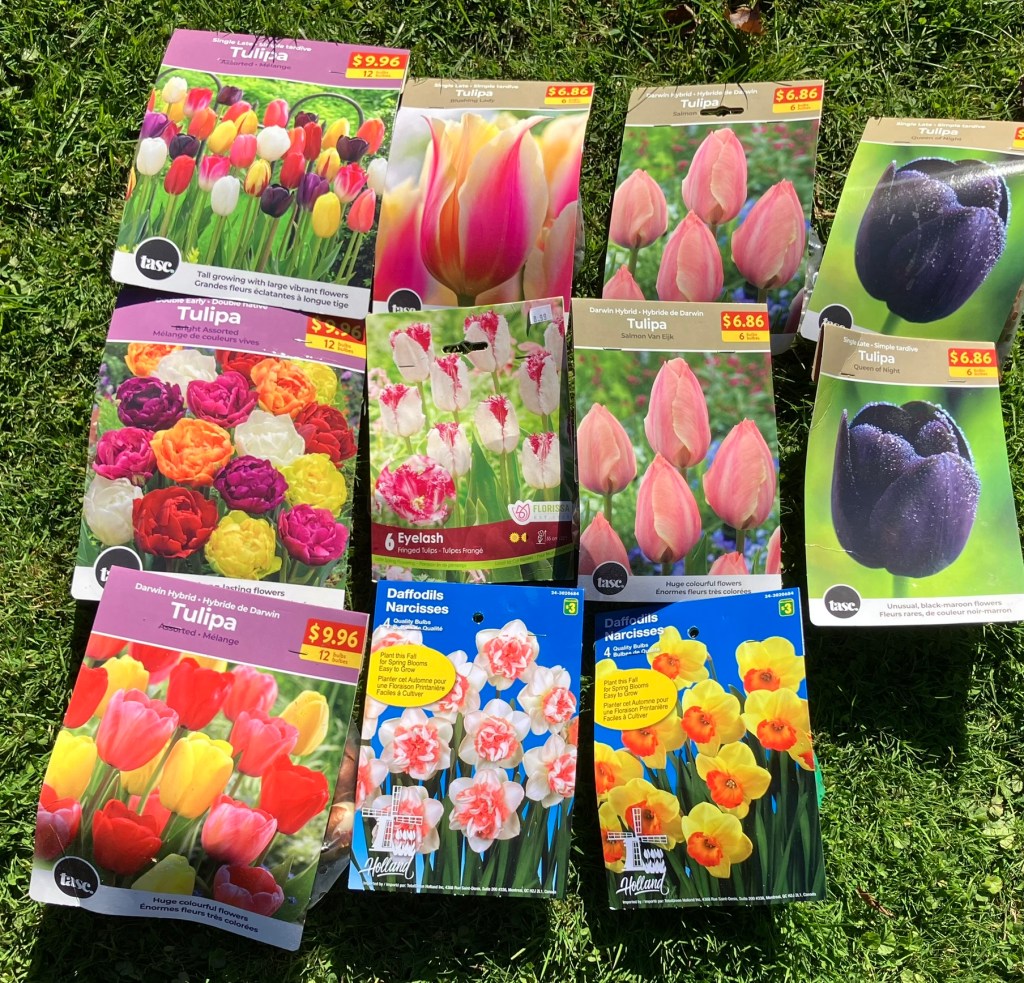
Furby and I added a pile of tulips and a few daffodils. There wasn’t much spring colour in that border…
But that’s all going to change Spring 2027. (I also planted a few out front, along with some more snowdrops).
The second thing I needed to do was get the garlic in the ground.
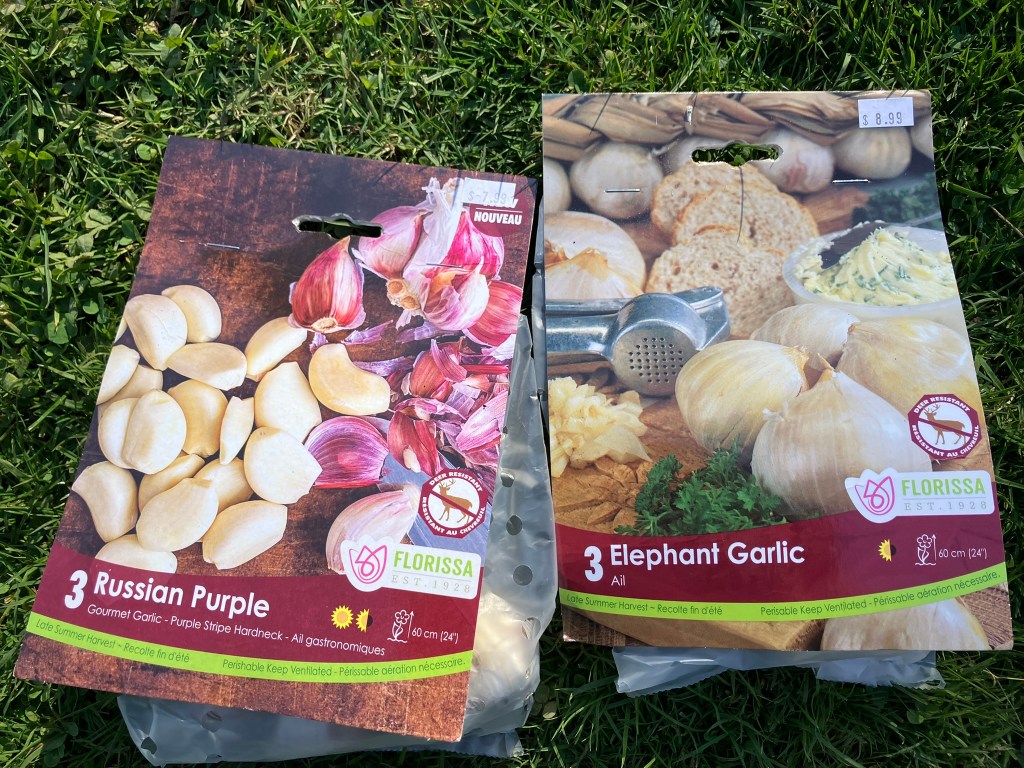
I’m trying a new type this year. Normally I go with “Music” but instead I picked out this Russian Purple (Though I did plant some Music from the stuff I grew this year as well.).
I also got another pack of Elephant Garlic. I only got the one bulb this summer (and it wasn’t that big), but that was enough to make me want to try again!
I still need to wrap some roses, and get my dahlias dug up… but the 2026 garden season is quickly coming to a close.
While most of our days have been nice and warm and sunny, the nights are downright frosty. I’m fighting the urge to turn the furnace on (I try to hold out to November each year). There’s even been the soft glisten of frost on the yard in the morning.
But it hasn’t been hard enough to knock the gardens down yet.
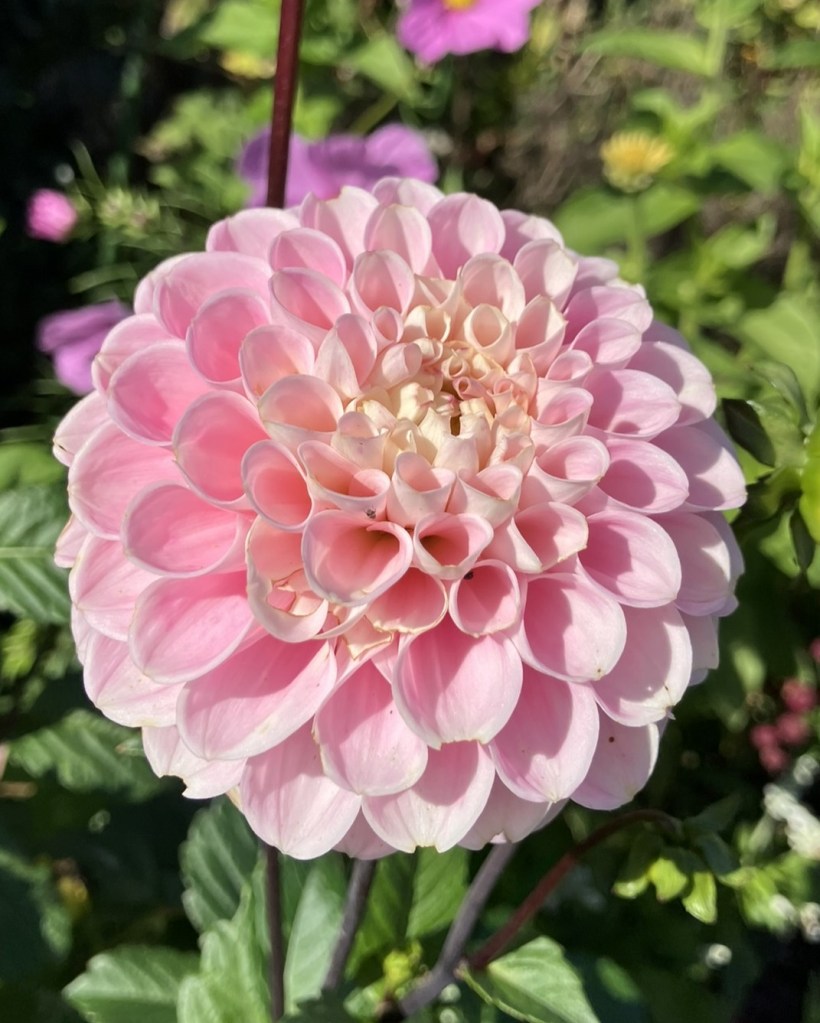
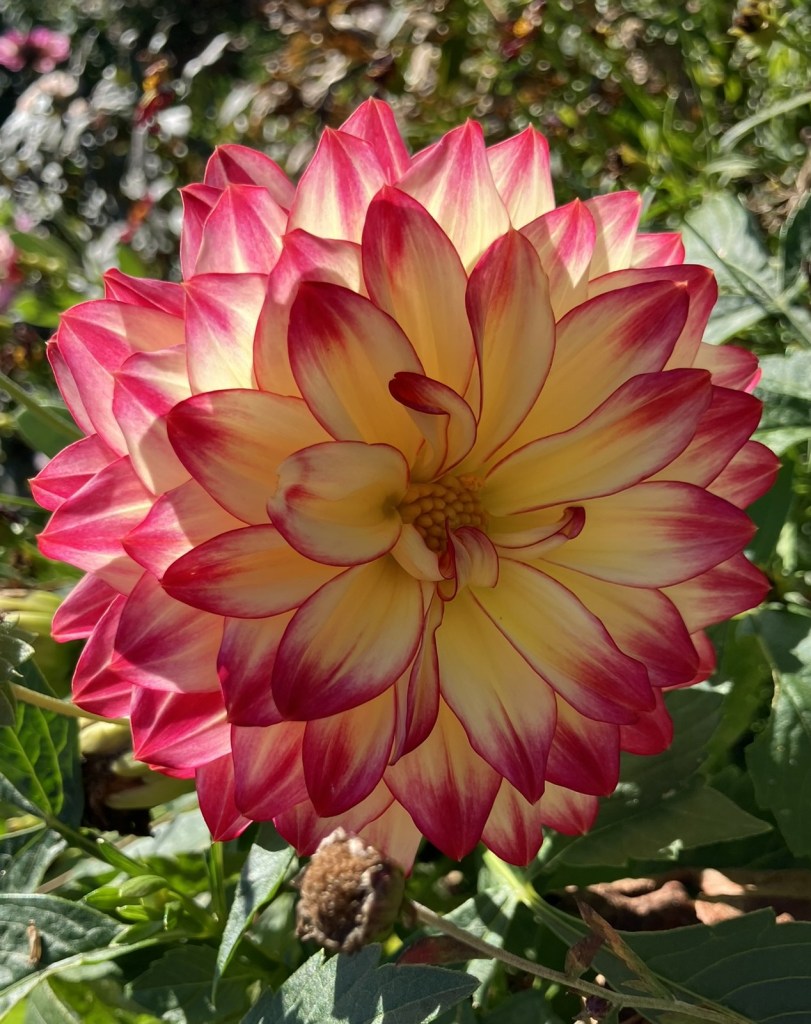
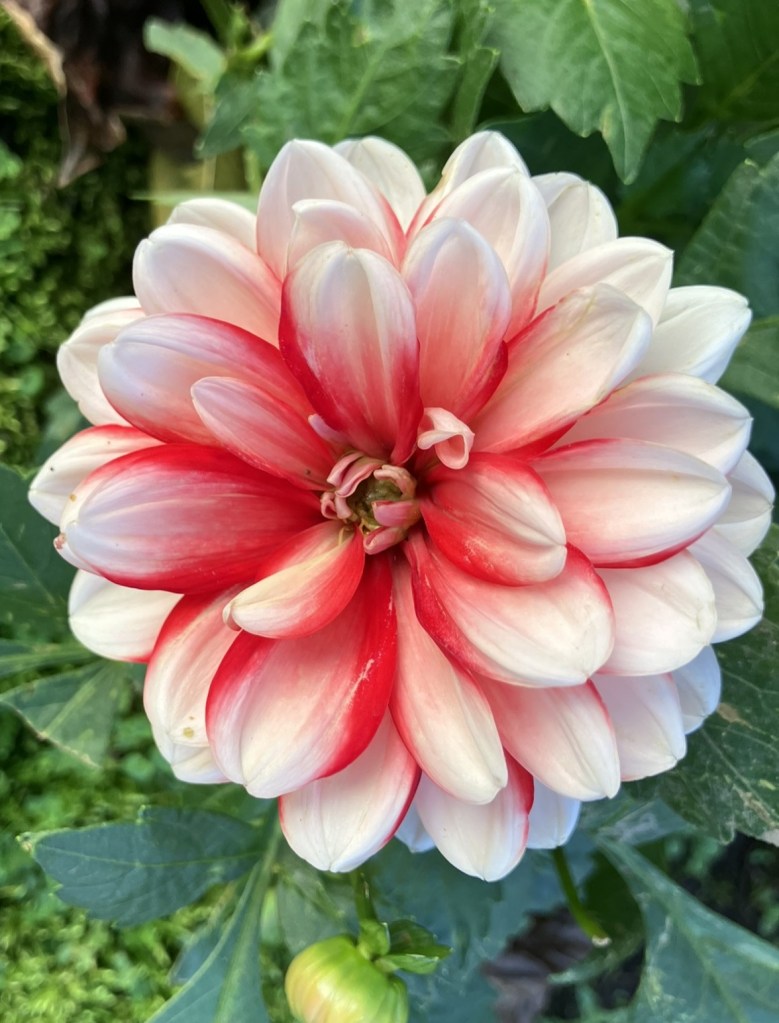
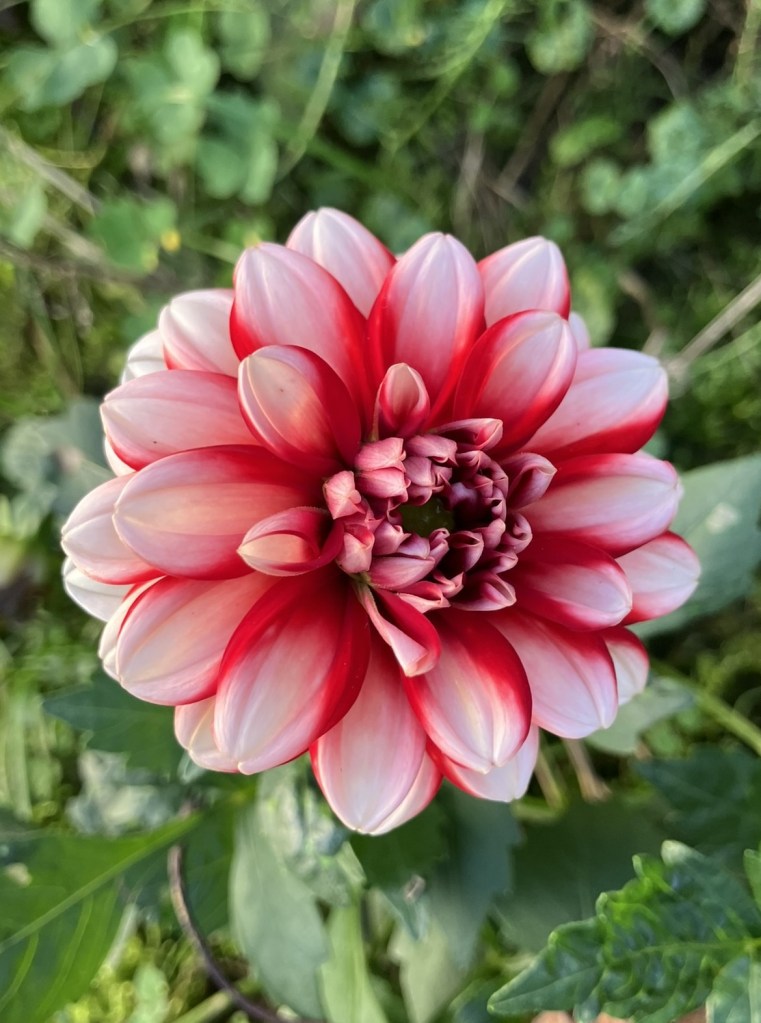
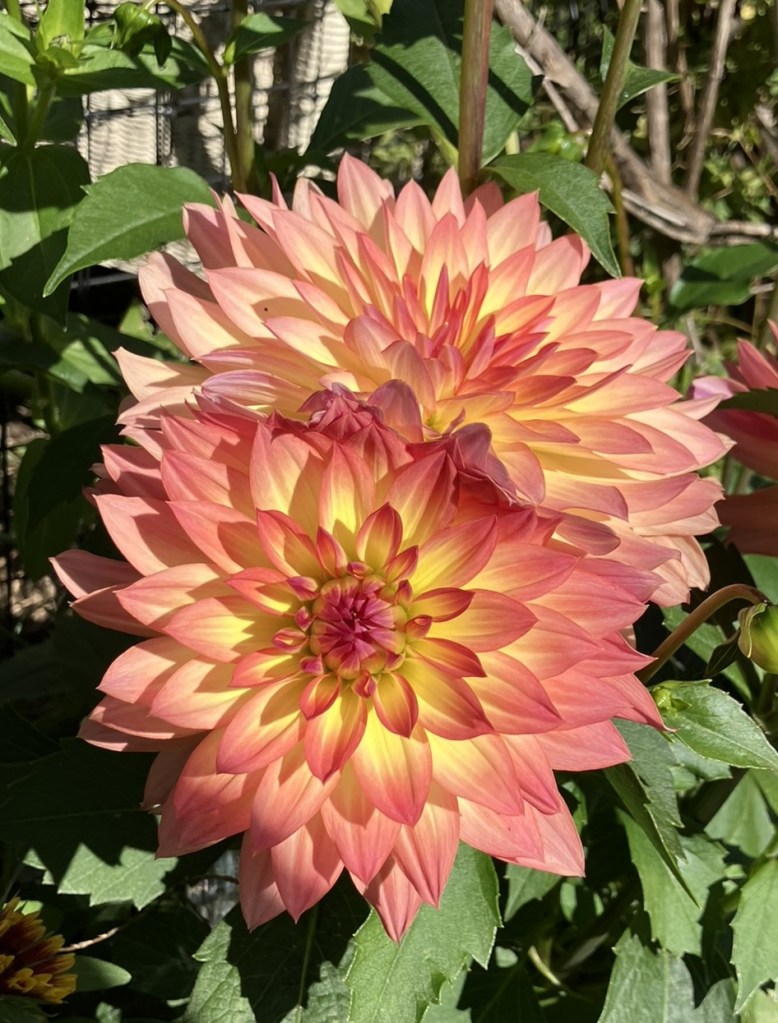
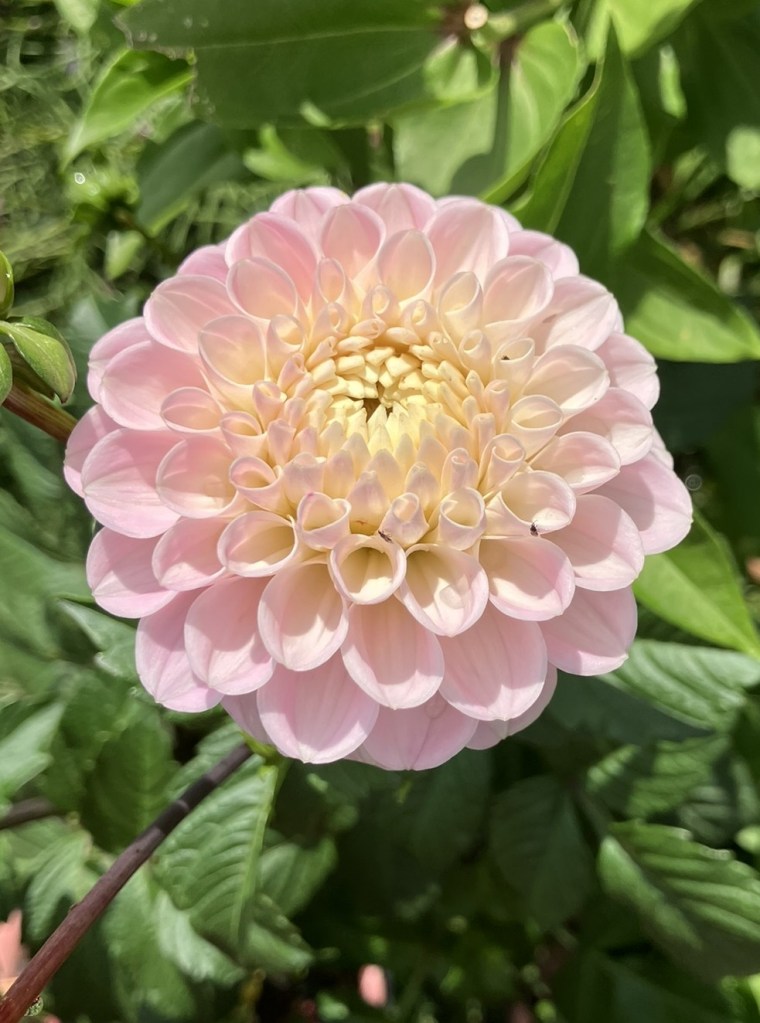
The Dahlias are just stunning. Which I love… but… I also need to get them dug up!!! That’s hard to do when they are still blooming.
I need to work on getting them to bloom a little earlier so I can enjoy them longer. The ones I bought from the garden centres did that just fine – but the ones I started myself didn’t start blooming until late September.
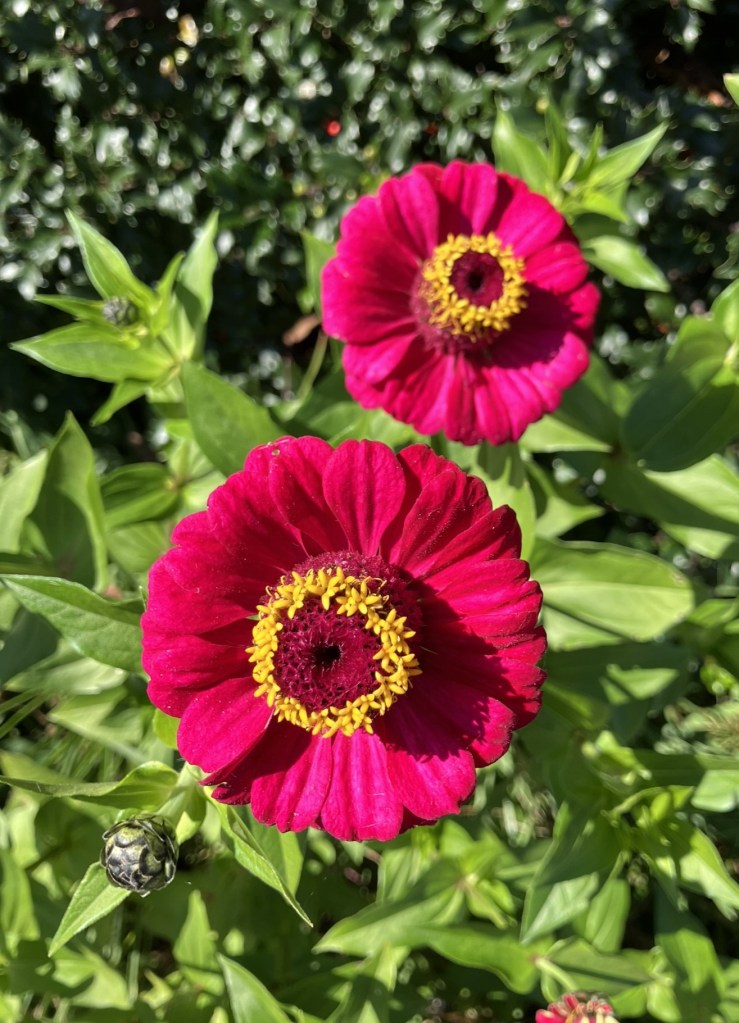
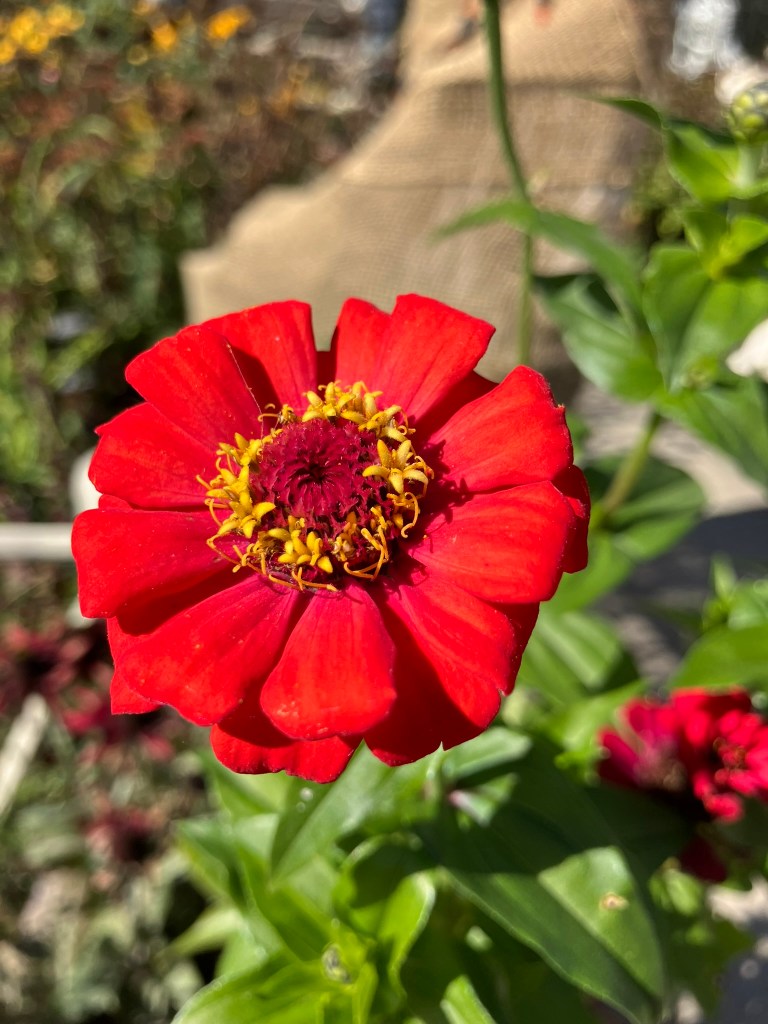
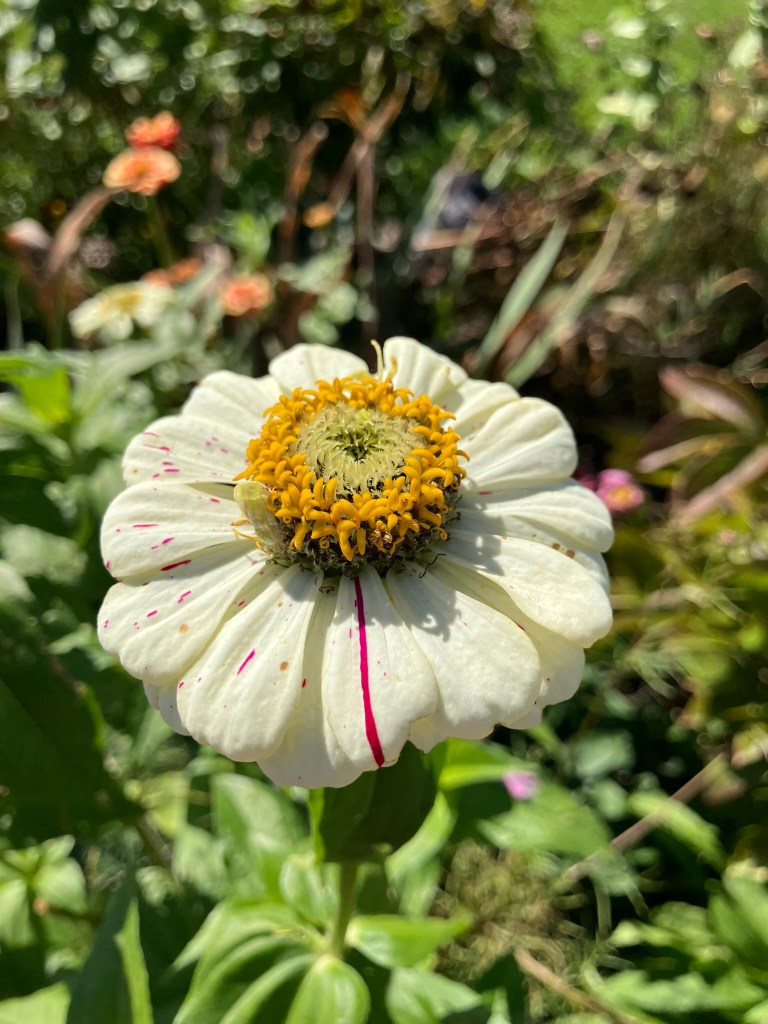
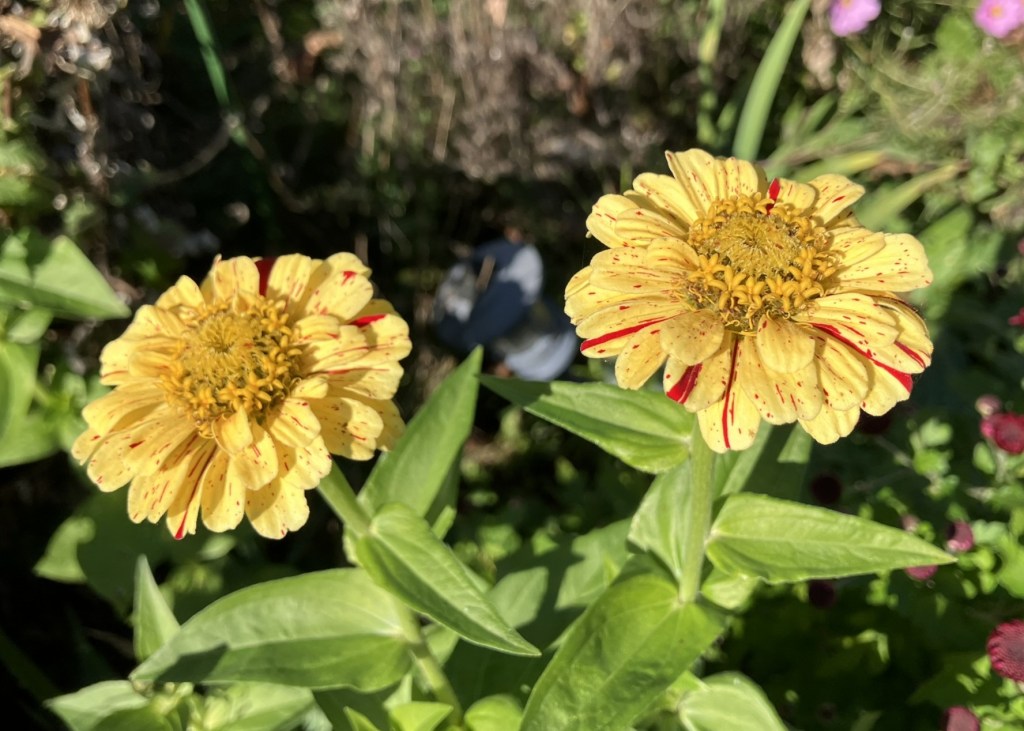
The Zinnias have been an absolute blessing for the pollinators that are still coming out when the sun is shining.
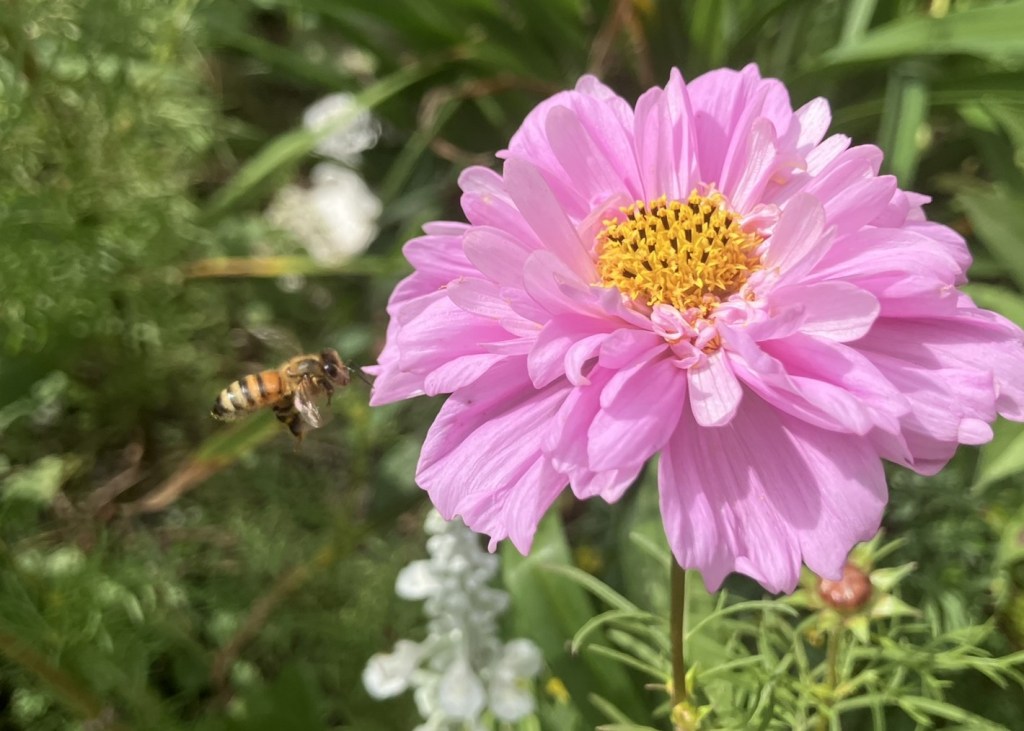
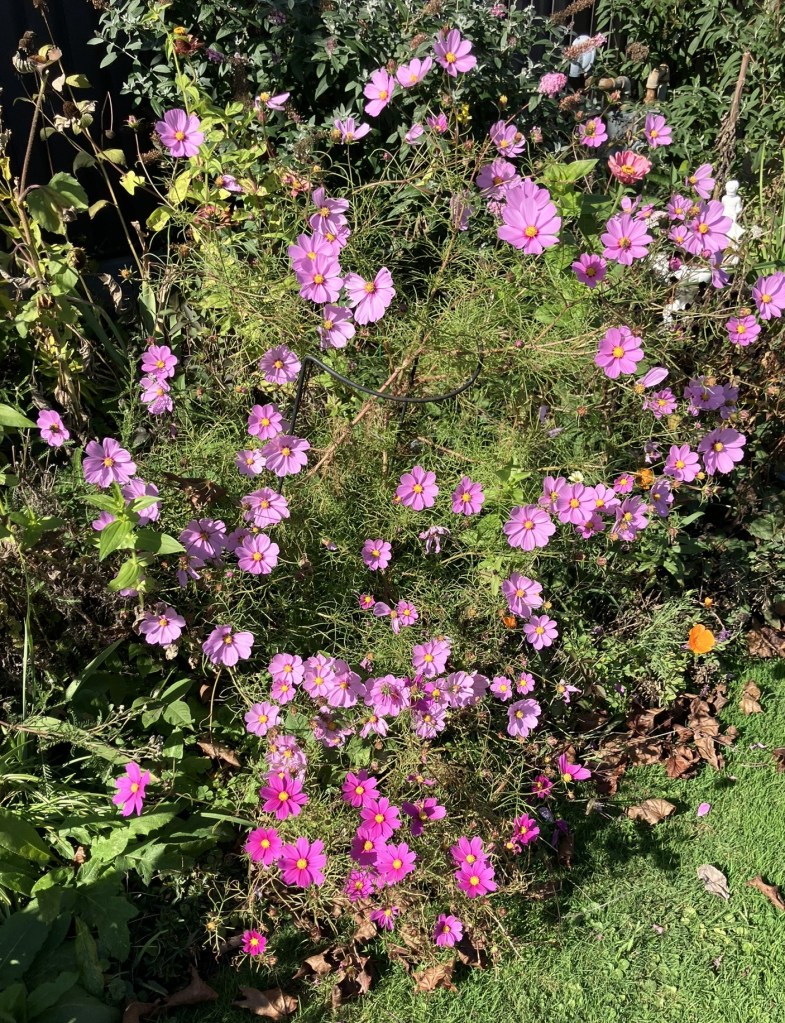
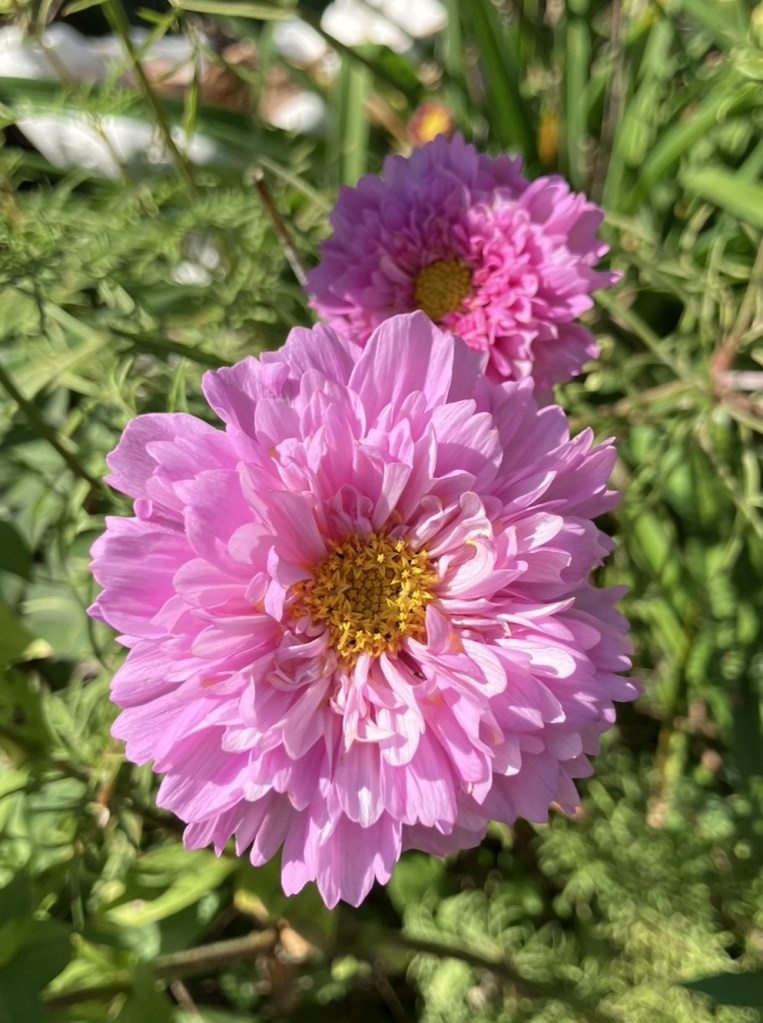
Same with the Cosmos
I absolutely adore these double bloom cosmos and so do the Honey Bees.
But we don’t discriminate and welcome all Cosmos to our gardens!
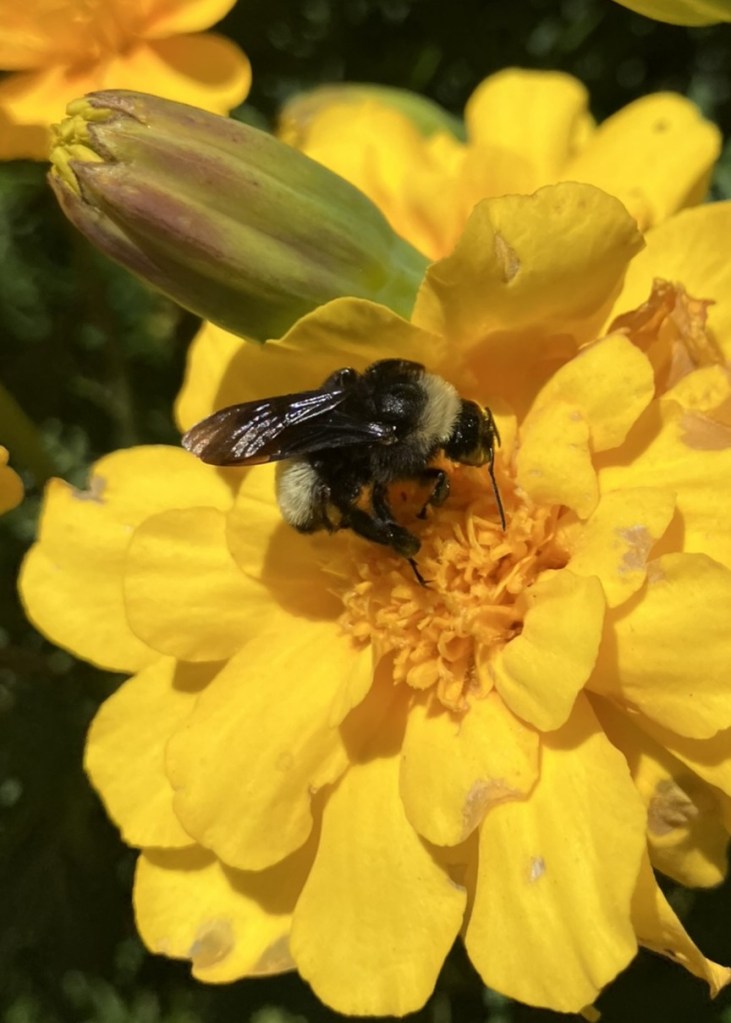
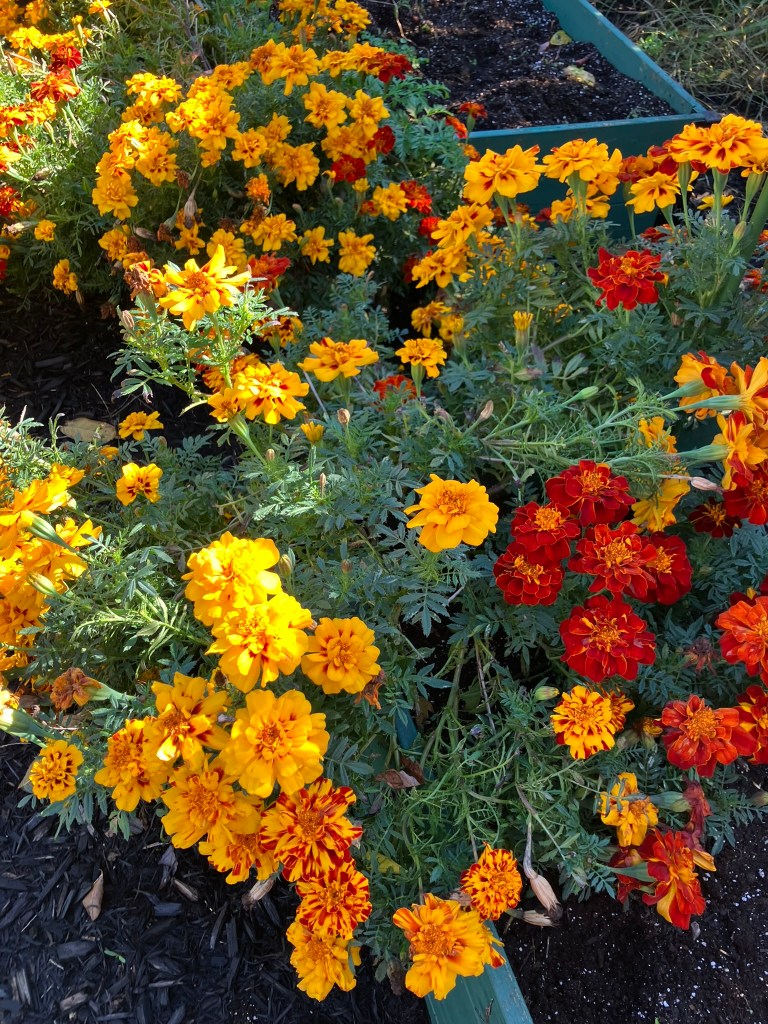
The marigolds are also doing their part in the late-season pollinator buffet
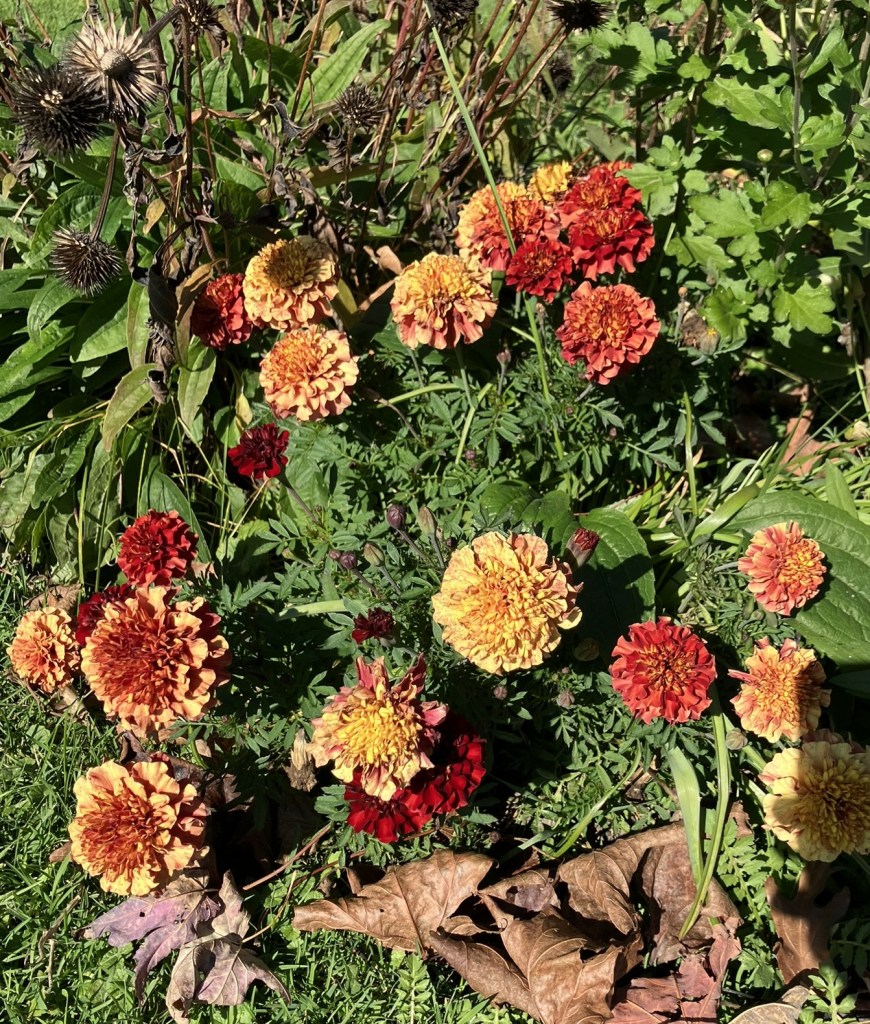
Most of the marigolds are in the vegs beds, but I also have clumps of the Strawberry Blonde Marigolds (right) throughout the beds in front. And they are officially my favourite marigolds! I started them from seed – and planned to save some seed from these to plant again. But I’ve since learned, they probably won’t come true from seed if I do that… so I will have to buy new seed in the spring. But I think it’s worth it!
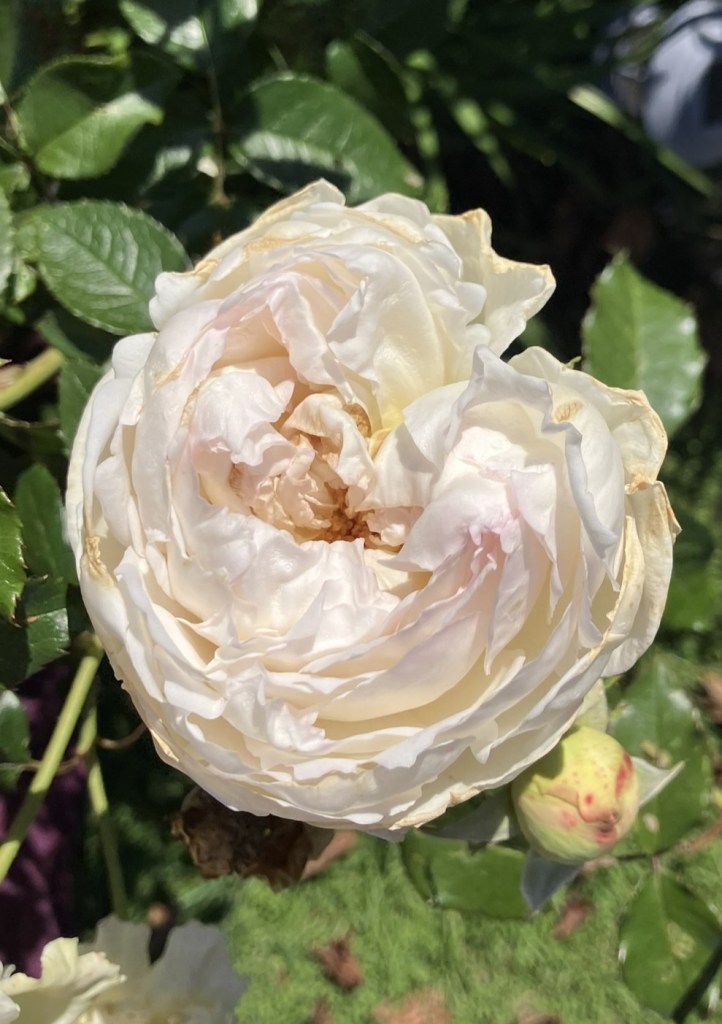
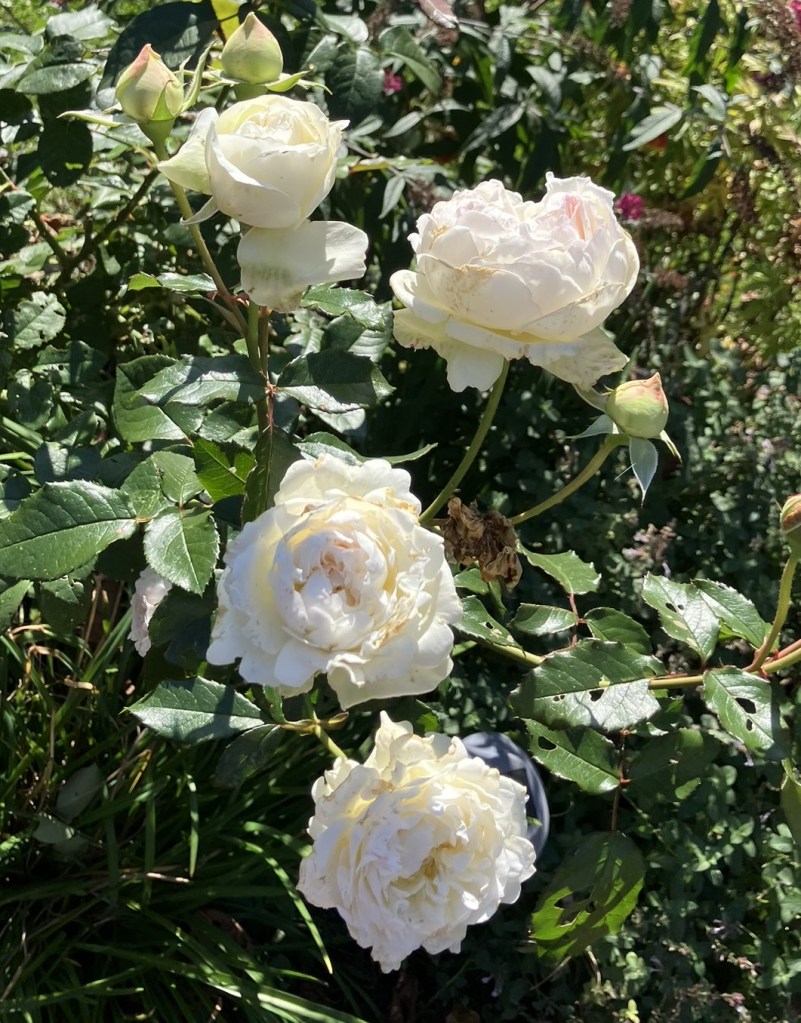
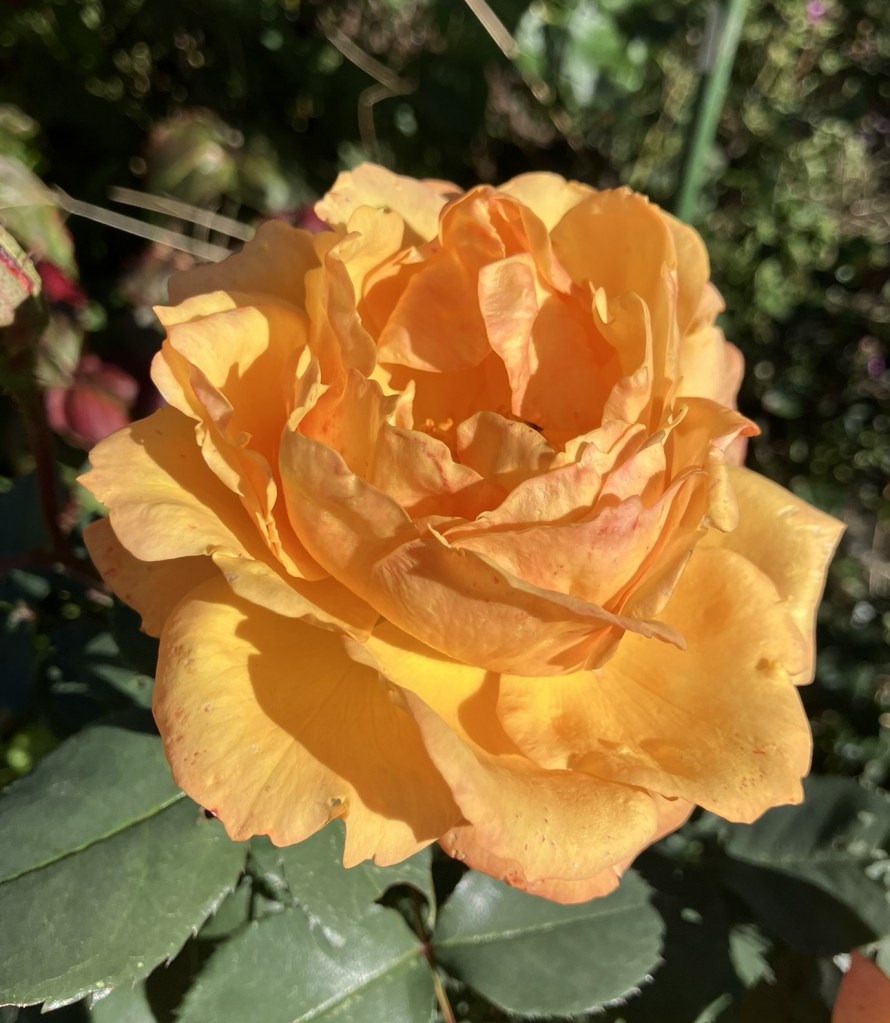
I’ve wrapped most of the roses in burlap (something new I’m trying this year) But Bolero (left and middle) and Good as Gold are still blooming, so I’ll wrap them in another week or two. It would be a shame to cover up all that beauty.
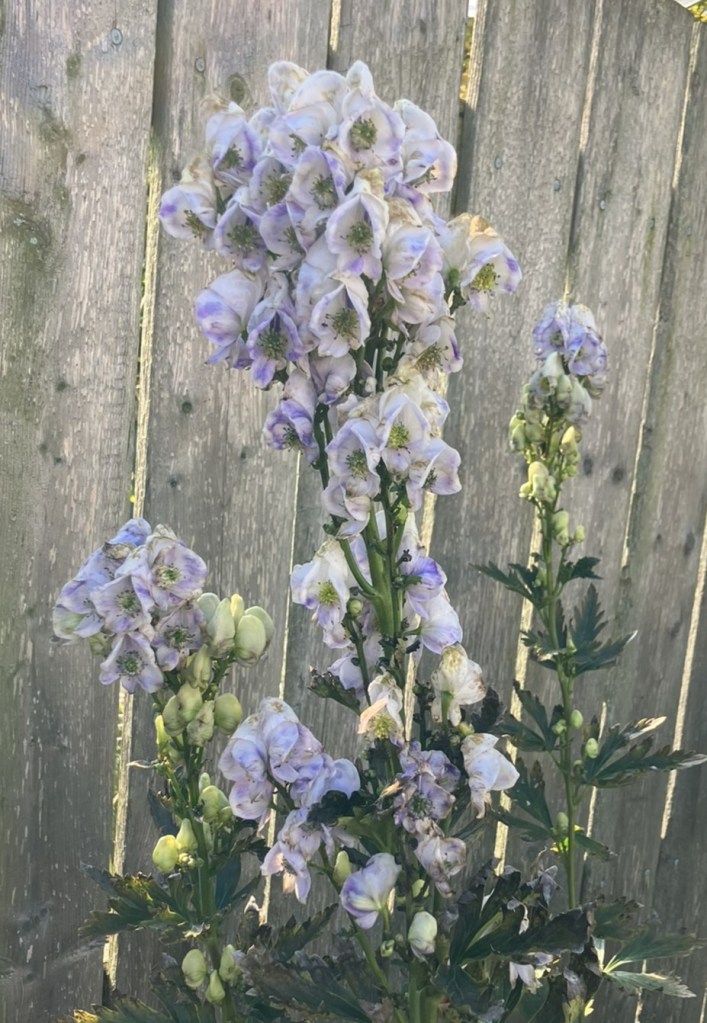
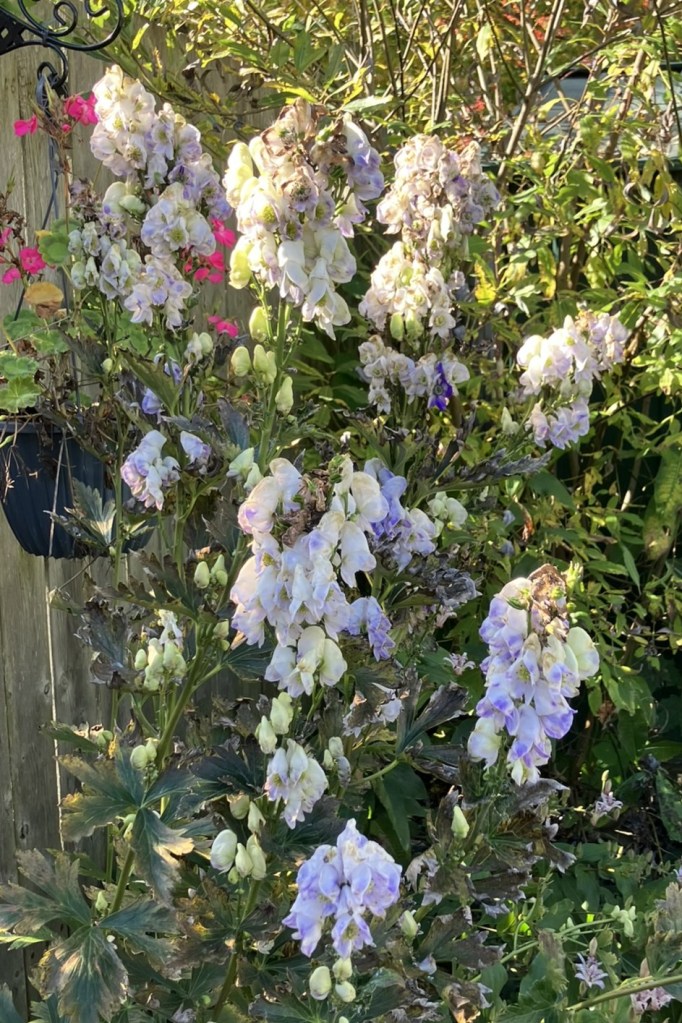
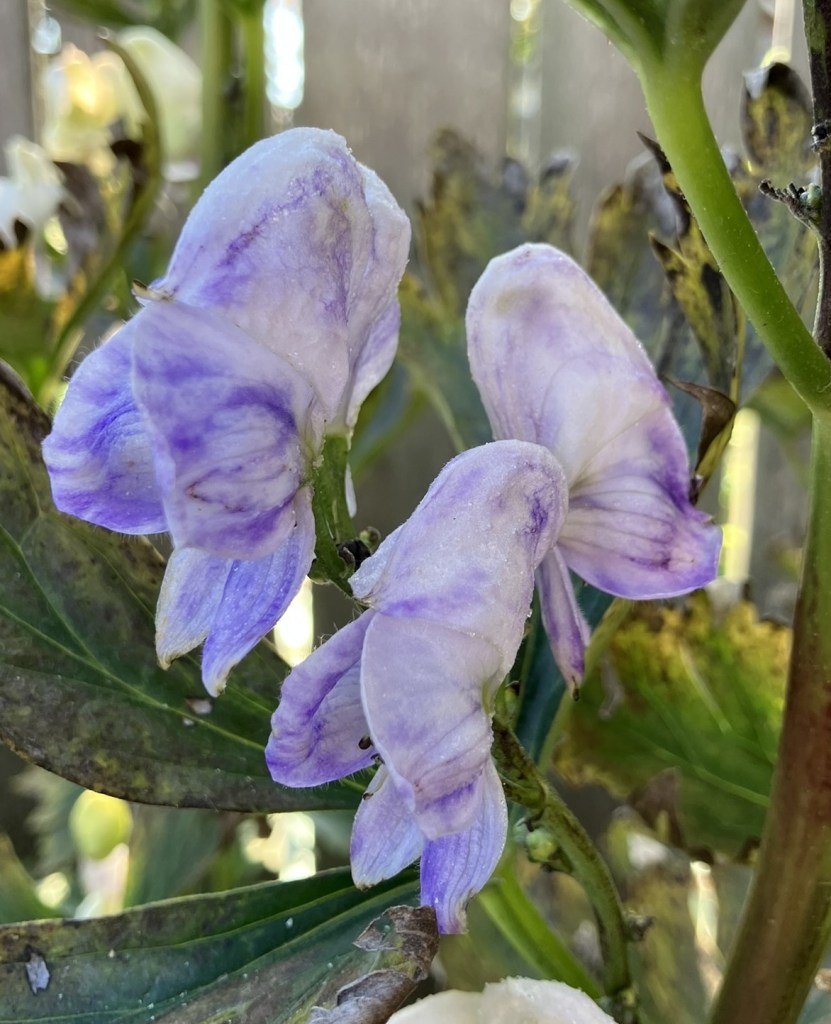
The Bicolour Monkshood is always one of the last flowers to bloom – but it’s well worth the wait. Just look at those masses of flowers. This is the best year for it yet. I tried to start some solid purple Monkshood, but it didn’t make it. But seeing this makes me really want to try again.
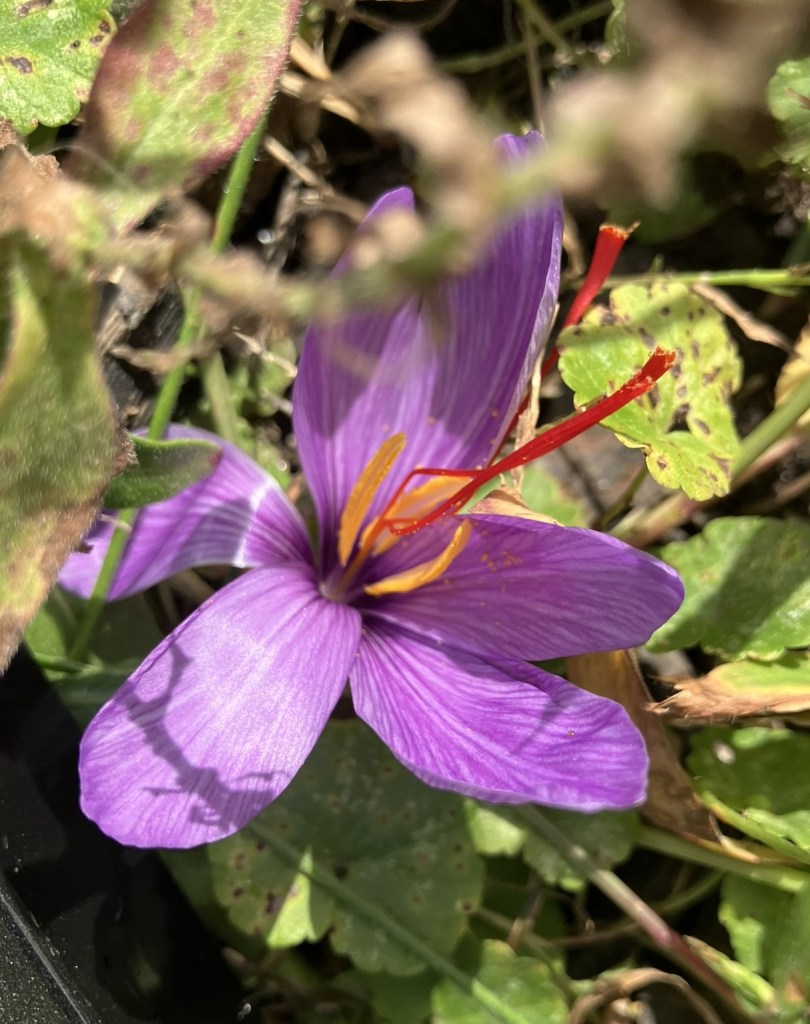
And last, I leave you with a little spicy discovery I made while putting up the giant skelly. Tucked among the fading autumn foliage, I discovered a beautiful Saffron Crocus (Crocus sativus)… except I never planted any! My best guess? A sneaky little saffron bulb must have hitched a ride in a bag of giant crocus bulbs I planted last year.
Unlike giant crocuses, which bloom in spring, Saffron crocuses bloom in autumn and produce something rather extraordinary: the world’s most expensive spice! Those brilliant red threads you see extending from the centre of the flower are the stigmas, and they’re the part harvested to make saffron. Each flower produces just three, which must be carefully picked and dried by hand. It takes roughly 150–200 flowers to produce a single gram of dried saffron!
So.. I’m not sitting on a Saffron Fortune.. but it’s a wonderful little discovery none-the-less!
I forgot to share one very important part of our Halloween set up!
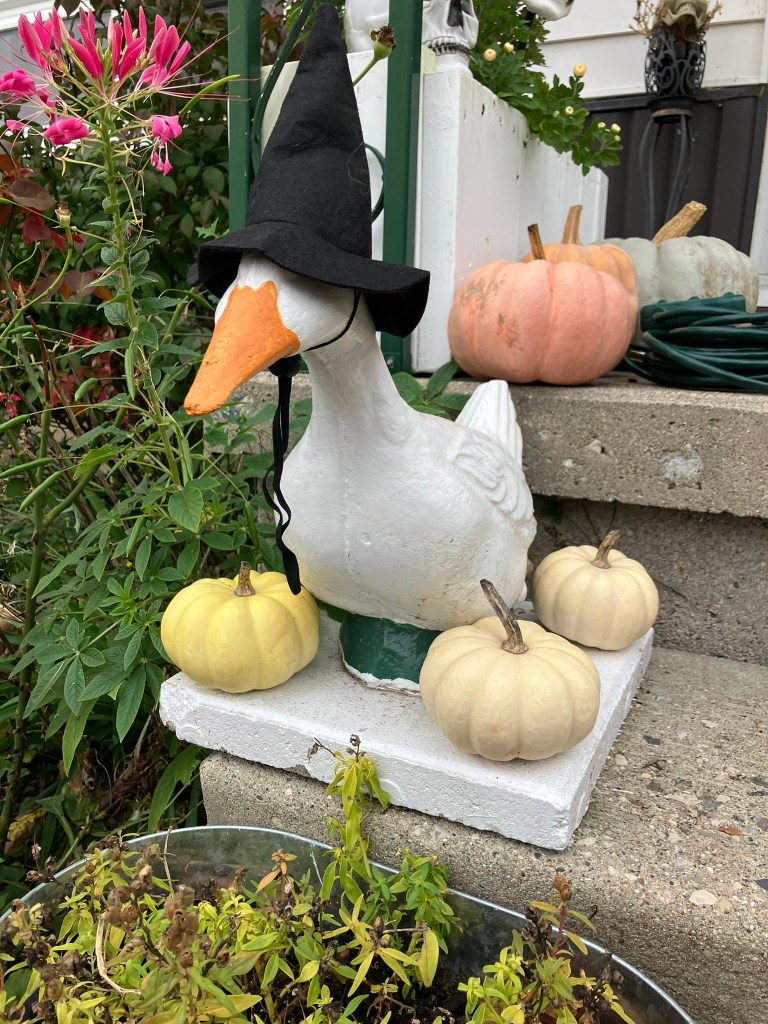
Gertie finally has a costume (and a repainted beak! I did that at the start of my vacation.) Back in the summer – I ordered her a pile of outfits for every season, but hadn’t tried any of them out because of the beak situation. But now that the beak was looking fab,it was time to dress her up!
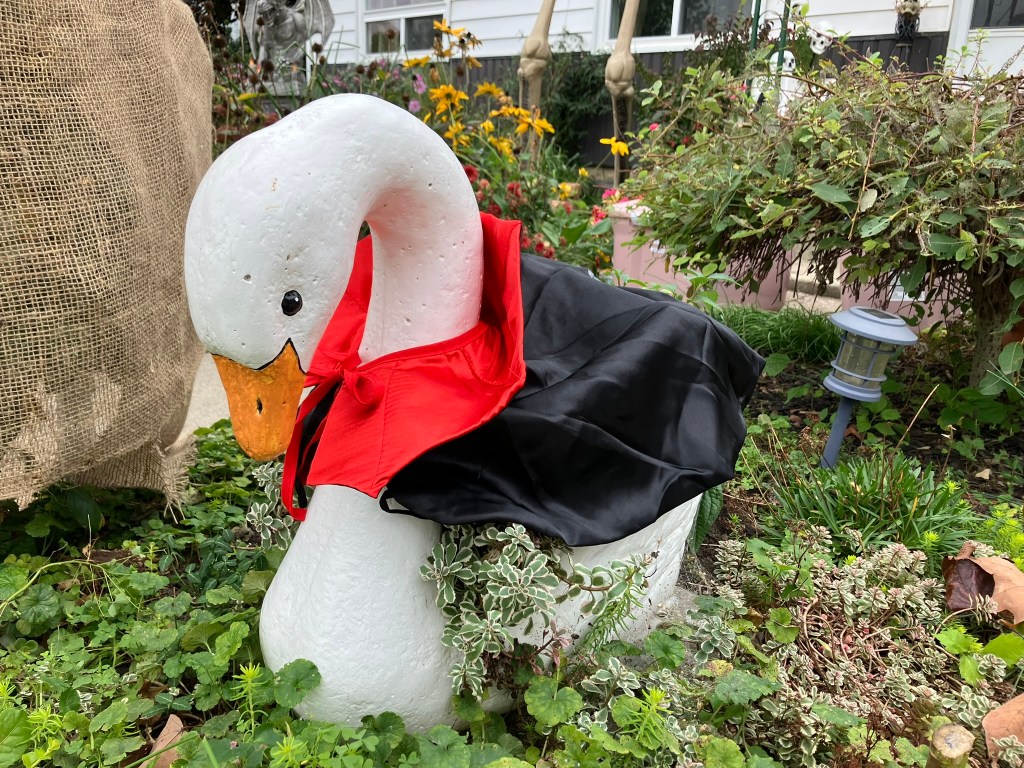
The hat did come with a cape – but Gertie isn’t your typical porch goose, which are more upright (and a touch bigger), so the cape didn’t quite fit right.
But you know who it did fit?
Susannah! And doesn’t she just look so beautifully majestic?
In addition to getting the Garden of Bones up, another goal of my vacation was to get a quilt top done…
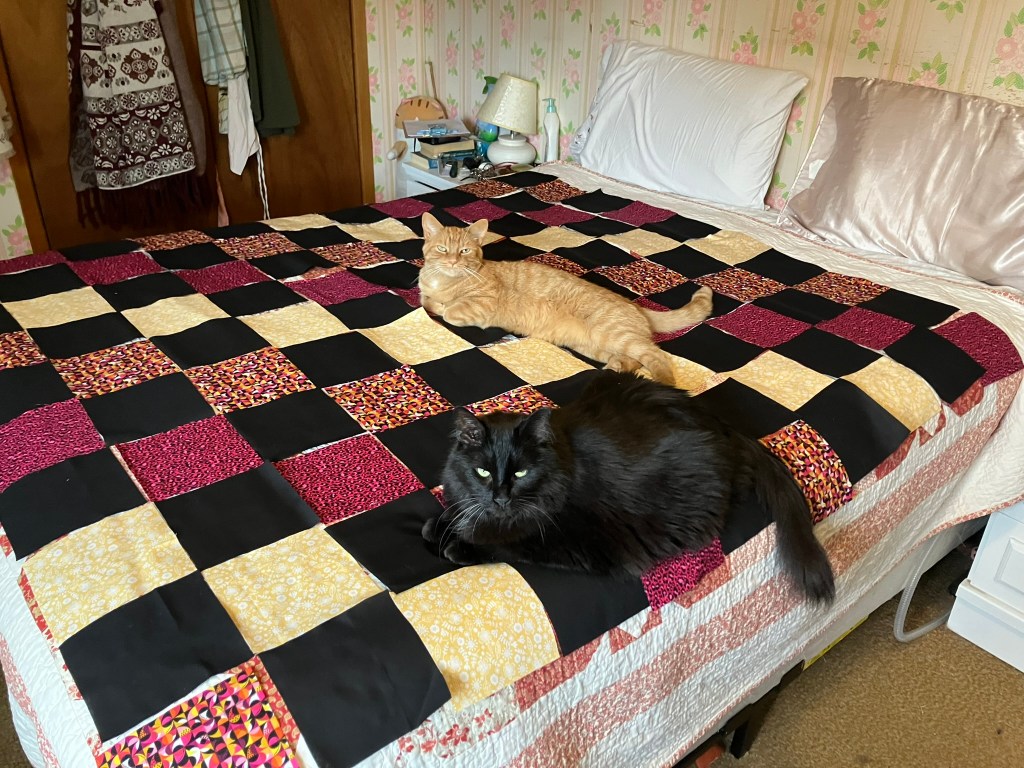
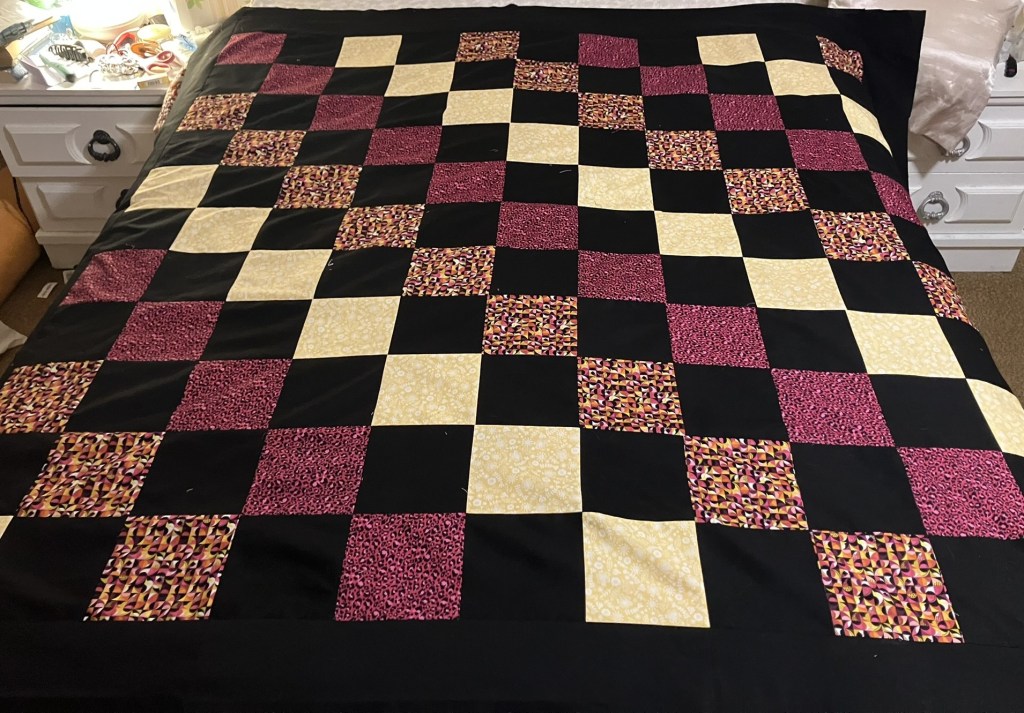
The one featuring leopard print, which I showed you a little while back. It’s going to the sister of the young man I’m making the muscle car quilt for. With that in mind, I decided to do a similar (but not same) layout. This diagonal with the solid black squares really let those crazy print shine.
Because it was a simple layout, it didn’t take too long to get it together…
A long afternoon, and a bit into the evening, and it was done!
I had just enough of the hot pink leopard print left for binding… and some brown, black and light pink leopard print flannel for the back.
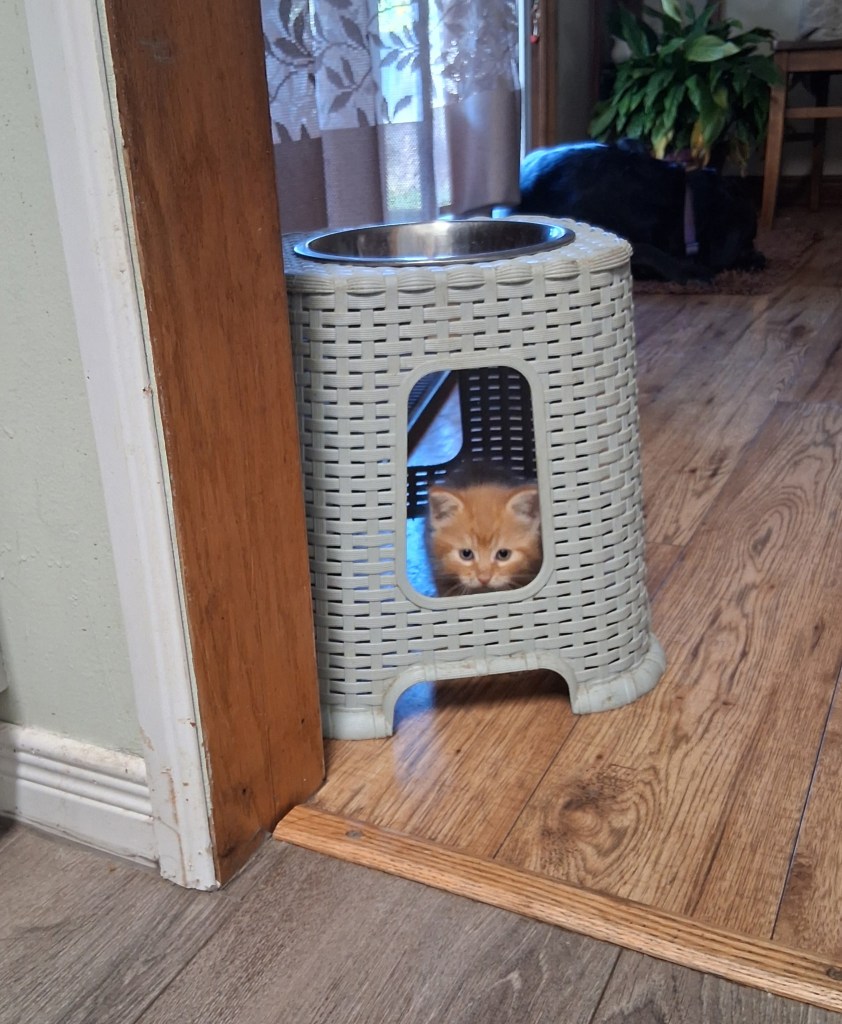
I have a date set with Mom at the start of November to get these quilted… and of course, meet this little nugget…
Mom has officially named him Oliver. I can’t wait to make his acquaintance!
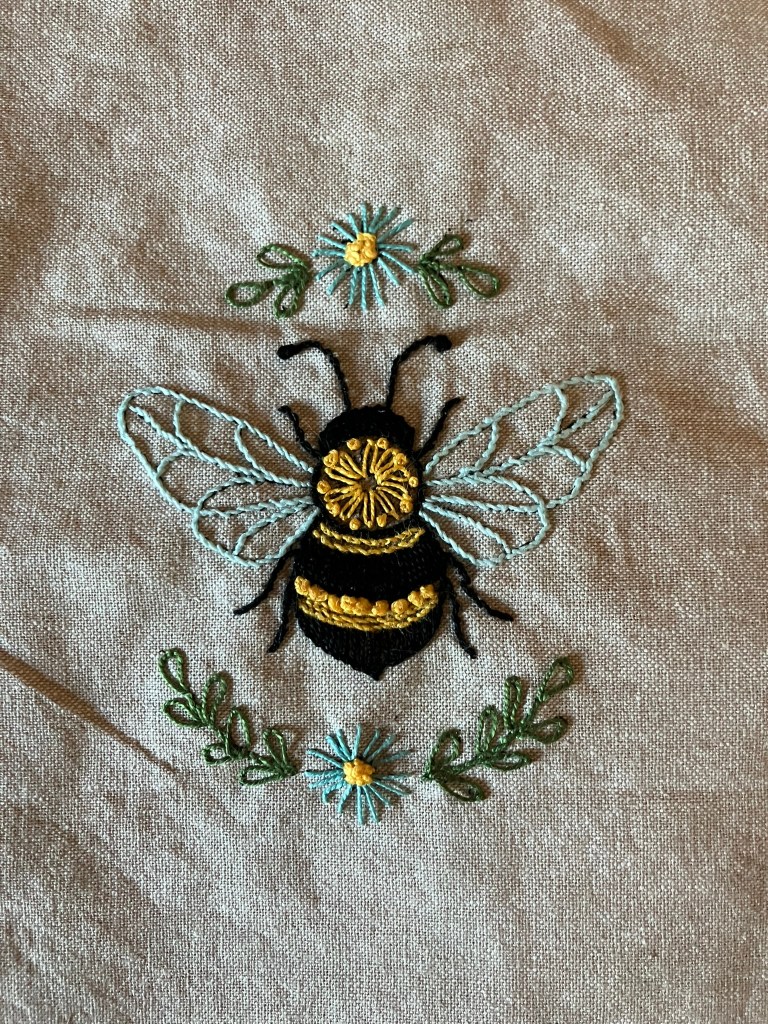
And I managed to finish it! And it’s a very pretty little bee, if I do say so myself.
Shift Change late Sunday night saw us get a small start on the next block – a very pretty little bird. We didn’t get too far before bedtime, but we’ll make more progress this weekend!
The yard isn’t the only thing that gets spookified!
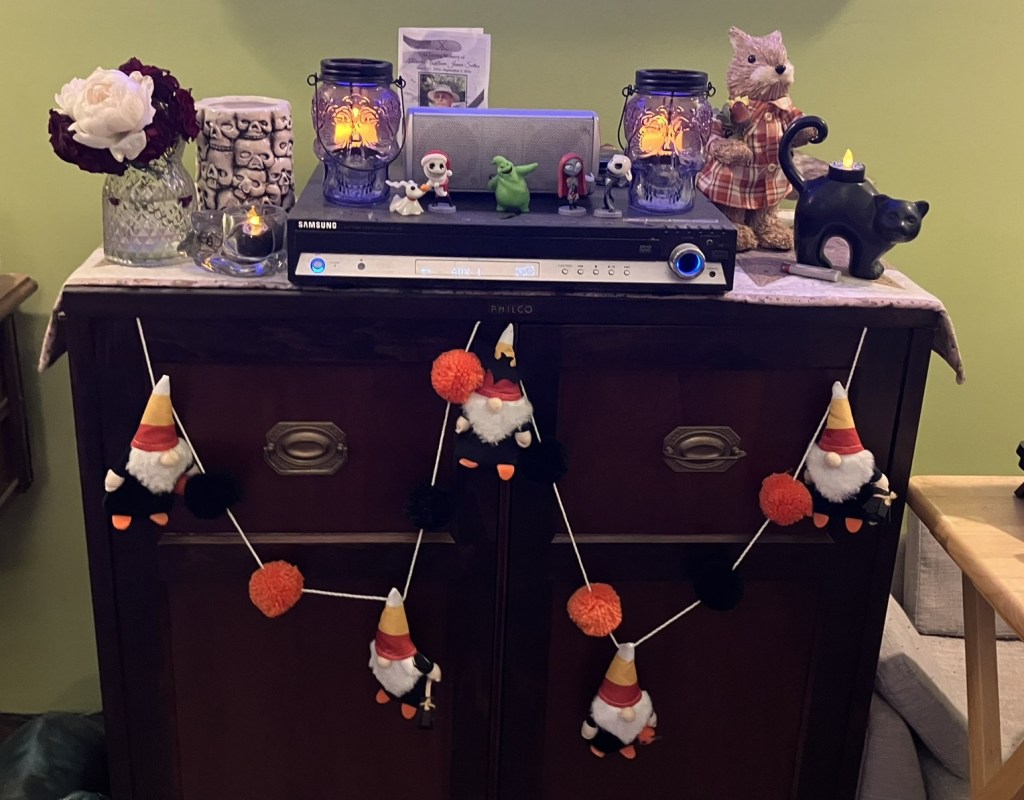
We love Hallowe’en, so the livingroom gets done up too.
Our vintage radio console under the TV is always decorated for the seasons.
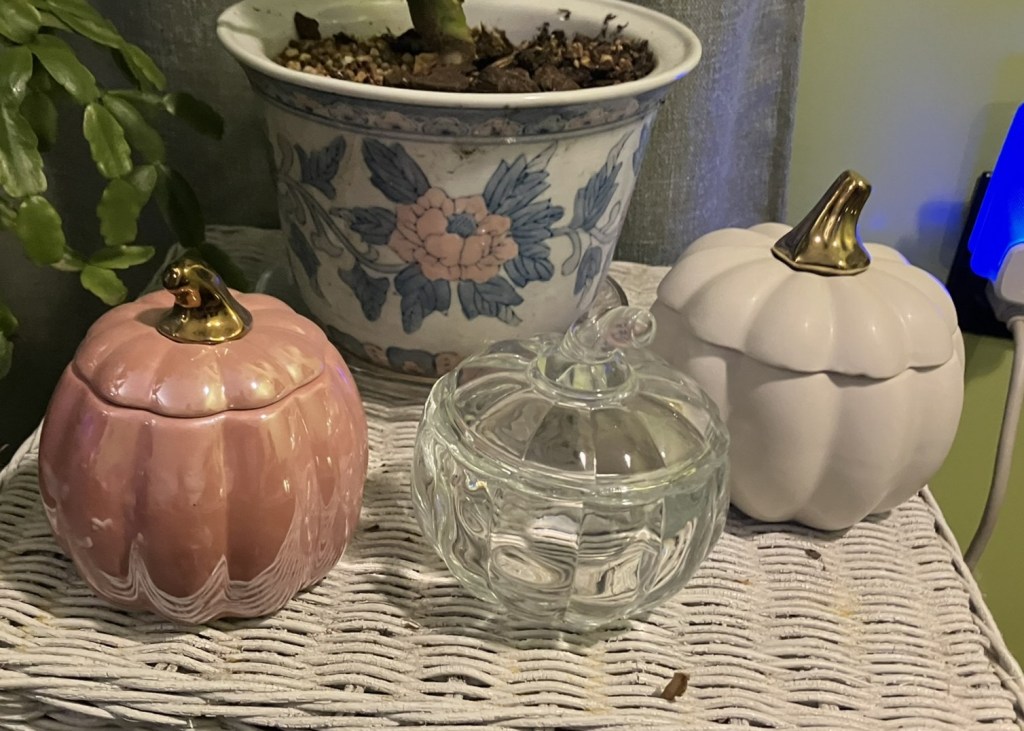
And then there’s my small glass/ceramic pumpkin collection. These guys stay out all fall – until it’s time to put up the Christmas stuff.
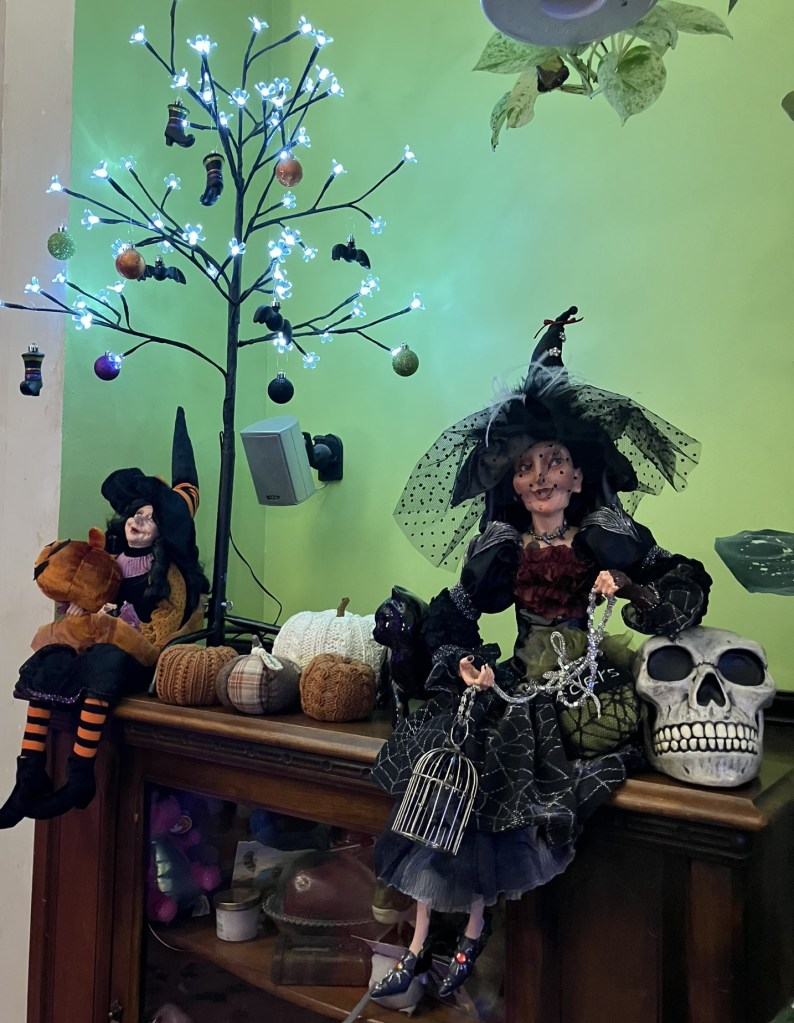
Over on the hutch…
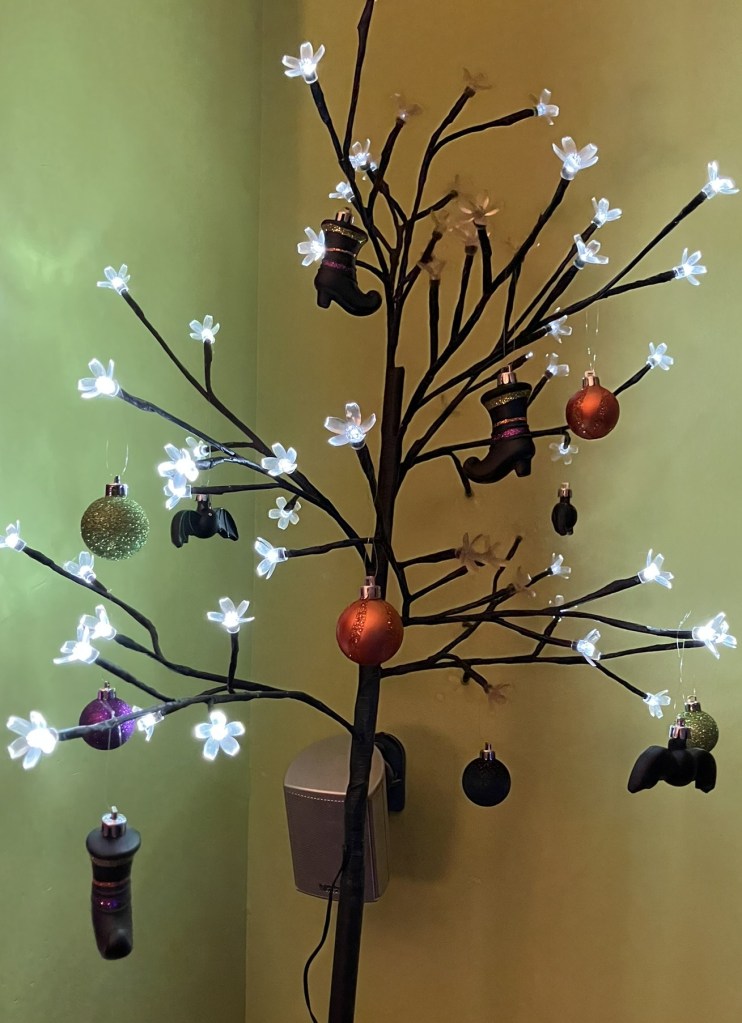
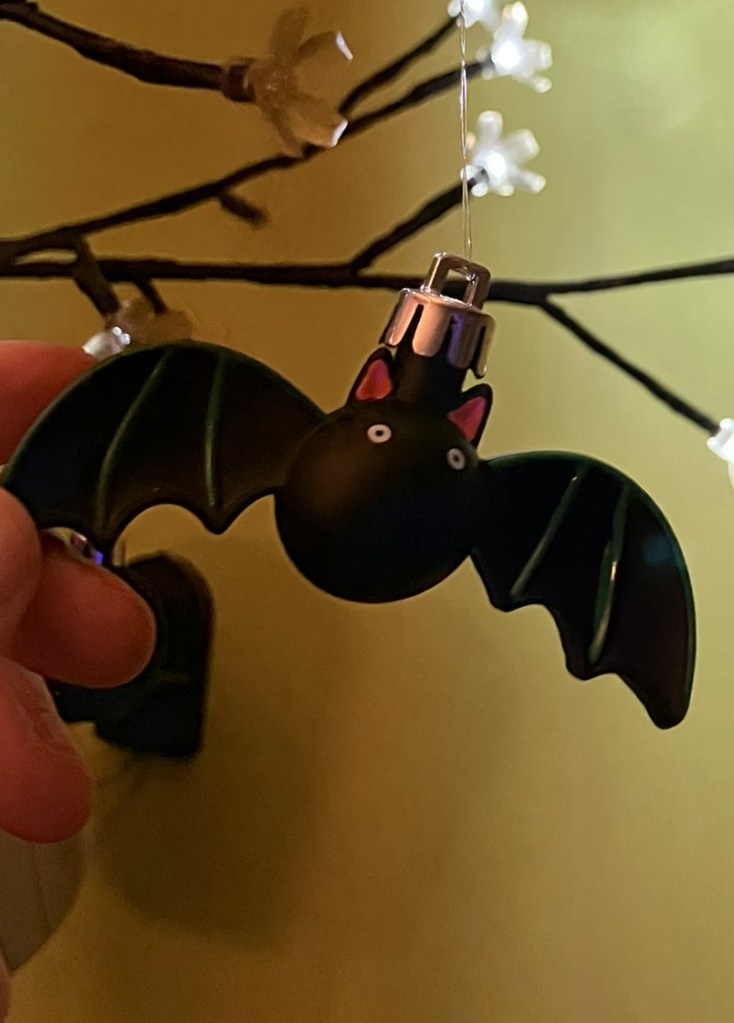
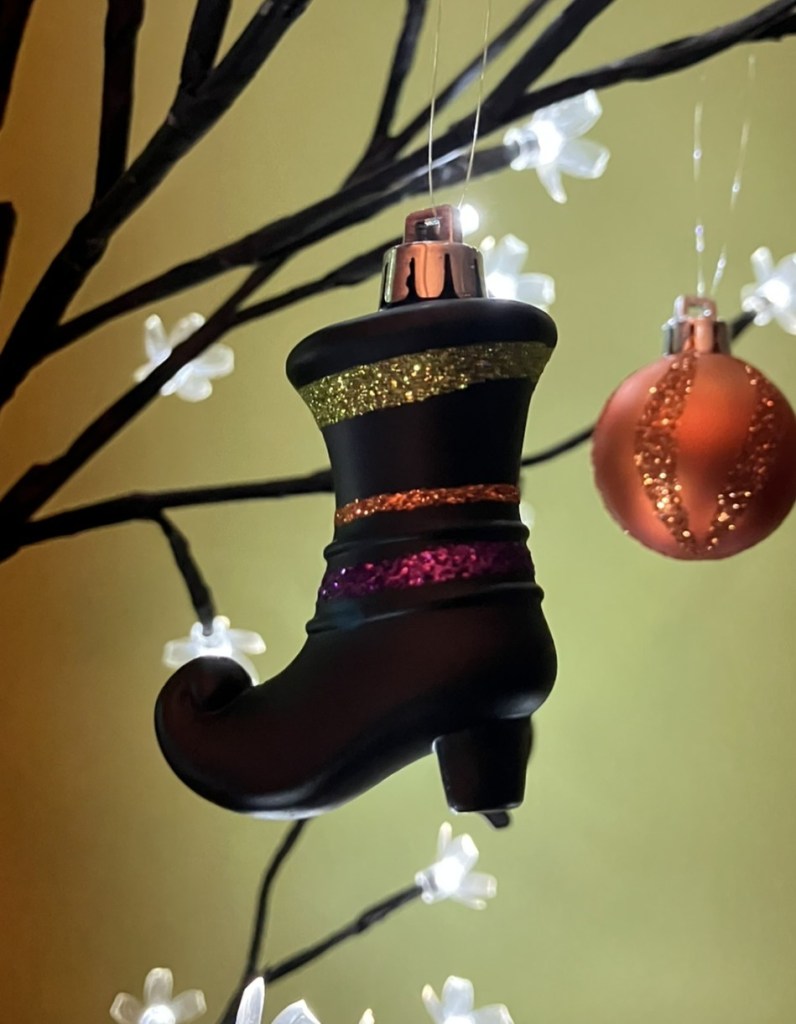
I thrifted this little light up tree earlier in the summer. It’s not a Halloween tree per say, but I knew it would work well for that. These cute little ornaments from Michaels really brought it to life
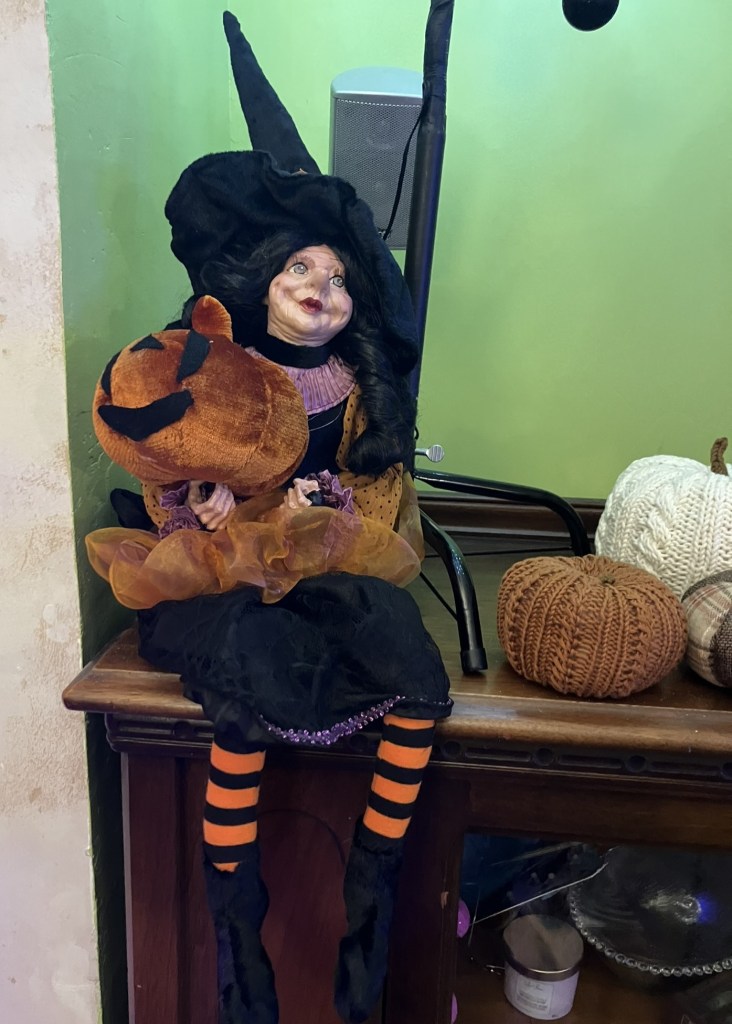
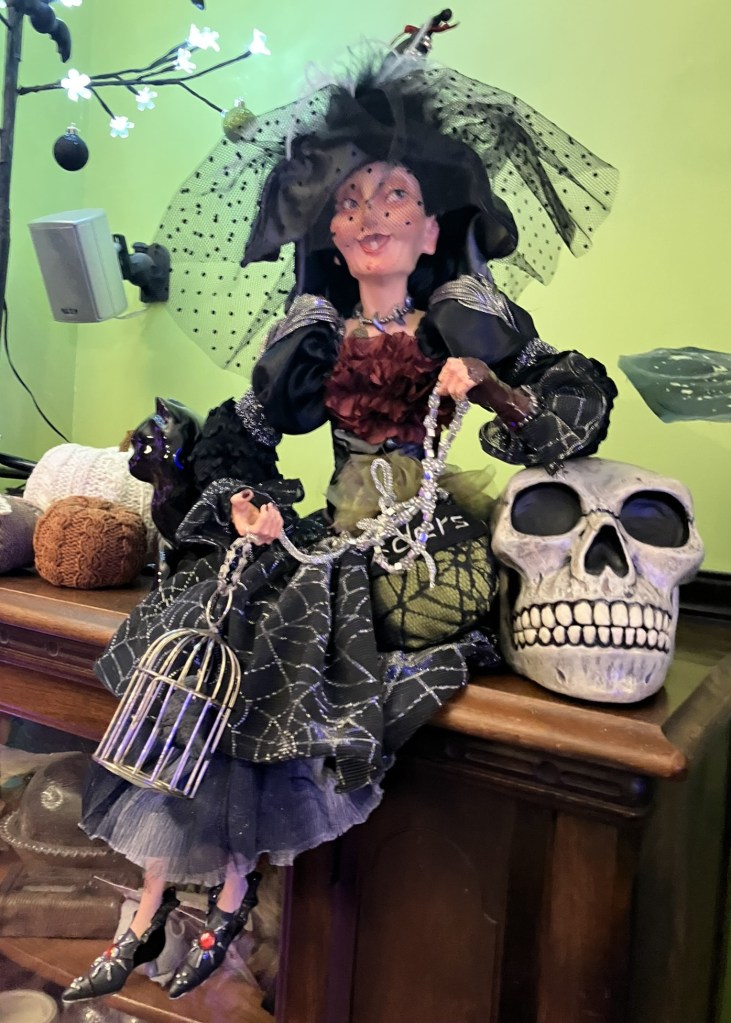
And underneath the tree, my two favourite additions.
These two gorgeous ladies that I thrifted early in the year for a steal. The pictures do not do them justice – they are stunning and the little details are amazing!
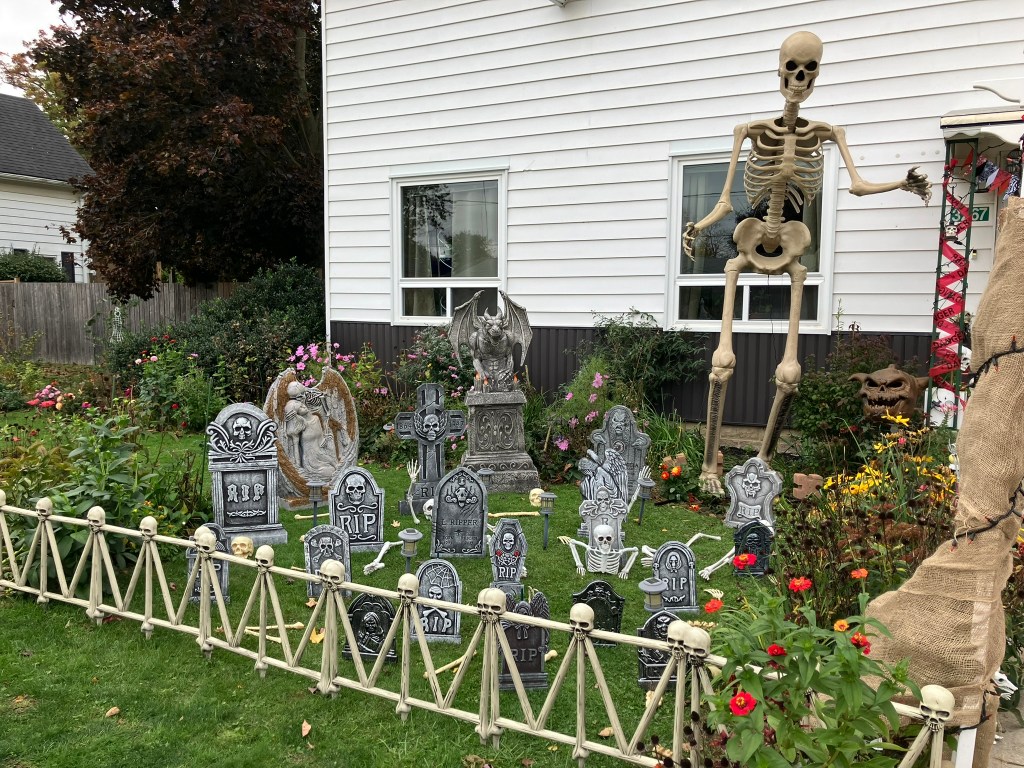
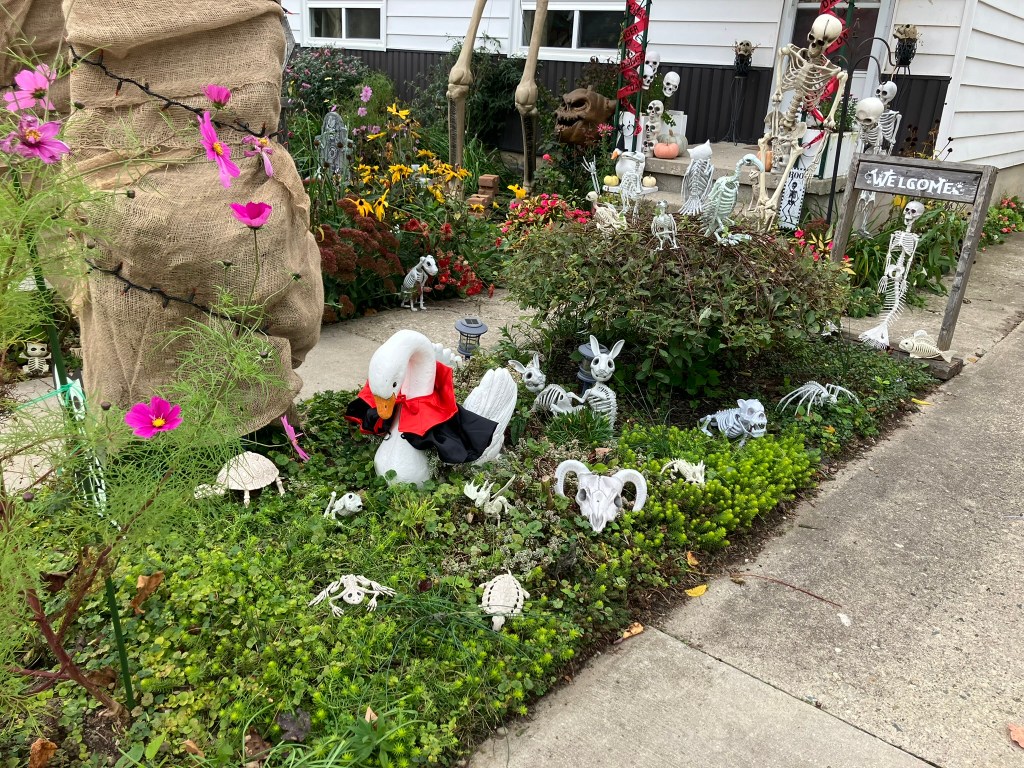
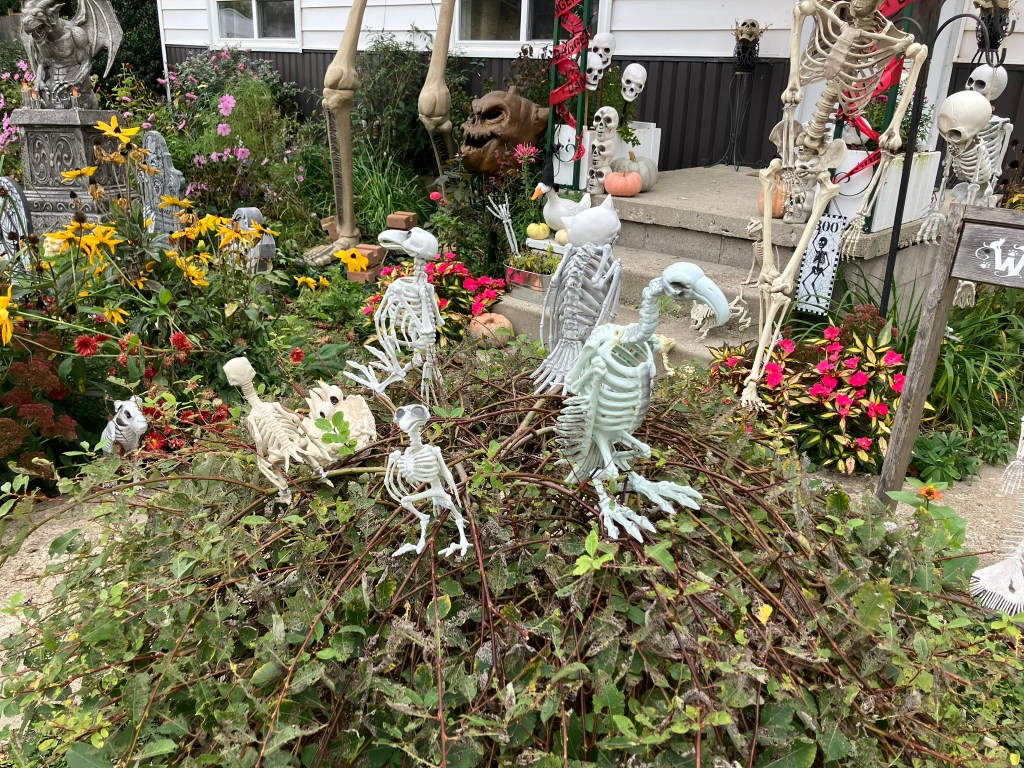
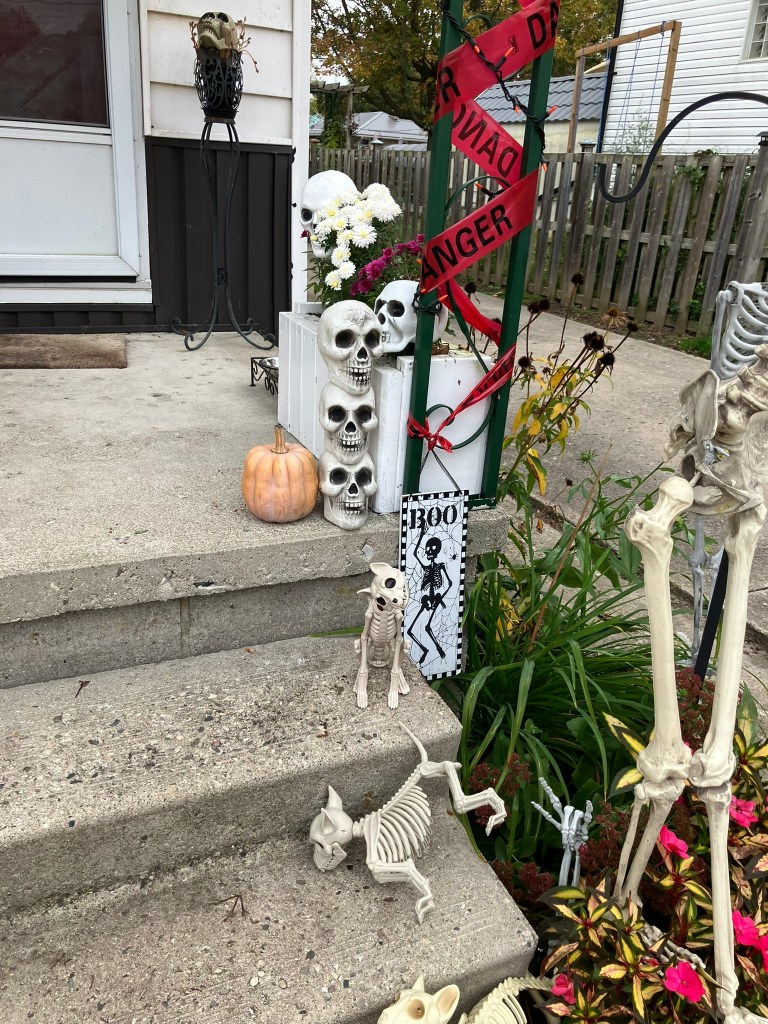
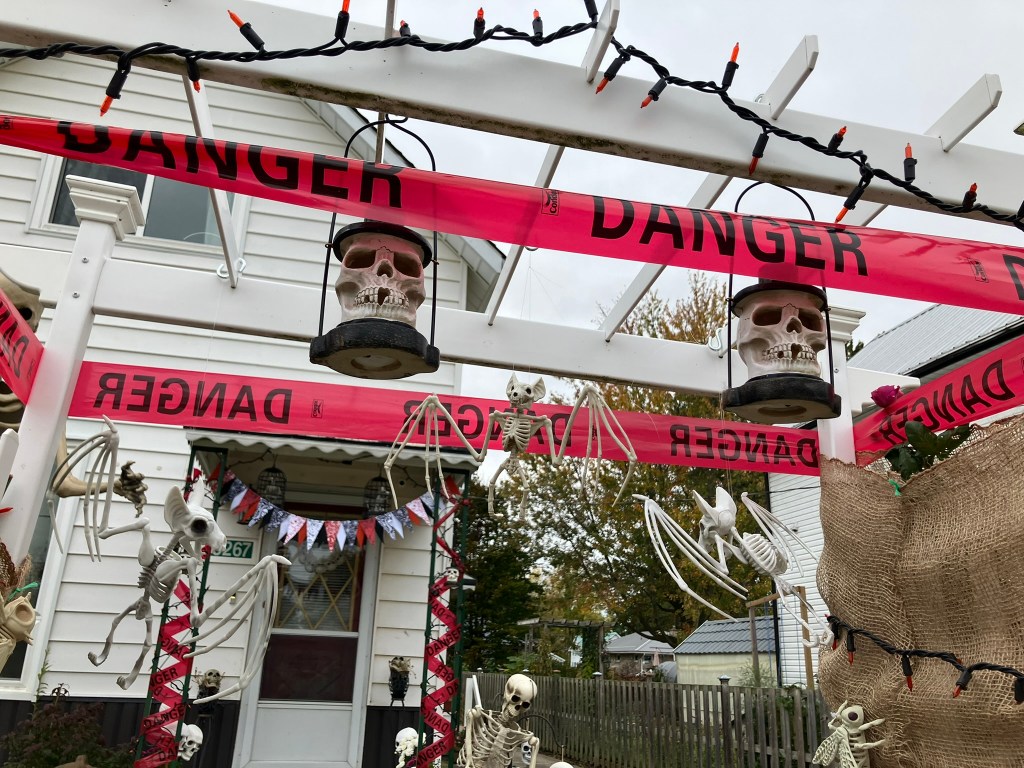
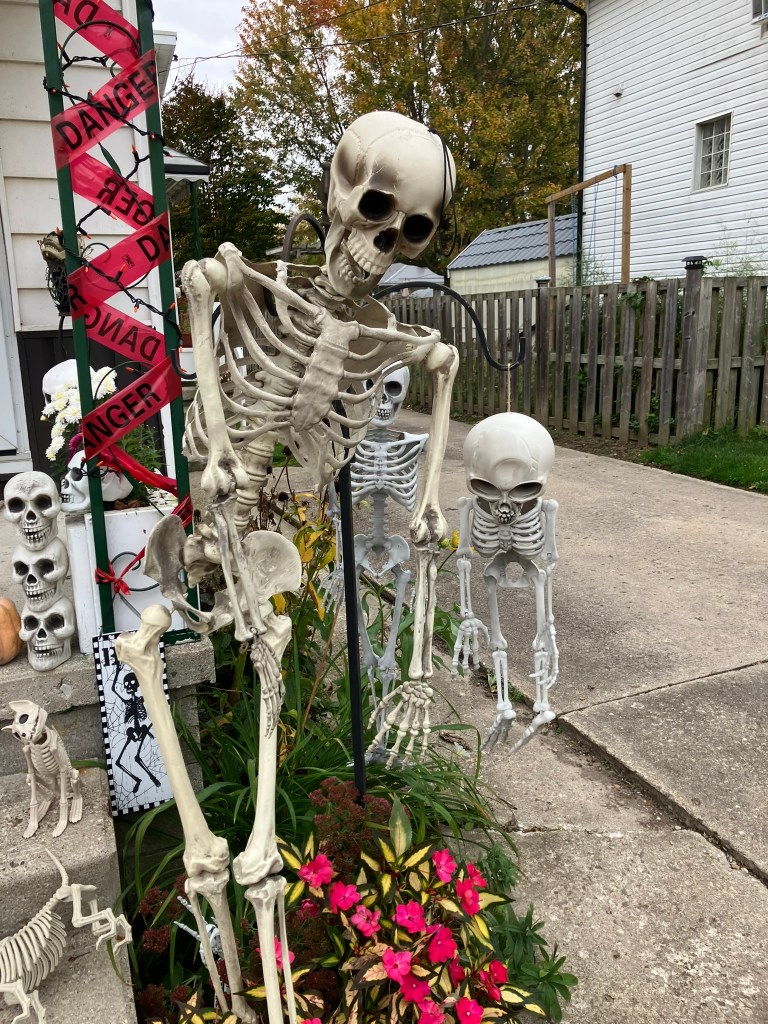
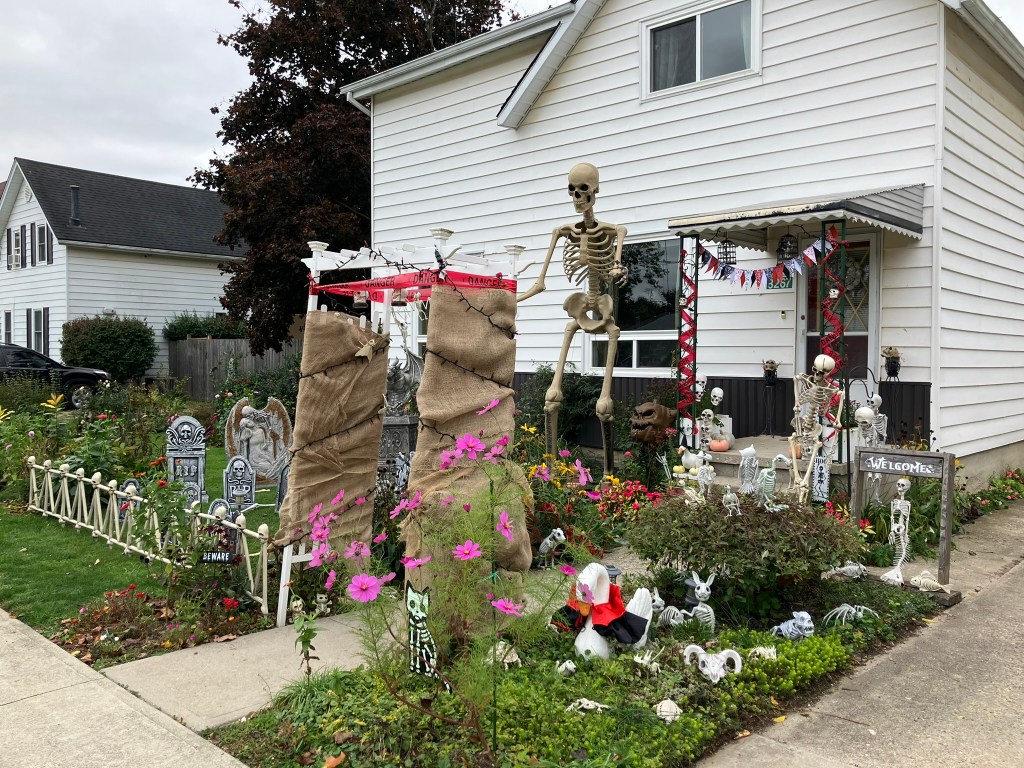
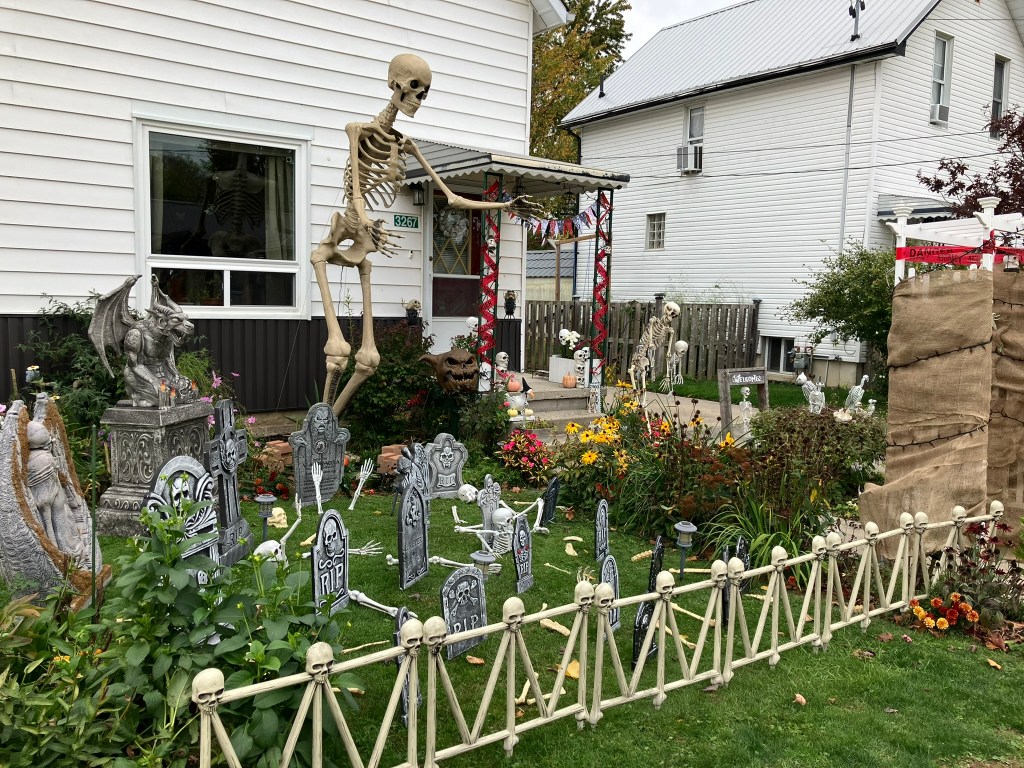
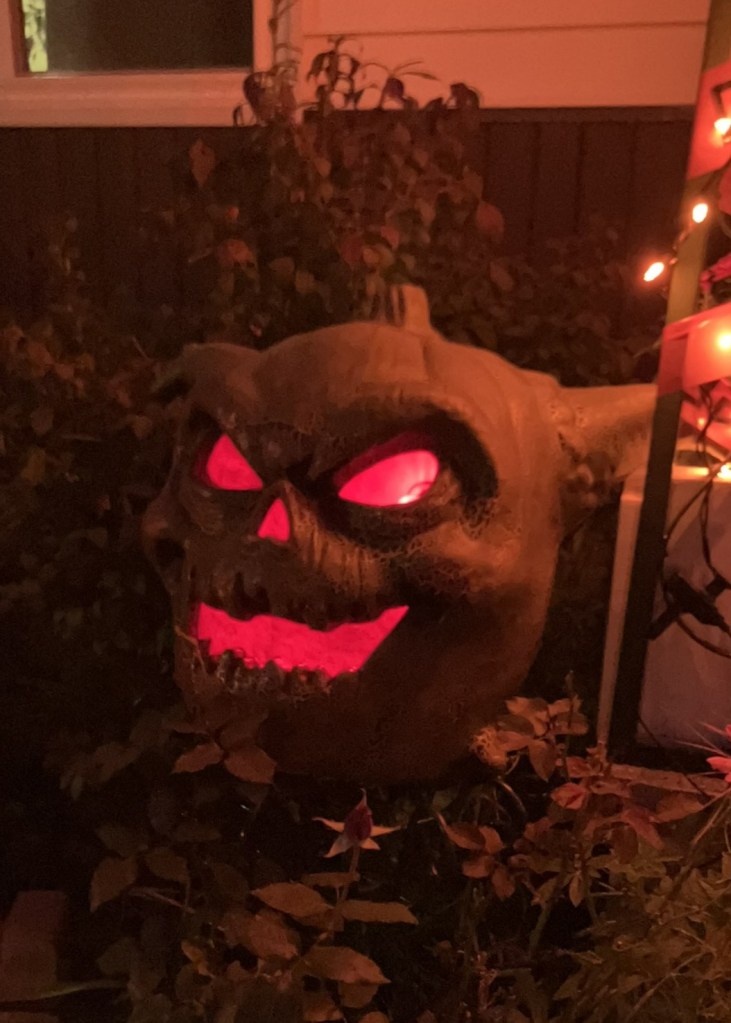
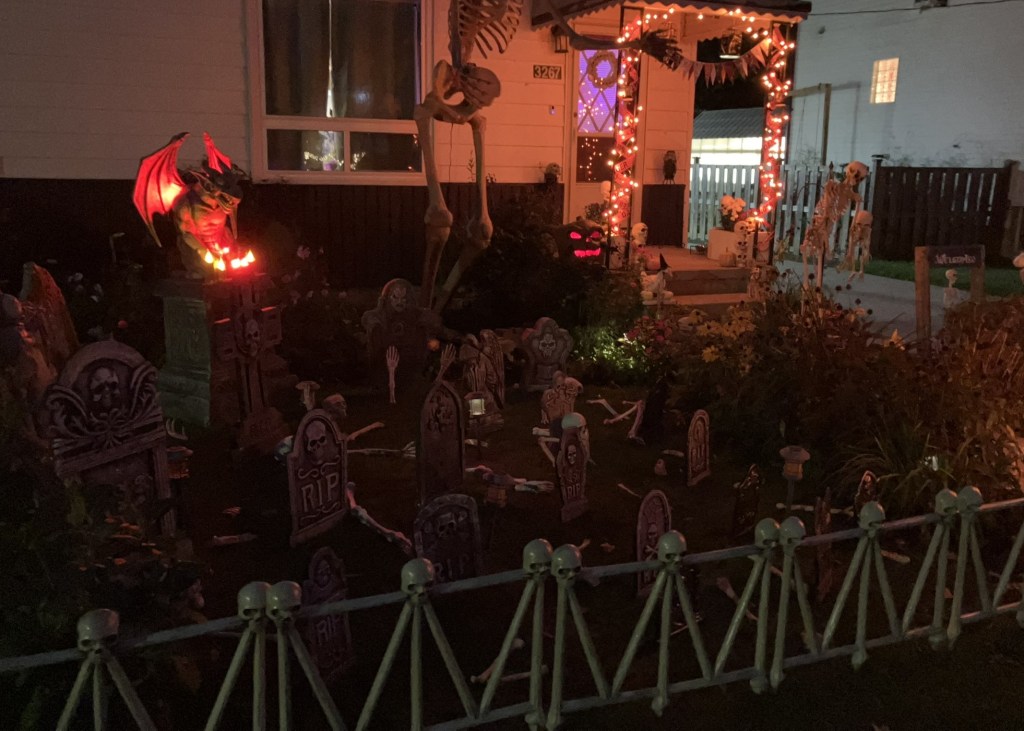
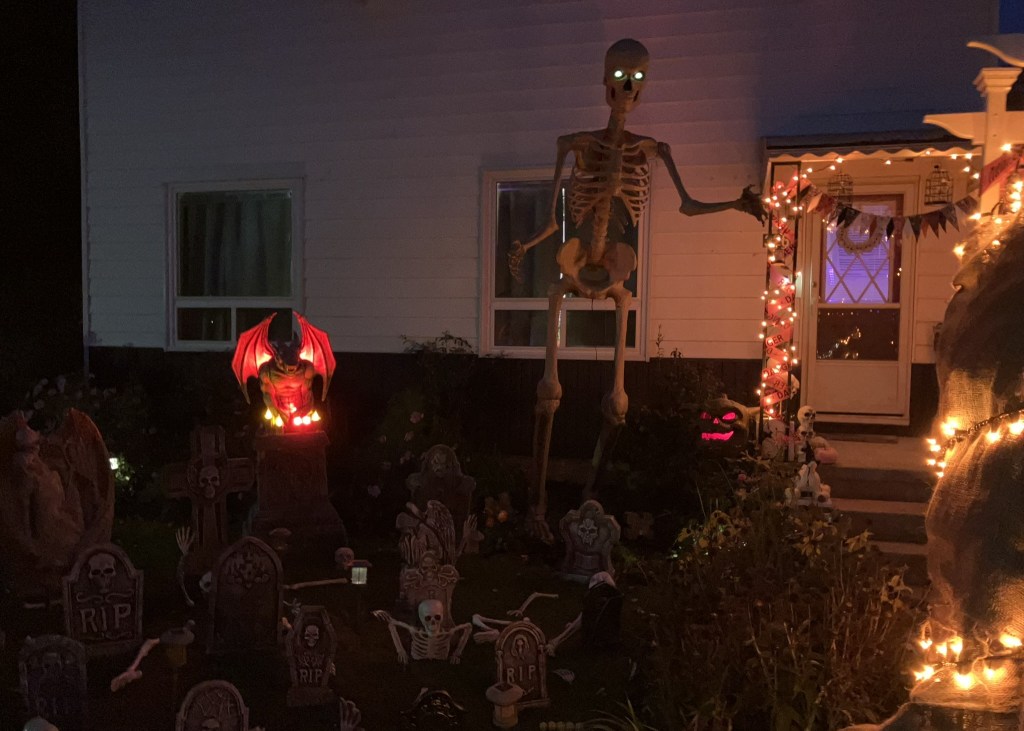
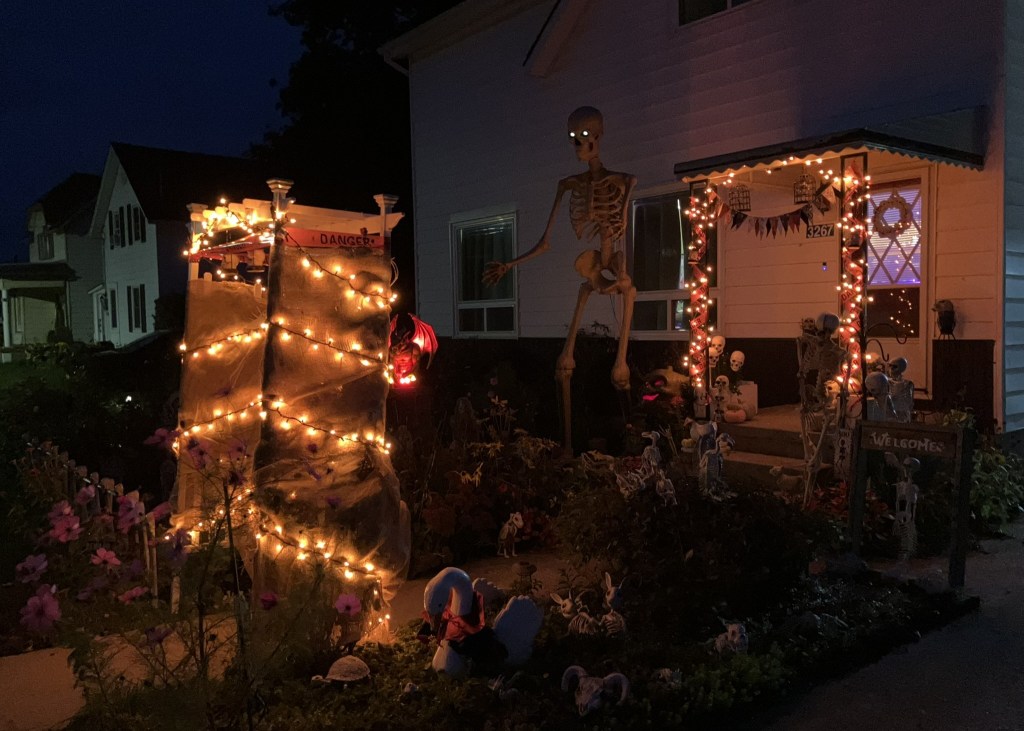
One of the main goals of my vacation was to get the Garden of Bones together again for the season. And of course, this year had some big additions.
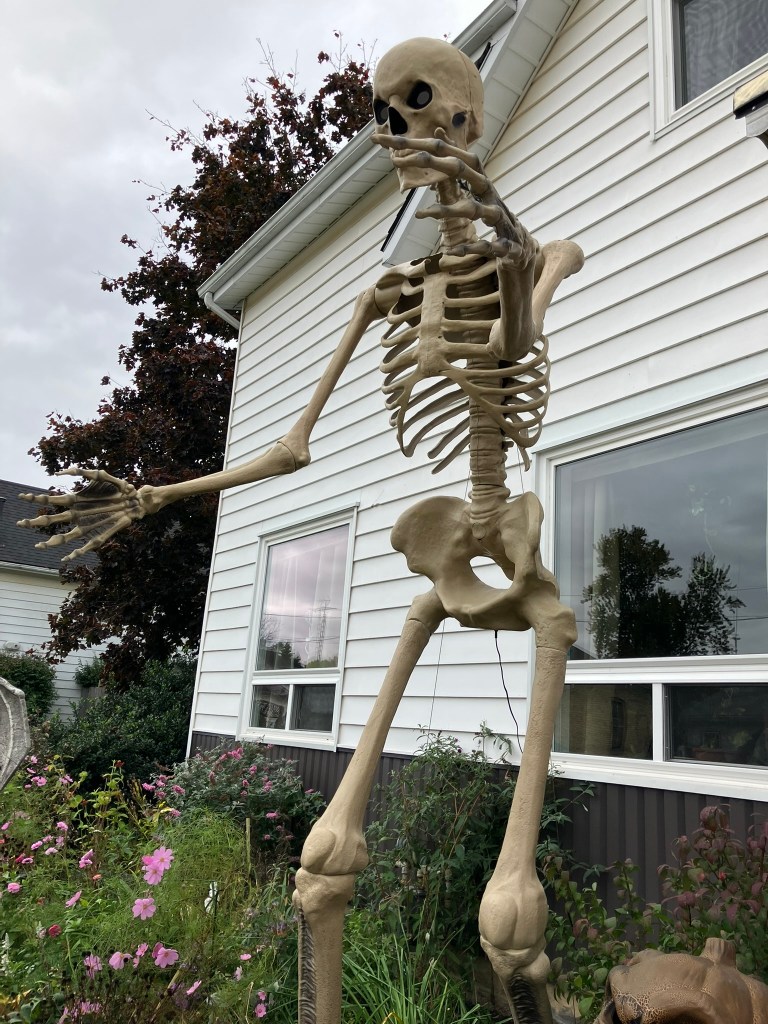
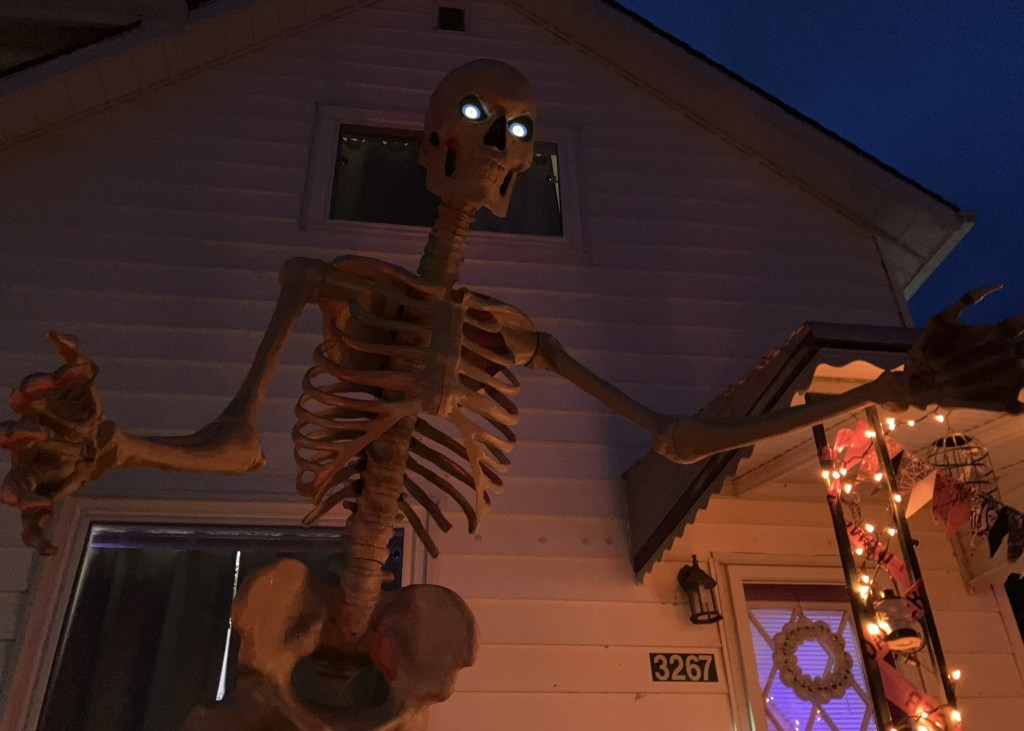
Mainly… Mr. 12-ft-Skeleton. He took Dave and I about 2 hours to get up. But now that we understand how he goes together, I’m sure subsequent seasons will see erection for much faster. It’s definitely a two person job, and at least one of those people needs a little muscle…. but it’s not super complicated.
Once he was up, the cemetary emerged
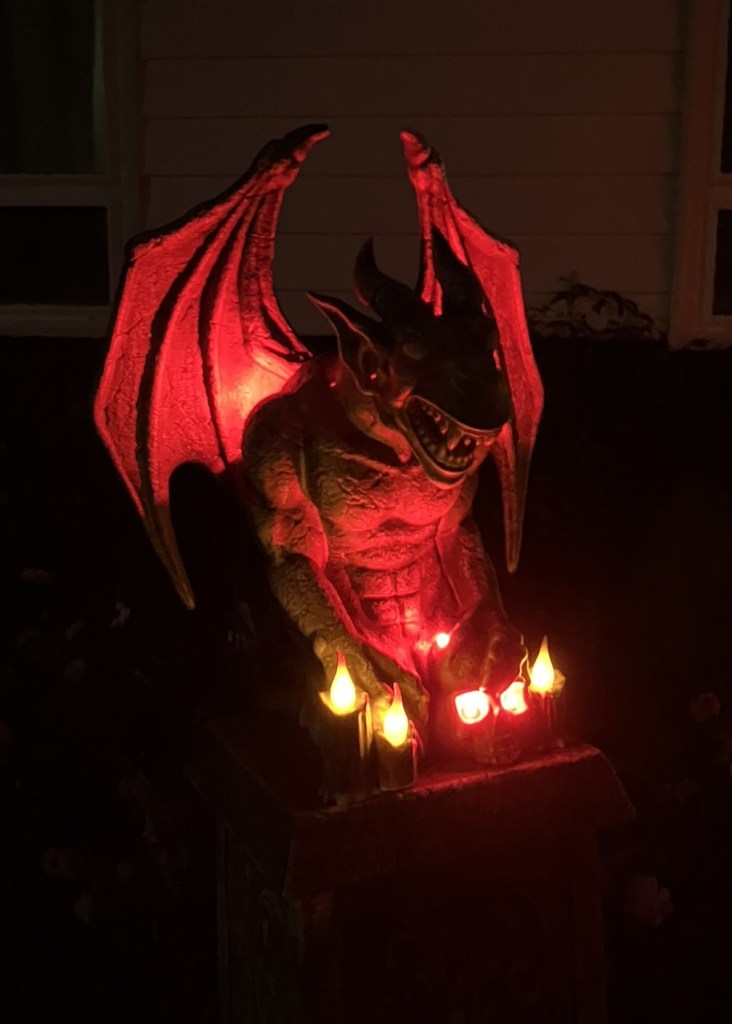
And you can see our other new acquisition, Gary the Gargoyle, overlooking the yard.
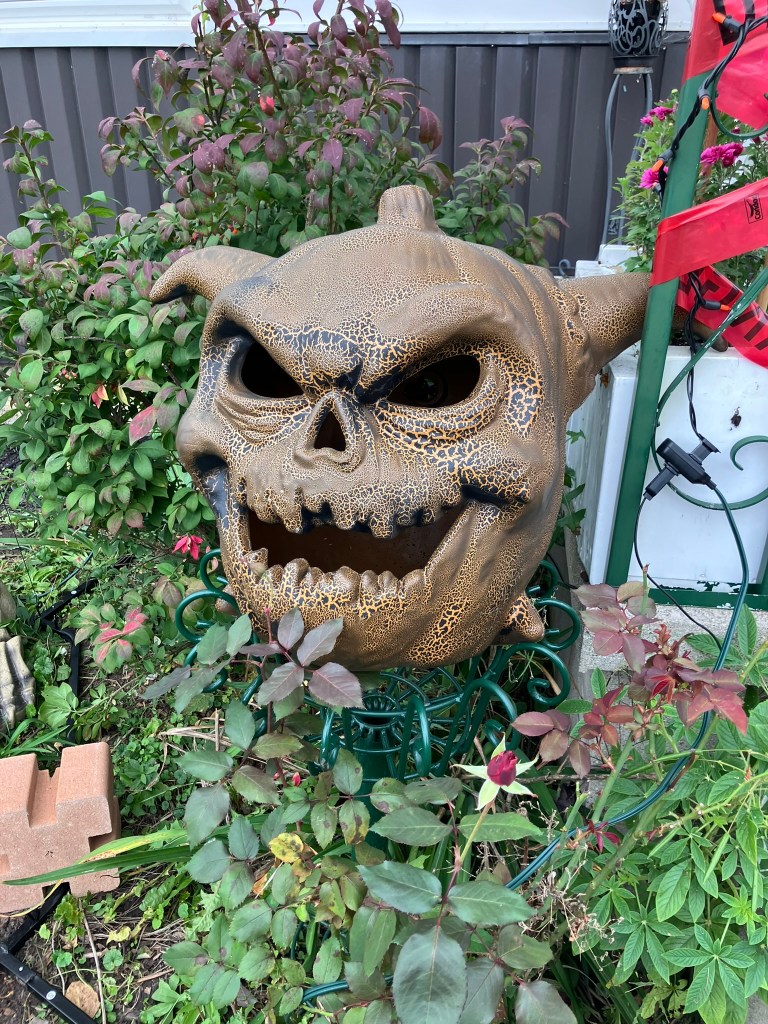
And Doug has been brought in front of the Burning Bush since it’s too tall to put him behind now.
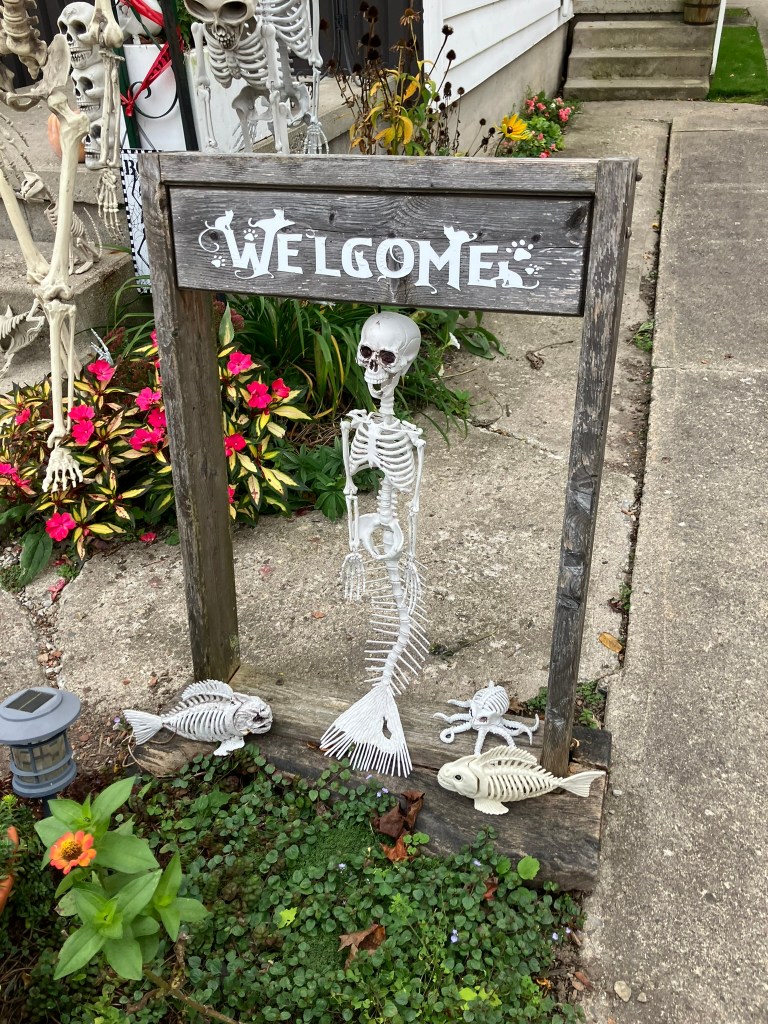
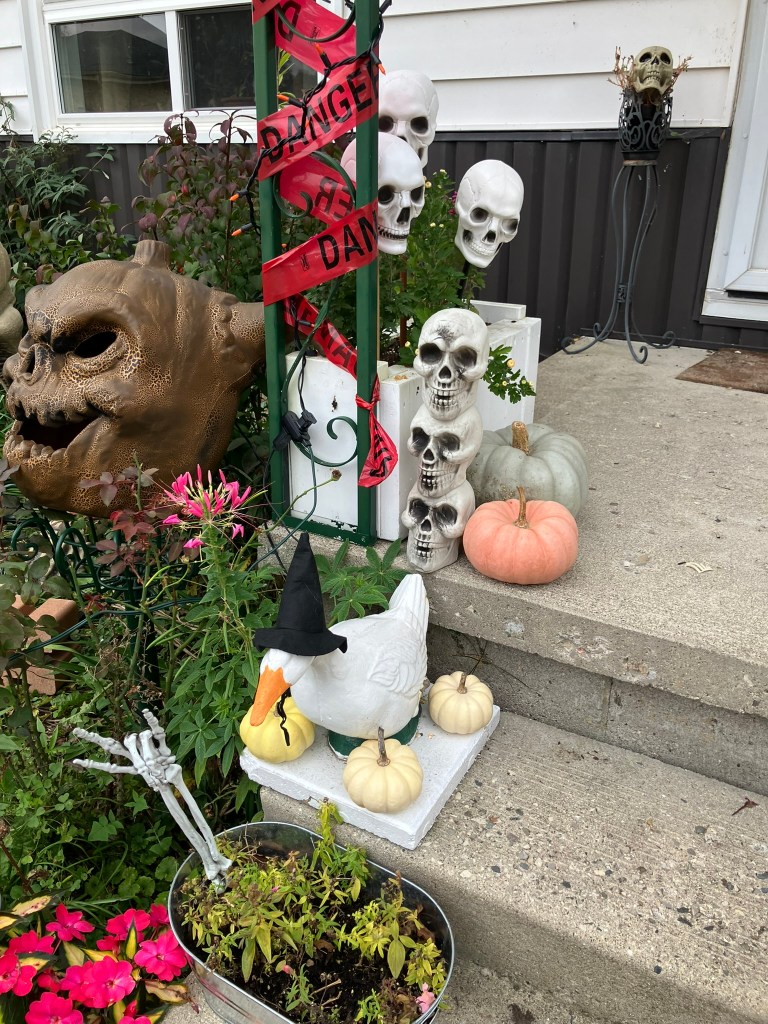
And after that, the skeletons just started sprouting from EVERYWHERE!!!!!