
If you’ve been reading this blog for any amount of time, you’ll know that one of the things I try to do it incorporate native plants in the garden whenever/however I can.
I’ve never intended to have a purely native garden – there are just too many other plants that I love to exclude them – but it helps to do a little extra for our native pollinators and other creatures.

Like these little bees napping in the tickseed in the evening.
I’d say the most successful native I’ve planted is of course, the milkweed

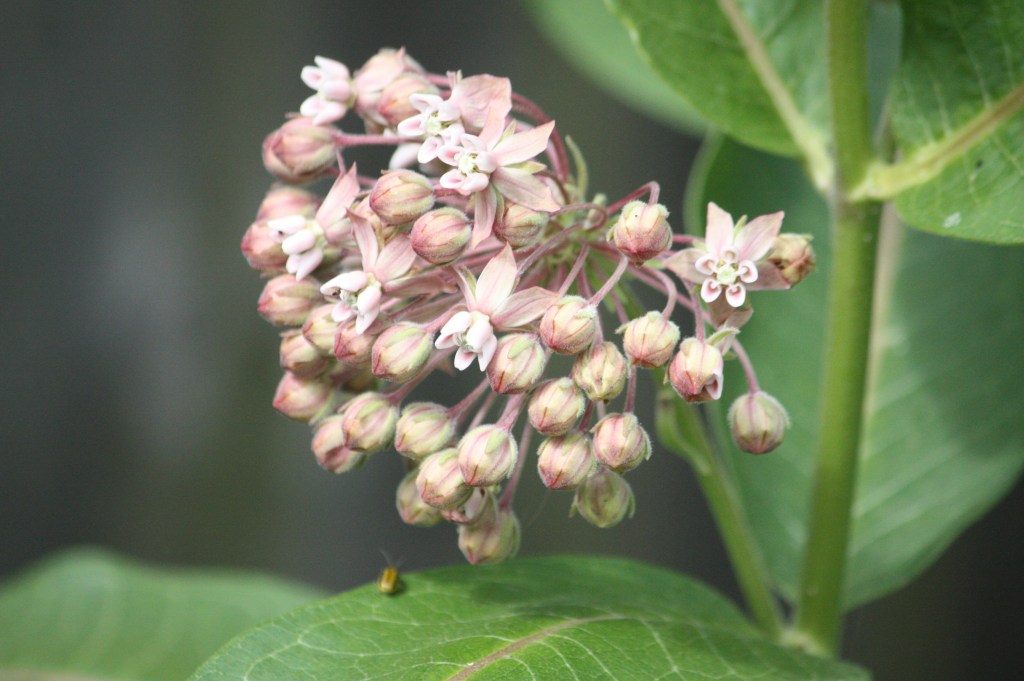
On the left is Swamp Milkweed, and the right is the Common Milkweed. I actually only planted the Swamp Milkweed – the Common Milkweed just showed up on it’s own, and I’ve let it do it’s own thing.
And the proof of its success, is of course…

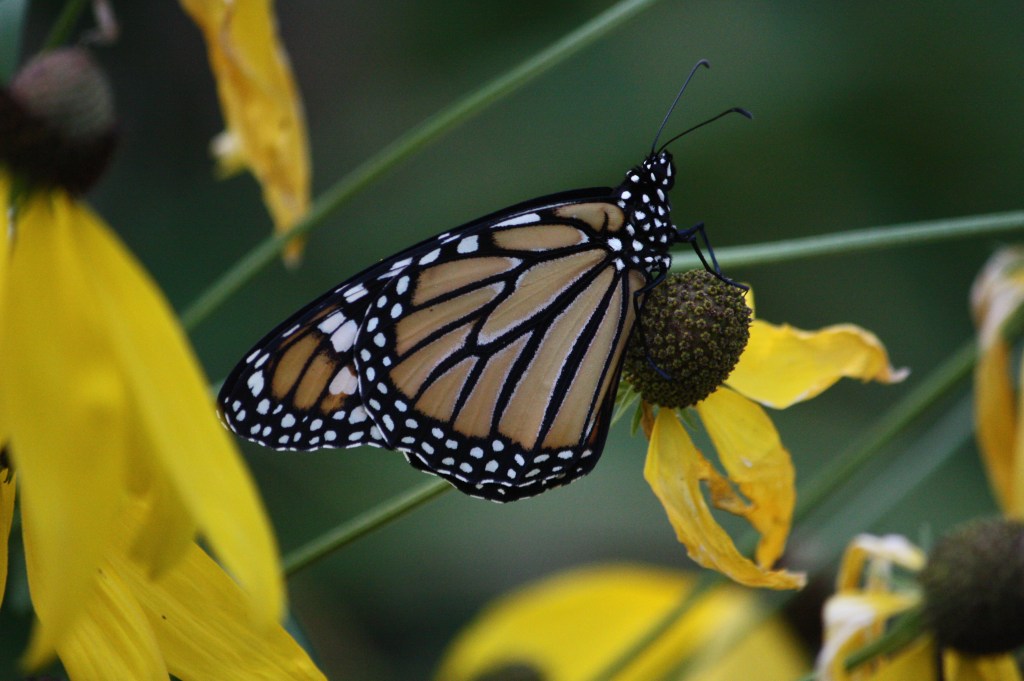
Helping promote the lifecycle of the Monarchs.

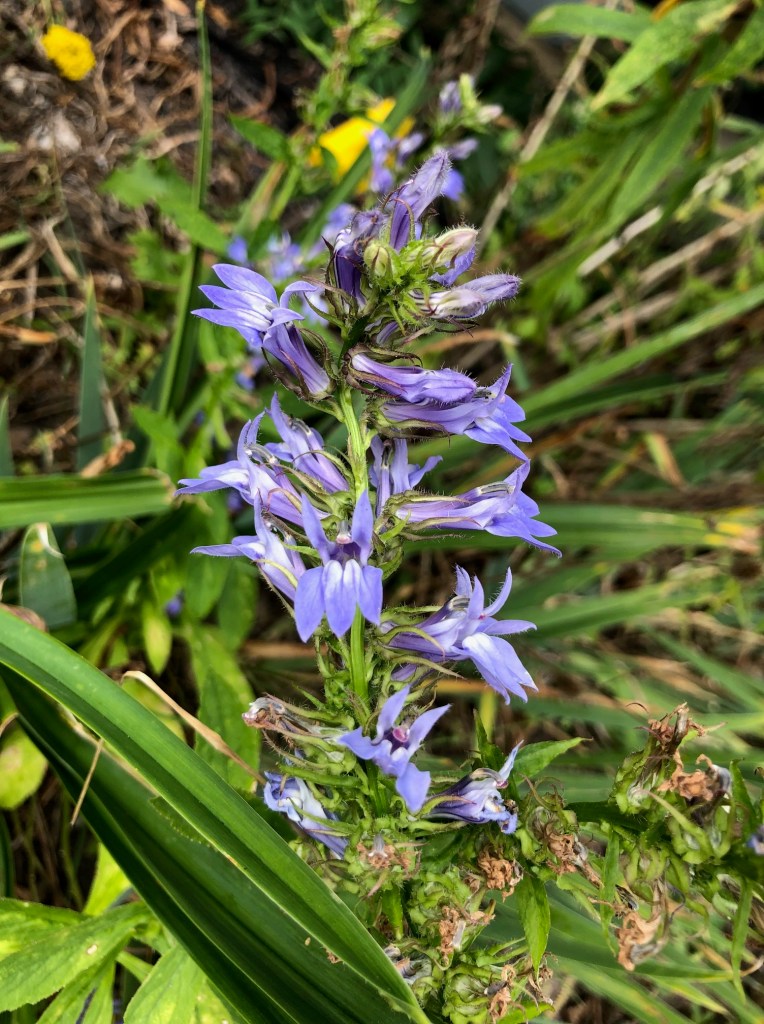
The Cardinal Flower, and the Blue Lobelia (both are native Lobelias), have done well now that I’ve got them in the right spot. They both help support the hummingbirds.
The problem arrives with a few of the others.. namely, the smooth/new England asters, the sneezeweed, the prairie coneflower, and the false sunflowers.
These are all beautiful plants… but they are meant to grow in grass lands – areas where they have a fair bit of competition to keep them in check. Here in the garden… well… they get a little out of hand. The biggest problem has to do with their height – all of them get so tall and heavy… they just flop.

I actually have this false sunflower supported and staked up… the actual plant is only in in the area behind the big zucchini leaves… but you can see it flops to the left and right – shading out everything else undernearth is.

Same with the one out front – though it’s staked, up, it leaves heavily to the right in a big waterfall of flowers, completely blocking the pot on the milk can behind it.
I have two big bunches of sneezeweed and the one by Edible Alley I actually got staked up and looking nice and tidy.

And it’s just a mass off happy yellow flowers that the pollinators of all kinds are loving!
But the bunch by the woodland garden…

They are just a flopping disaster.
Same with the prairie coneflowers…

They just want to fall right out into the yard – despite massive staking. (I also need to split this bunch up – they are waaaay too dense!)
The asters aren’t in bloom yet, but the ones in the catio are just all over the place as usual… and the ones in the front garden…

I cut back most of the flopping stems, so they are tidier but they completely block the poor butterfly bush behind.
And as you can see, all these flowers bloom absolutely amazingly! They bring huge benefits to the garden and it’s residents, so I don’t want to take them out… but I need to find a better solution.
- I need some better supports – stakes and string just aren’t cutting it – I’m going to have to invest in some half moon metal supports. I have some small ones, but I can’t find any that are tall enough. There’s a metalsmith/welder down the street from us, so I’m going to go have a talk with him one day and see if could make some.
- Next year…. I’m going to try the Chelsea Chop! It’s something l learned about on my British Gardening shows.. The Chelsea chop (so called because it is usually carried out, coinciding with the RHS Chelsea Flower Show) is a pruning method by which you limit the size and control the flowering season of many herbaceous plants. Basically, you chop them back about one third, and it helps to keep their size under control.
It’s too late for both those things this year… but next year, I’ll hopefully have a garden that looks a little less… floppy!
 Wandering Cat Studio
It may be floppy, but you sure have some gorgeous blooms!
LikeLike
I have a flopping problem here too especially with my black eyed Susans. I had to tie up a rhododendron this summer. I have no idea where it came from. It just sprung straight up in the middle of the front bed.
LikeLike
My Susans are actually very well behaved – and amazing this year!
LikeLike
They may be floppy but they all look so lush and beautiful!
LikeLike
As others have said, they may be floppy, but they are gorgeous. The butterflies and bees love them too. I hope you find a great solution for next year.
Blessings,
Betsy
LikeLike
Great info, thanks!!! I will look forward to how you can tame the height issues!
LikeLike