
It’s once again the weekend – and time to check on the gardens…
Today lets check on the native plants!
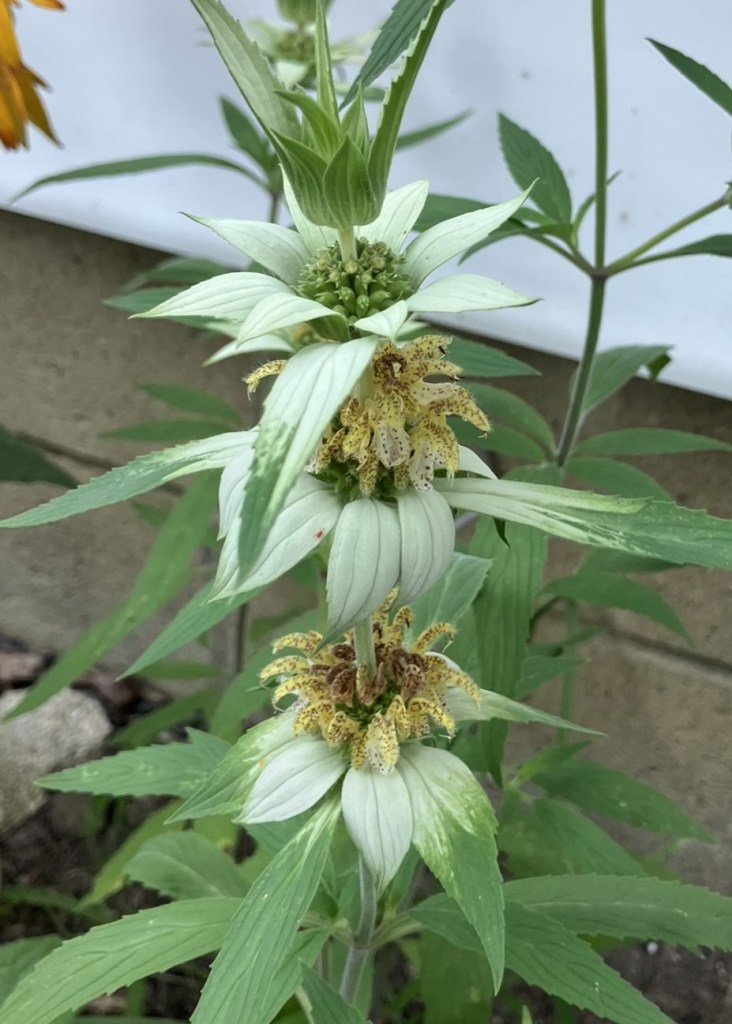
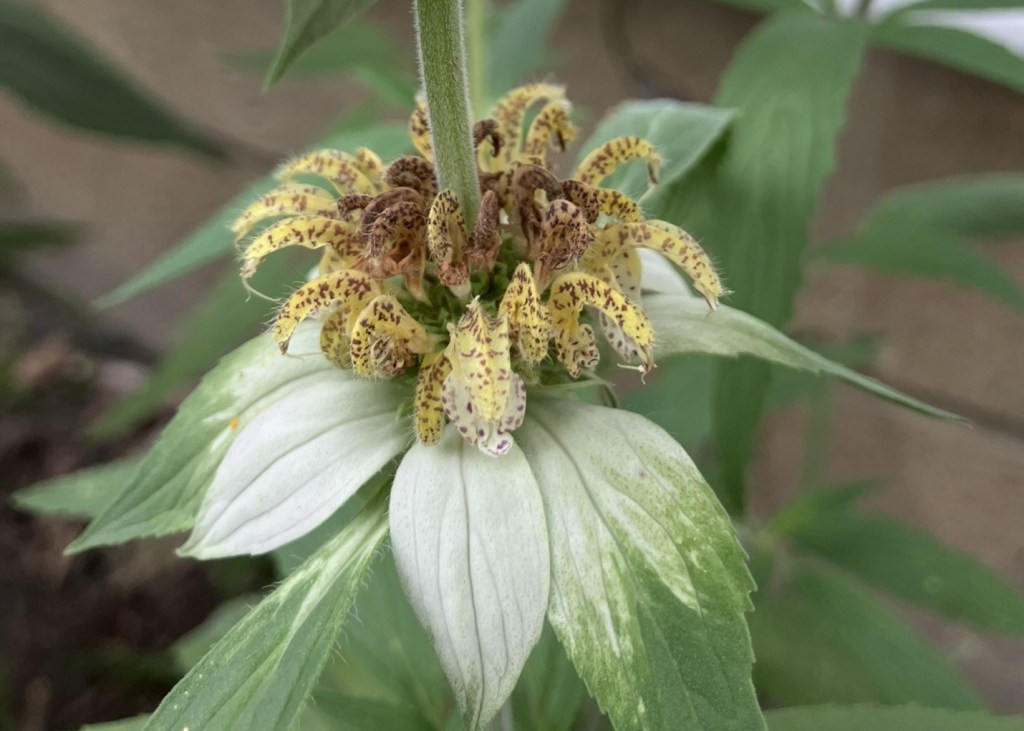
Last week I showed you the Spotted Bee Balm – the newest addition to my Native plant collection. At first, I thought it was fairly subtle.. but a week on… oh no… it’s AMAZING! There are multiple flowers on each stem and because of those white bracts, the yellow spotted petals just shine out! I want MORE of this!!!

The Blue Lobelia is blooming! It’s a hummingbird favourite.
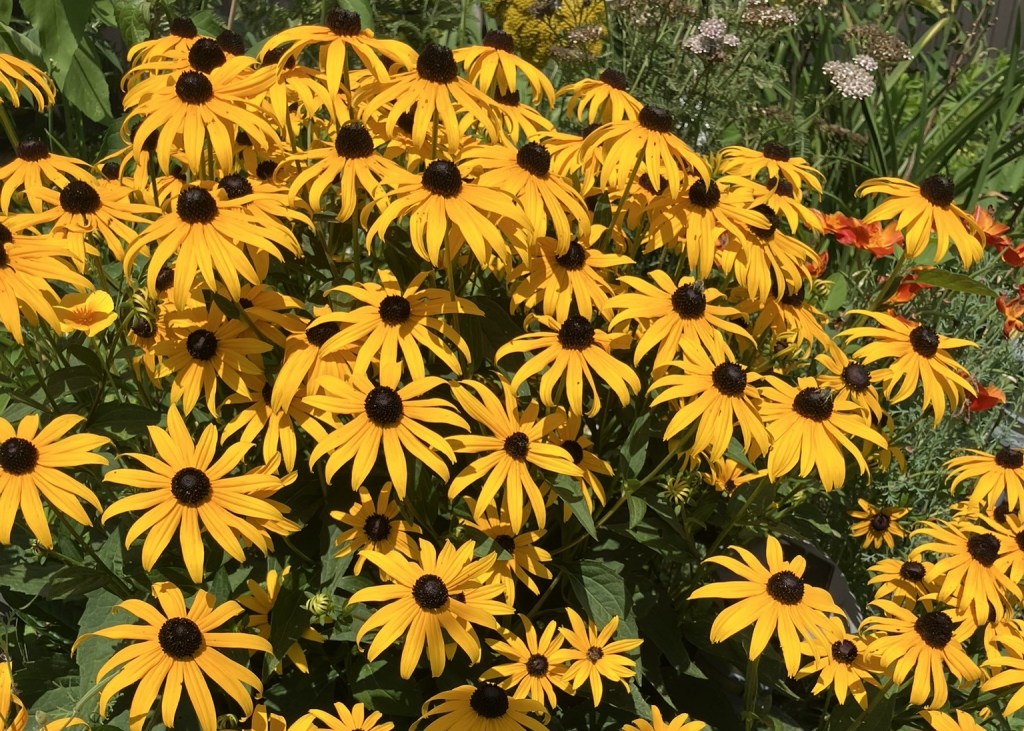
There are several clumps of Black-Eyed Susans all around the garden. And they are all looking spectacular this year!
While I don’t regret planting these Native False Sunflowers …

I do wish I’d known a little more about them before I did. 1) They get VERY tall. Like about 5 foot or a little more. 2) They get bushy…. stems come up EVERYWHERE from the clump, and this makes them flop left and right and cover other plants.
Ive just cut down a patch I have in the front garden. I will take them out completely next spring. For now I’m leaving the clump that’s beside the veg gardens, but I did have to cut a lot back, and tie some more up. I’m debating on moving it to the back of the yard where there’s a little more room for it. I wish I had a big meadow for it… because that’s exactly what it needs!
Similar are these grey-headed coneflowers.
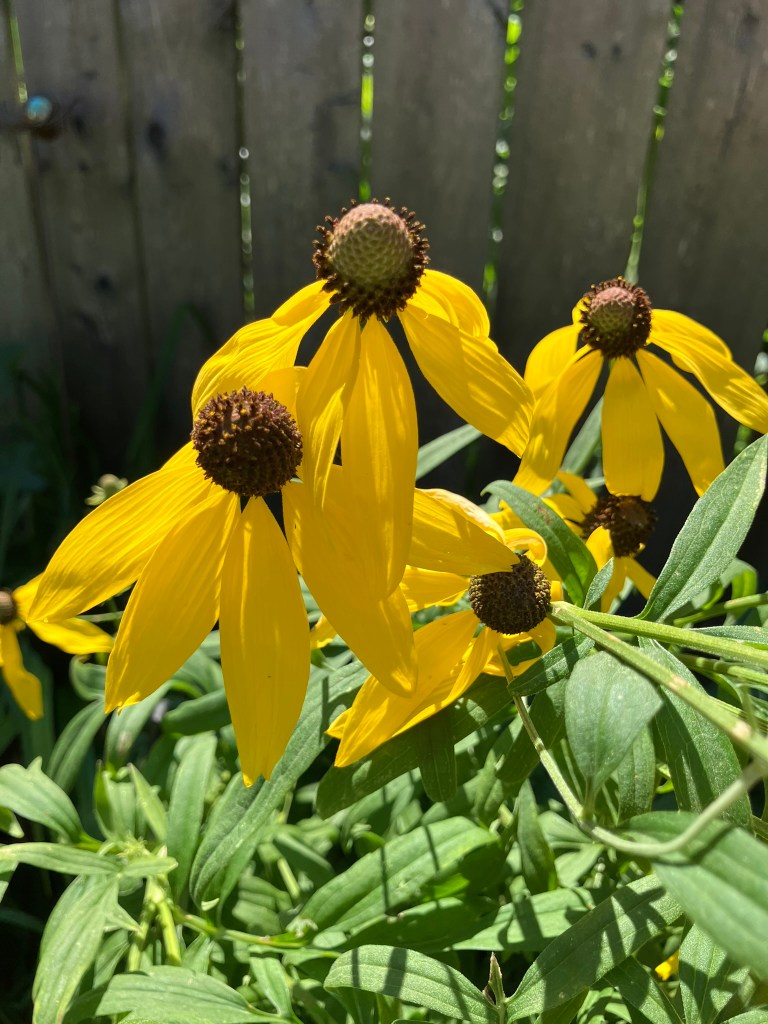

It doesn’t get as tall as the False Sunflower, but it does flop terribly – at least where I have it along the fence border. This garden is getting a bit of expansion when the weather cools down, so I may pull it out and move it away from the fence where it will get the sun easier, and might not feel the need to flop so much. I might move some to the front garden too. It really is one of my fave flowers… I just wish it behaved itself better.
The native Blanket Flower is much better behaved.
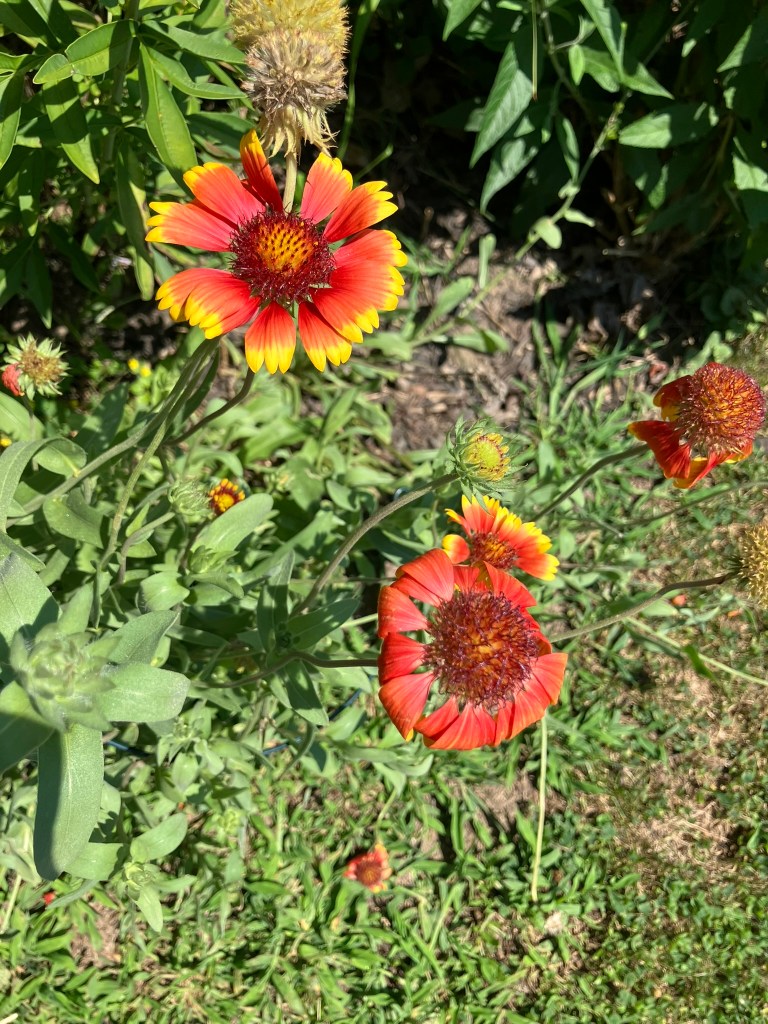
I have some hybrids, which are shorter and bushier, but this species version is taller and leaner.

And they like to pop up amongst the other flowers, just as thry would in a meadow.
I have two types of yarrow in my garden. I thought they were both natives, but I have recently learned they are not. Do you know which one is the visitor?
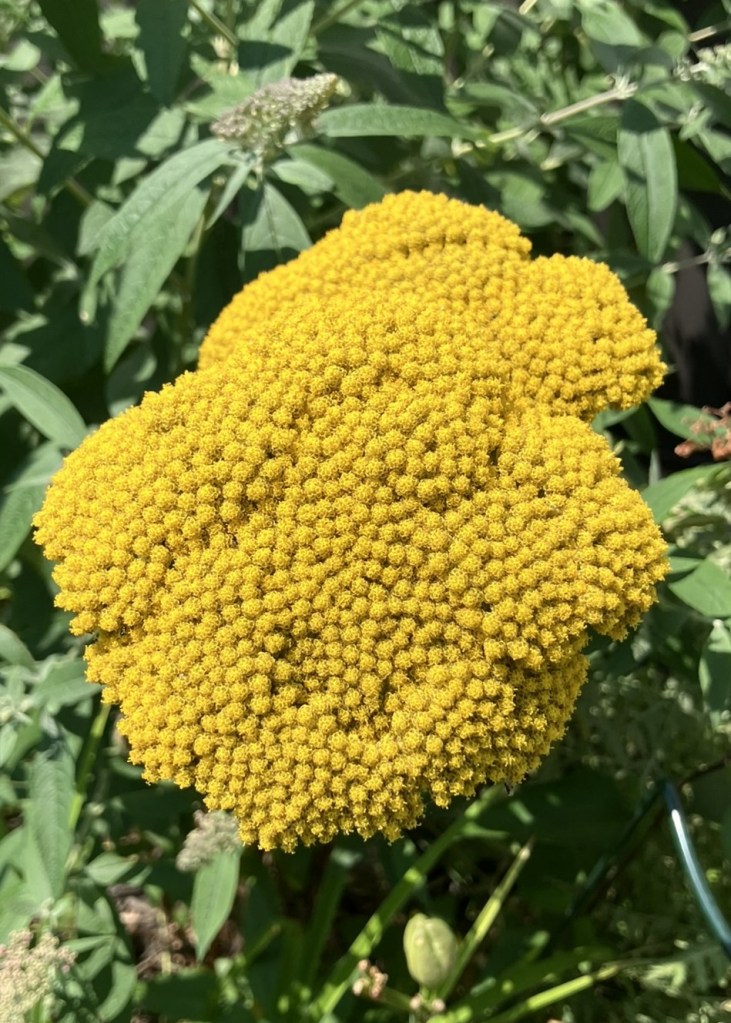
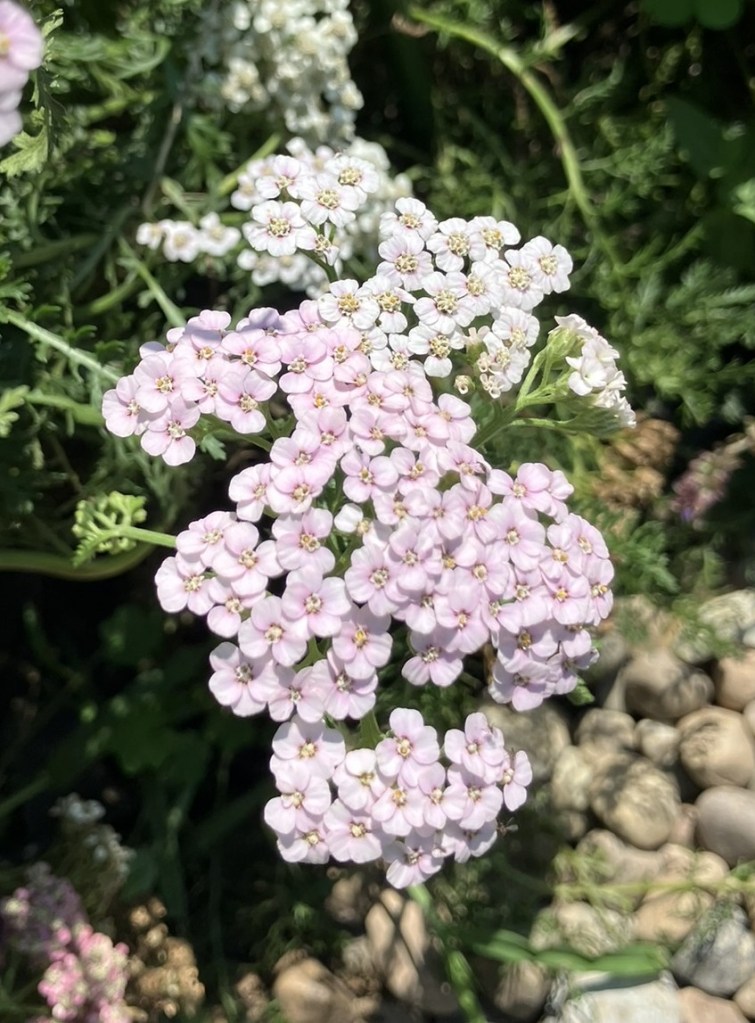
It’s the yellow one on the left! It’s a Fernleaf Yarrow and it’s actually from Asia. I had no idea when I bought it. I just saw Yarrow and thought cooooool – I like Yarrow! As you can see, it has very dense heads of tight little flowers. The one on the right is Common Yarrow. It’s the one that’s native to North American meadows and grasslands! Regular readers will know I have it in a literal rainbow of colours!
And another interesting thing I learned is about purple coneflowers…
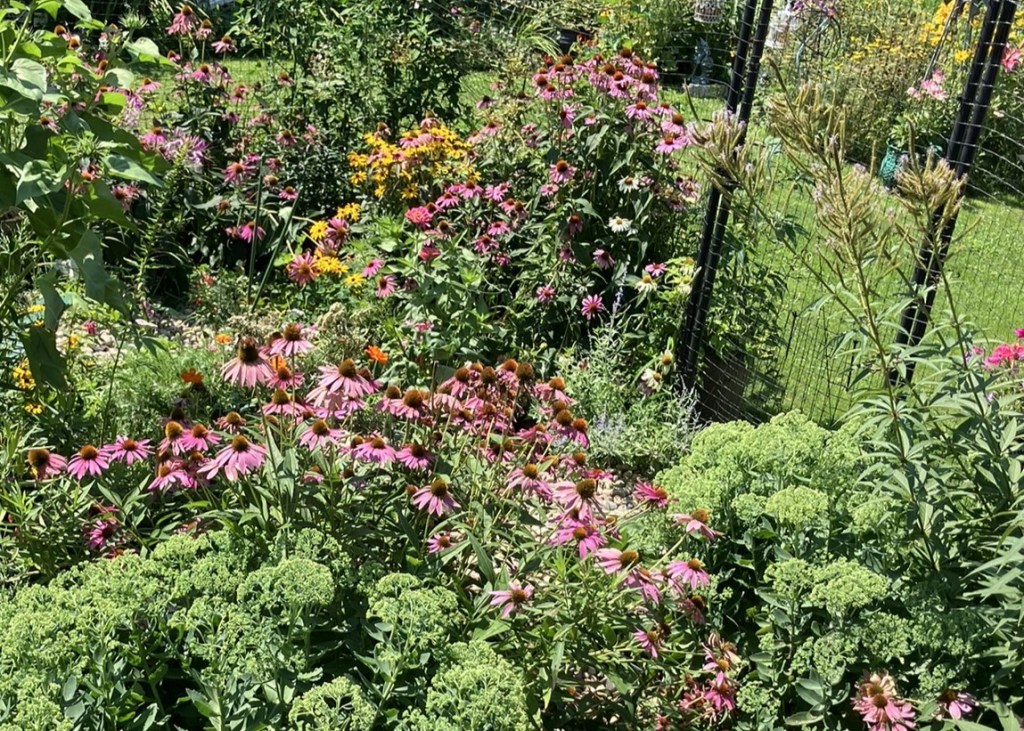
Last year, I made a post about how the purple coneflowers had seemingly took over the gardens (as evidenced by the catio here), despite the fact that I have coneflowers in a variety of colours!. I have red, orange, yellow, white… but the purple seemed to become stronger and more dominant year after year – with the others slowly dissapearing.

The wild form of Echinacea purpurea naturally produces purple flowers. Most of the newer colors available today are the result of selective breeding or hybridization between E. purpurea and other Echinacea species. If a hybrid produces seedlings, the offspring inherit a random mix of genes. The genes responsible for purple pigmentation are often dominant or involve multiple interacting genes. As the hybrid genetics reshuffle, many seedlings come up as purple. Since I let my plants reseed freely (ie don’t deadhead) this probably accounts for most of my purple plants.
In addition some cultivars consist of multiple crowns or shoots. If the original hybrid tissue declines, dormant buds from genetically different tissue can become dominant. These shoots may produce the wild-type purple flowers.
So… it’s going to take a little more work on my part to keep a good mix of coneflowers throughout the beds. But that’s one of the things I love about gardening – I am ALWAYS learning something new!
 Wandering Cat Studio
Many of my tall plants are falling over too.
My gardens are coming back from being stepped on my the roofers, brick workers, and cement dudes.
In fact, I lost an entire garden of native plants when they raked up the debris of their work, and cleared out my bee balm, columbine, and more.
Oh well, cannot do anything but move forward.
LikeLike
You’ve got some wild looking flowers out there! That first one looks half flower half spider.
LikeLike
Your native plants are awesome!!!
LikeLike
What a great array of native flowers. I especially love the black eyed susan.
Blessings,
Betsy
LikeLike
Everything looks great! The taller native Sunflowers may benefit from a good cut back in early June. Grey Headed cone flowers are always so tall! What beauties your Purple Coneflowers are!
LikeLike
We like learning things from you, too! Beautiful flowers!
LikeLike